Four practical methods to carbonate homebrew and choose wisely
Learn four common carbonation options, how to pick one for your gear and beer style, and practical tips to nail volumes, temp, and timing.
1. Bottle conditioning (natural carbonation)
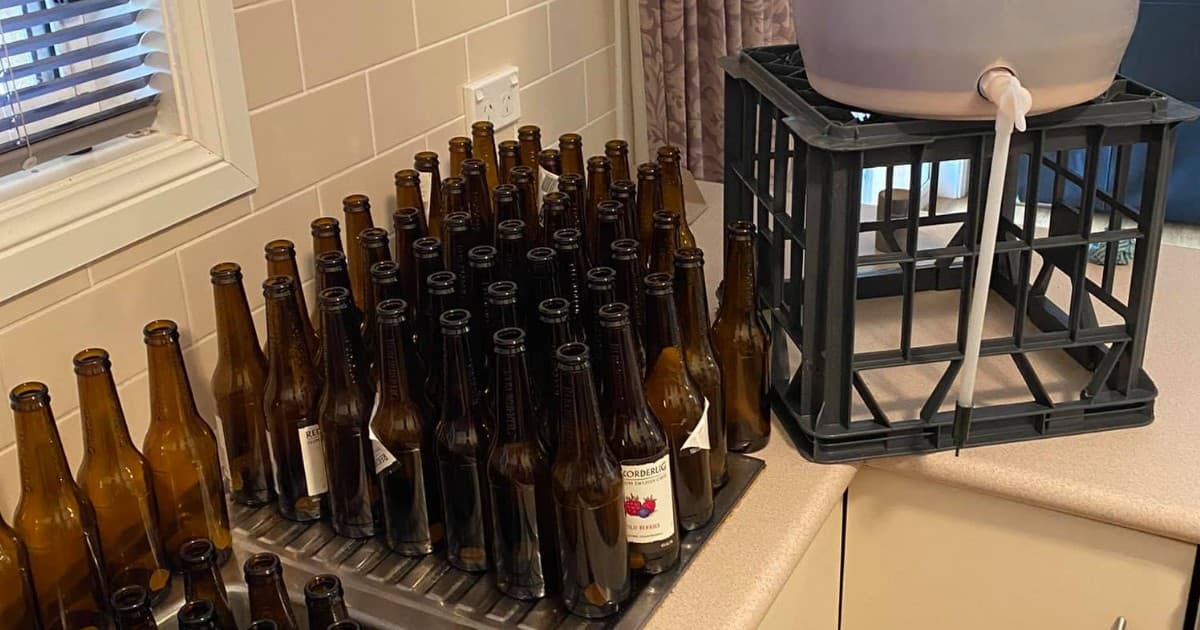
Bottle conditioning is the low-cost, portable classic: you add priming sugar to the finished beer, bottle, and let yeast generate CO₂ naturally. Calculate priming sugar with a calculator that factors batch size, residual CO₂ (based on fermentation temp), and target volumes; dissolve sugar in boiling water, cool, and gently mix into the beer to avoid oxygen pickup. Expect 1–3 weeks for most ales at room temperature, longer for lagers or cold-stored brews; hygiene and proper sealing are critical because contamination or under-sanitized bottles can spoil a batch. Advantages are low equipment needs and good long-term conditioning; drawbacks include less precise control of volumes and potential headspace/oxygen risks if mixed roughly.
2. Force carbonation in a keg
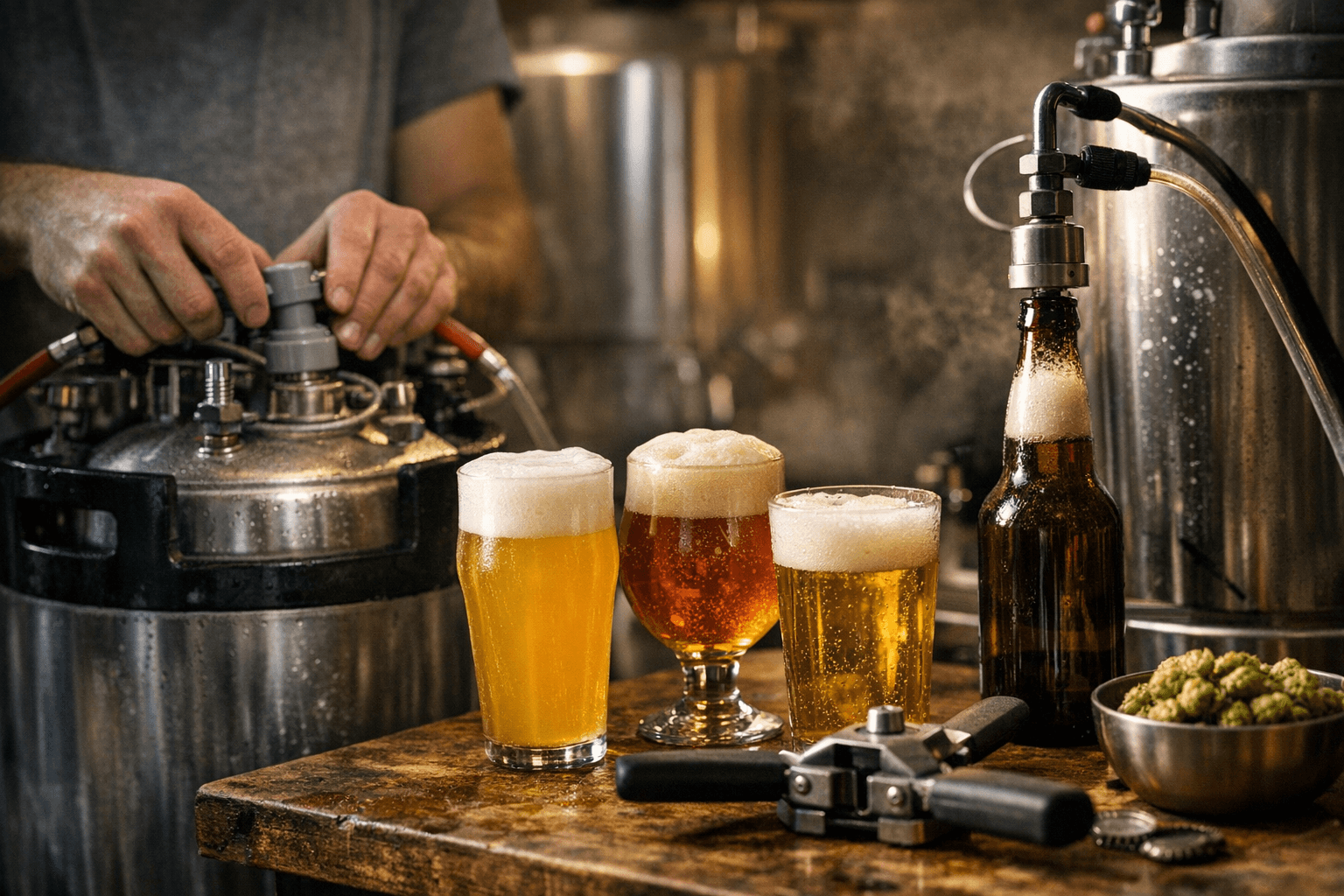
Force carbonation uses a CO₂ tank and regulator to set exact volumes quickly; attach the regulator to your keg and either set the pressure chart (based on temp and desired volumes) or use a carbonation stone/rolling method to speed uptake. This method gives precise control, fast turnaround (hours to a few days depending on technique), and clean dispensing without bottle labor, but it requires kegs, a CO₂ source, and hardware investment. For best results, cold-crash your beer to drop proteins and yeast before carbonation; colder beer absorbs CO₂ faster, reducing foaming when you pour. Force carbonation is ideal when you want consistency across pours or are serving at events.
3. Natural keg conditioning (priming in a keg)
Natural keg conditioning merges keg convenience with bottle-style conditioning: you add a measured priming sugar (or a few tablets) directly into a sanitized keg, seal it, and let the yeast carbonate the beer. This is handy if you don’t own a regulator but want keg portability for picnics or swaps; it also avoids bottle handling while still using natural CO₂ for mouthfeel. Be mindful of mixing, gently stir or roll the keg to distribute sugar without introducing oxygen, and monitor pressure buildup to avoid overpressurizing. Expect similar timeframes to bottle conditioning; because kegs have less headspace variation, results can be more consistent than many bottles.
4. In-bottle CO₂ or carbonation drops / measured priming
Carbonation drops or pre-measured sugar tablets are a convenient option when precise priming calculations are difficult or you’re bottling small runs or split batches. Drops remove weighing and calculators from the equation, making bottling faster for taproom-style party kegs or when you’re on brew day fatigue. Downsides: slightly higher cost per bottle and less flexibility when target volumes differ by style, stick to measured priming if you need tight control. This is a great stopgap for newcomers or when you want predictable results without the math.
5. Target carbonation volumes by style
Match carbonation volumes to style to preserve aroma, mouthfeel, and head behavior: English ales generally sit low (around 1.5–2.2 volumes), modern American ales and many pale ales around medium (2.2–2.7 volumes), lagers often fall mid to slightly higher (2.4–2.7 volumes), while Belgian saisons and some wheat beers run high (3.0+ volumes) for a spritzy profile. These ranges help you choose priming amounts or regulator settings and guide packaging decisions for bottles versus kegs. Community relevance: dialing the right volumes makes your beer read like the style on the shelf or in a competition pour.
6. Temperature considerations and timing
Temperature controls how much CO₂ the beer will hold, colder beer absorbs more CO₂, so force-carbonating at refrigerator temps speeds uptake and reduces foaming issues. For bottle conditioning, keep bottles at a stable, warmish conditioning temp (typically mid-60s–70s°F for ales) to let yeast eat priming sugar; lagers or cold-conditioned beers will need longer or warmer conditioning phases. Cold-crash before force carbonation to precipitate haze and limit floating yeast, and remember that carbonation volume charts assume specific temperatures, adjust pressure or priming accordingly. Time is part of the flavor game: some beers improve with weeks of bottle conditioning, others are best fresh.
7. Troubleshooting common carbonation problems
Under-carbonated beers often need more time or a warmer conditioning environment; for kegged beer you can hook up CO₂ and top up pressure for a controlled push. Over-carbonation can lead to gushers or bottle bombs, chill the beer immediately, vent carefully, and learn from your priming math next time. Foaming on pour usually signals warm beer, aggressive pour angle, or too much dissolved CO₂; chill and pour down the side of the glass or reduce dispenser pressure. Always inspect bottles for signs of overpressure and sanitize well to avoid off-flavors that mimic carbonation issues.
- Use closed transfers (spunding or racking into a purged keg) to minimize oxygen exposure and keep flavors bright.
- Sanitize everything that touches finished beer, priming mixing tools are common contamination points.
- Cold-crash before transferring or force-carbonating to drop yeast and protein, which reduces foaming and speeds clarity.
- Keep a priming log: batch size, sugar type and grams, conditioning temp and time; it saves future guesswork.
- When in doubt, use a priming calculator and standardize on one sugar type (dextrose gives predictable results).
8. Practical tips to reduce oxygen pickup and get repeatable results
Our two cents? Carbonation is one of the fastest ways to change how your beer reads, mouthfeel, aroma lift, and presentation all hinge on your choice. Pick the method that fits your gear and goals: bottle conditioning for portability and low cost, force carbonation for speed and precision, natural kegging for a middle path, and drops for convenience. Trust a calculator, sanitize like it’s sacred, and taste along the way, your local club swaps and taproom pals will thank you for it.
Know something we missed? Have a correction or additional information?
Submit a Tip