France keeps emergency heat plan at highest level as temperatures rise
France kept its top heat emergency plan in place as officials warned of another temperature spike and a death toll already near 1,000 excess deaths.

France kept its national health emergency response plan, ORSAN, at its highest level on June 29 as officials braced for another rise in temperatures after an early-summer heatwave had already strained the country. Sebastien Lecornu announced the decision at the start of a government crisis meeting focused on how France handled the recent heat and how it should prepare for the days ahead.
The health ministry had already activated phase 3 of ORSAN EPI-CLIM on June 25, the plan’s highest level of mobilization for the health system, and paired it with an additional 100 million euros. Official French guidance says ORSAN EPI-CLIM is meant to manage health-system tensions during extreme climate events, including heatwaves and cold spells. The broader ORSAN framework is designed to coordinate hospitals, care networks, health professionals and regional resources so care can continue during exceptional health situations, with ORSEC available as the civil-security partner system.
Meteorologists said the extreme heat had eased across most of France, but another increase was expected toward the end of the week. That kept the threat of renewed disruption alive even as the country counted the damage from the heatwave that began on June 20. France’s public health agency said the episode had already produced about 1,000 excess deaths, and officials warned the final toll could still rise. Most of the deaths were among people aged 65 and older, but the agency said the health effects of extreme heat reached all categories of the population.

The government’s decision also reflected a wider shift in how French officials are treating heat. In its most pessimistic scenarios, Météo-France foresees heatwaves that could last five times longer than the 2003 episode, a benchmark that remains seared into public memory. Santé publique France says the August 2003 heatwave caused about 14,800 excess deaths between August 1 and August 20.
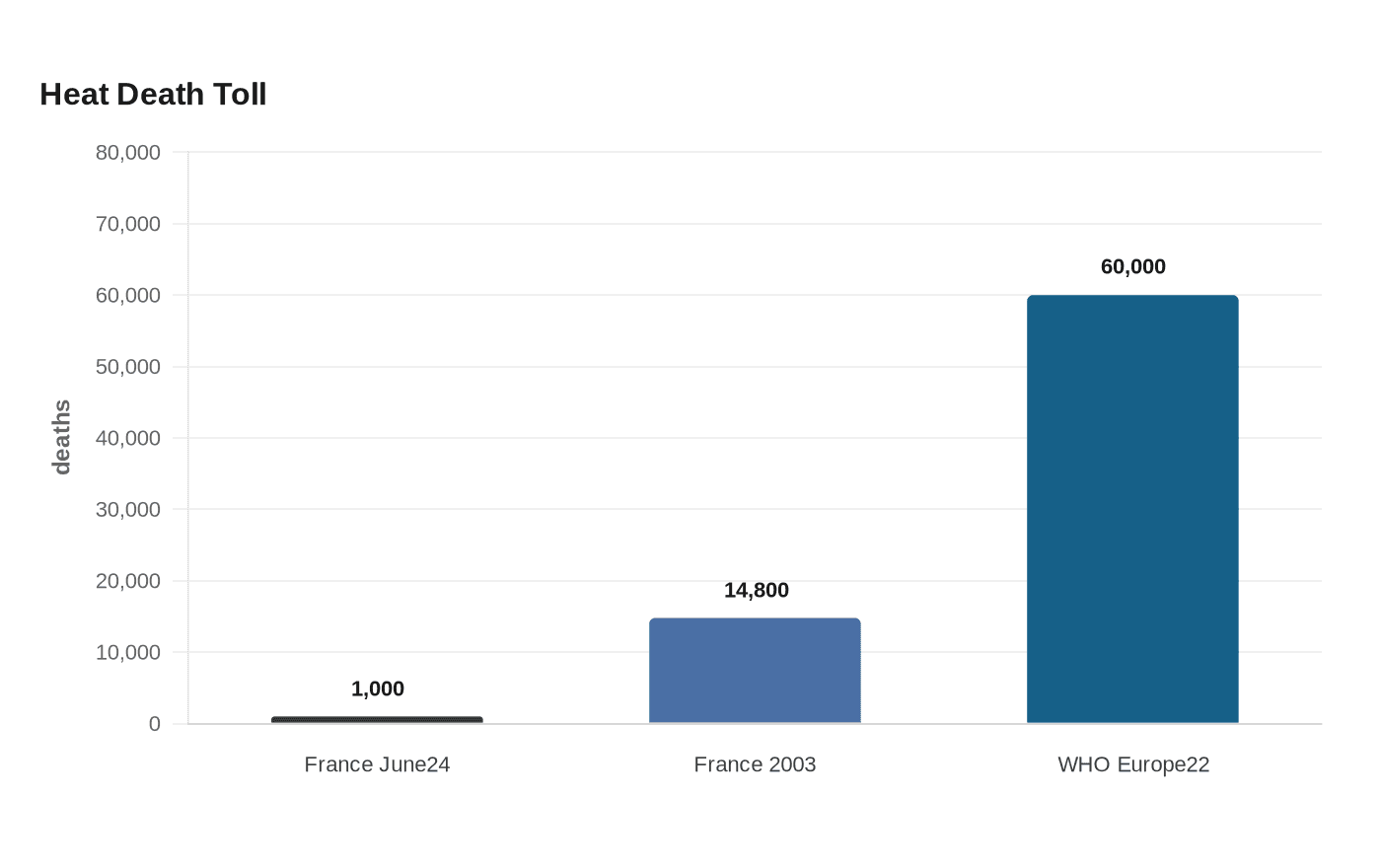
The pressure is not limited to France. The World Health Organization says heat is becoming a growing health risk across Europe because of urbanization, higher temperature extremes and aging populations. It estimates that extreme heat claimed more than 60,000 lives in the WHO European Region in 2022, and says heat-related mortality among people over 65 rose by about 85% between 2000-2004 and 2017-2021. For French hospitals and local authorities, keeping ORSAN at full alert means staying ready for another surge before the summer is over.
This article was produced by Prism’s automated news system from verified source data, official records, and press releases, then run through automated quality and moderation checks before publishing. The system is built and supervised by the people who set the standards it runs under. Read our full AI policy.
Did this article answer your question?