Free the Andro urges better fish passage at Brunswick-Topsham dam before relicensing
Free the Andro launched in late January to push for redesigned or removed fish passage at the Brunswick-Topsham dam ahead of 2029 relicensing; fish counts show most shad are blocked.
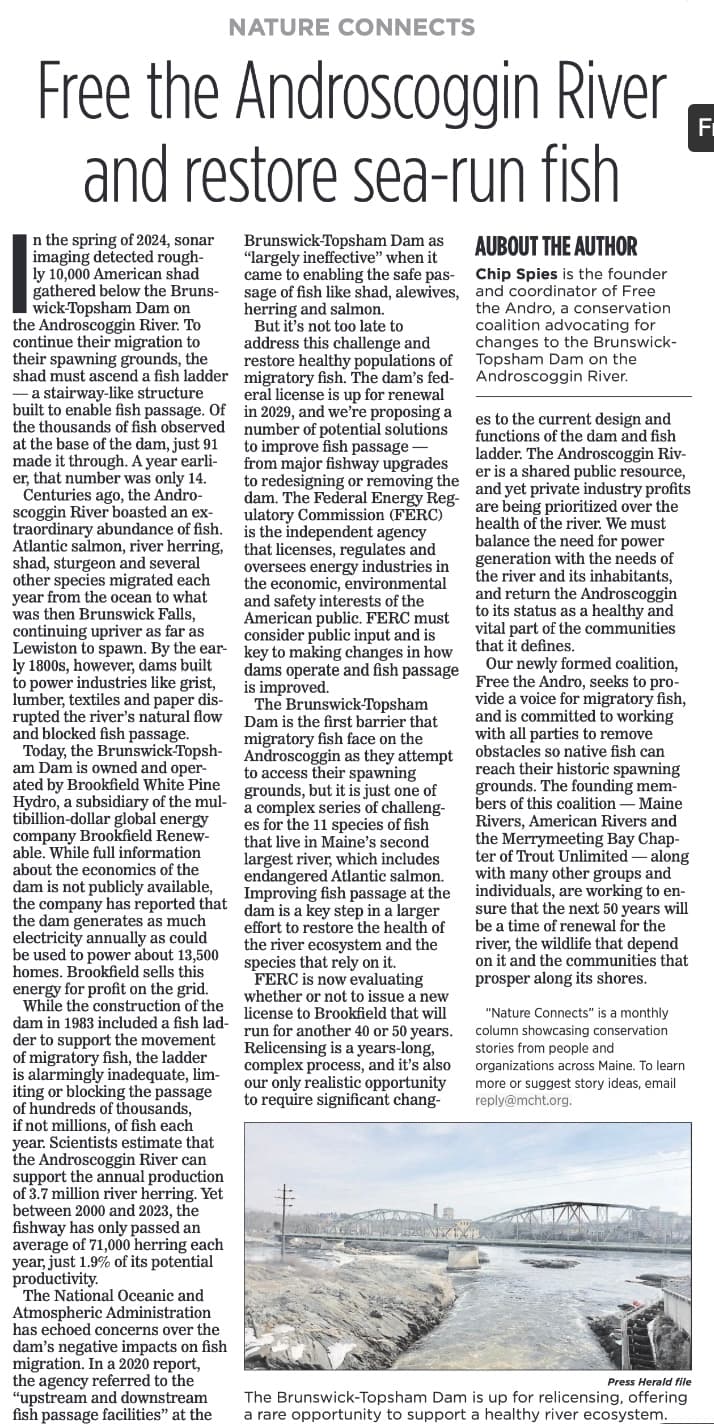
A citizen coalition called Free the Andro has publicly launched to press for better fish passage at the Brunswick-Topsham dam, arguing the federal relicensing window that culminates in 2029 creates a rare chance to restore sea-run fish to the lower Androscoggin River. Charles “Chip” Spies, founder and coordinator of Free the Andro, said the group wants either a redesigned fishway or removal of the dam to reestablish “unfettered native fish passage.”
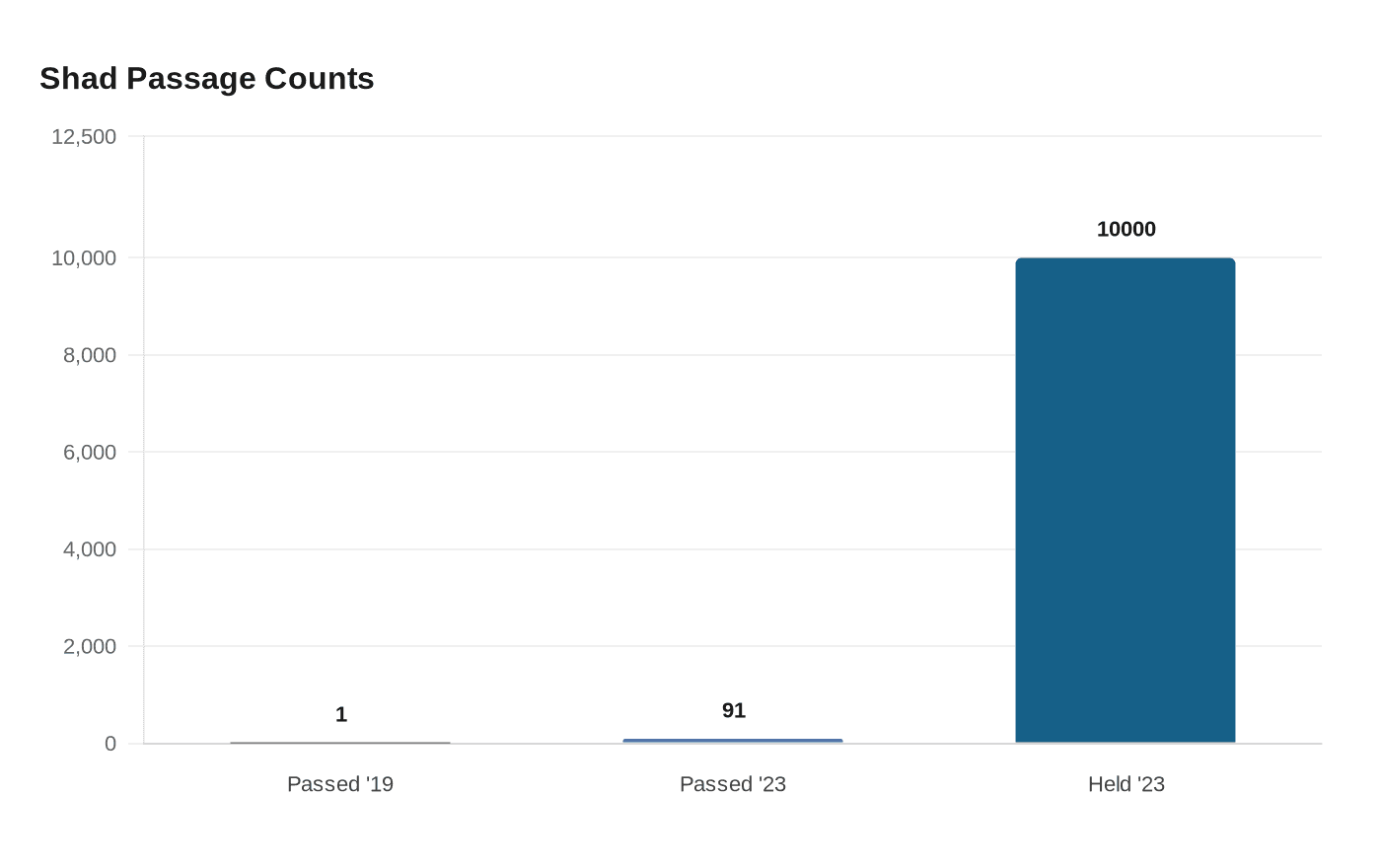
The coalition cites multiple studies and counts to make the case. A 2019 Bowdoin College report documented that only one American shad successfully used the existing vertical-slot fish ladder in that year. Coalition organizers point to 2023 figures showing 91 shad passed the ladder while sonar readings detected as many as 10,000 shad locked in a holding pattern below the dam. The Maine Department of Marine Resources has urged better passage, and Sean Ledwin, Director of the Bureau of Sea-Run Fisheries and Habitat at Maine DMR, said, “The current fishway has numerous issues that prevent the restoration of sea-run fish.”
Free the Andro brought together local and national conservation groups including Maine Rivers, American Rivers, Friends of Merrymeeting Bay, and the Merrymeeting Bay chapter of Trout Unlimited. The coalition publicly launched at a packed meeting at Curtis Memorial Library in Brunswick in late January, and Spies framed the moment as urgent: “The best solution frankly is removal of the dam.” Free the Andro says restoring fish runs would benefit Atlantic salmon, shad, recreational and commercial fishers, and the broader ecosystem that residents value.
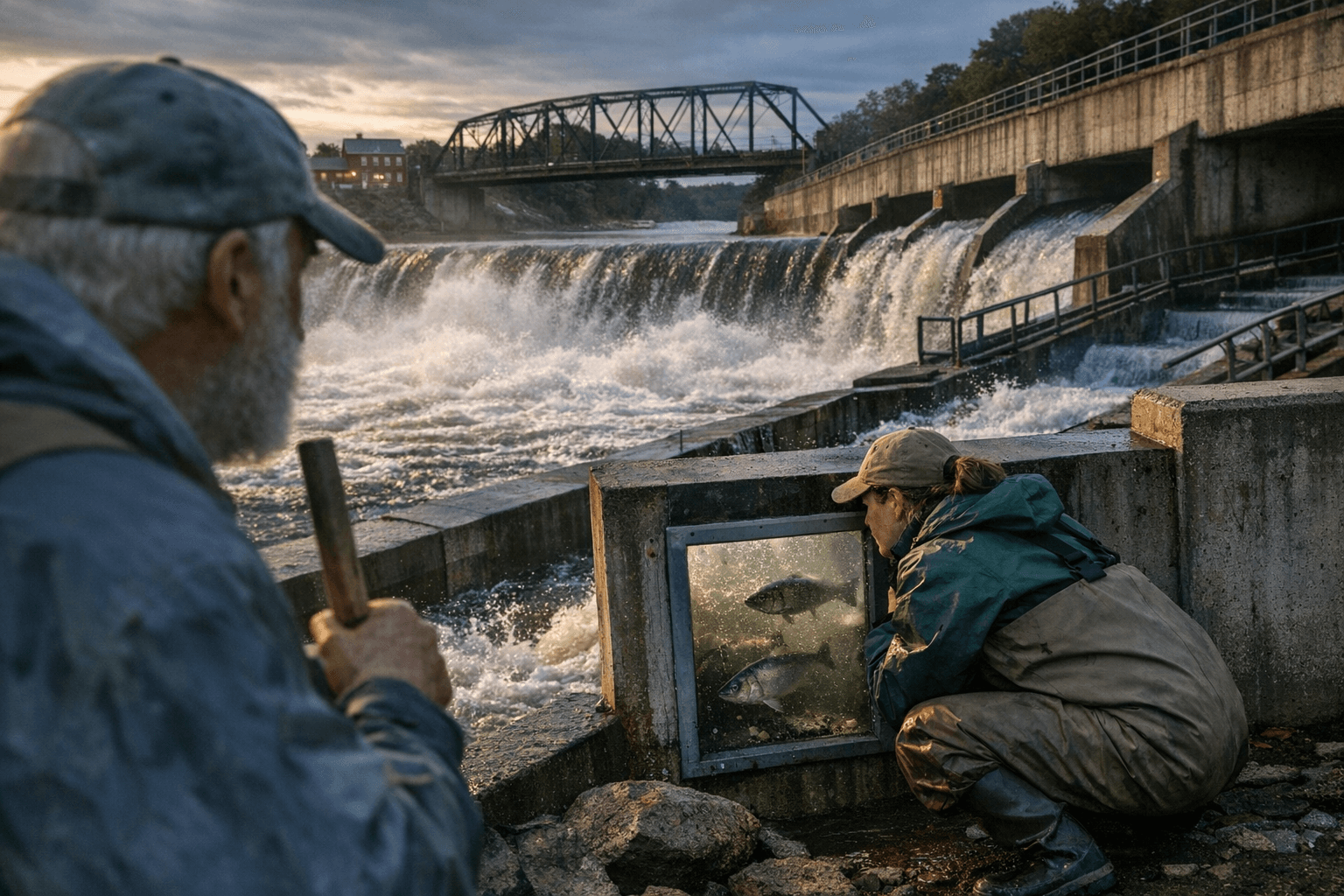
Brookfield White Pine Hydro, operating under Brookfield Renewable, says it will study fish-passage alternatives but does not plan to decommission the project. Brookfield told the press, “We are working on studies as part of the relicensing of the Project that will review measures to modify or replace the existing fish passage.” The company added, “We consider the results of our studies, including those focused on fish passage, and the input of all stakeholders before preparing and submitting a final license application to the Federal Energy Regulatory Commission.” The Brunswick-Topsham dam produces about 19 megawatts of electricity, roughly equivalent to power for 13,500 homes, which Brookfield and others cite when discussing tradeoffs.
Local governments have weighed in. The towns of Brunswick and Topsham each passed unanimous resolutions in 2025 supporting improved migratory fish passage as part of relicensing. Brookfield met with resource agencies and stakeholders on Jan. 27 to review downstream passage alternatives and plans to review upstream options in coming months. Federal regulators approved a revised study plan from Brookfield that includes a probe of fish passage alternatives, and the current FERC license, first issued in 1979, expires Feb. 28, 2029.
For Sagadahoc County residents, the dispute frames a practical tradeoff: maintain a 19 MW renewable energy source and the jobs and taxes it supports, or pursue structural changes that advocates say are necessary to restore historically blocked fish runs. The relicensing process will unfold over the next years with study results and stakeholder filings shaping whether the Brunswick-Topsham dam is modified, replaced, or removed, and with it, the future of the lower Androscoggin’s sea-run fisheries.
Sources:
Know something we missed? Have a correction or additional information?
Submit a Tip