French consumer confidence drops sharply in April, biggest fall since war began
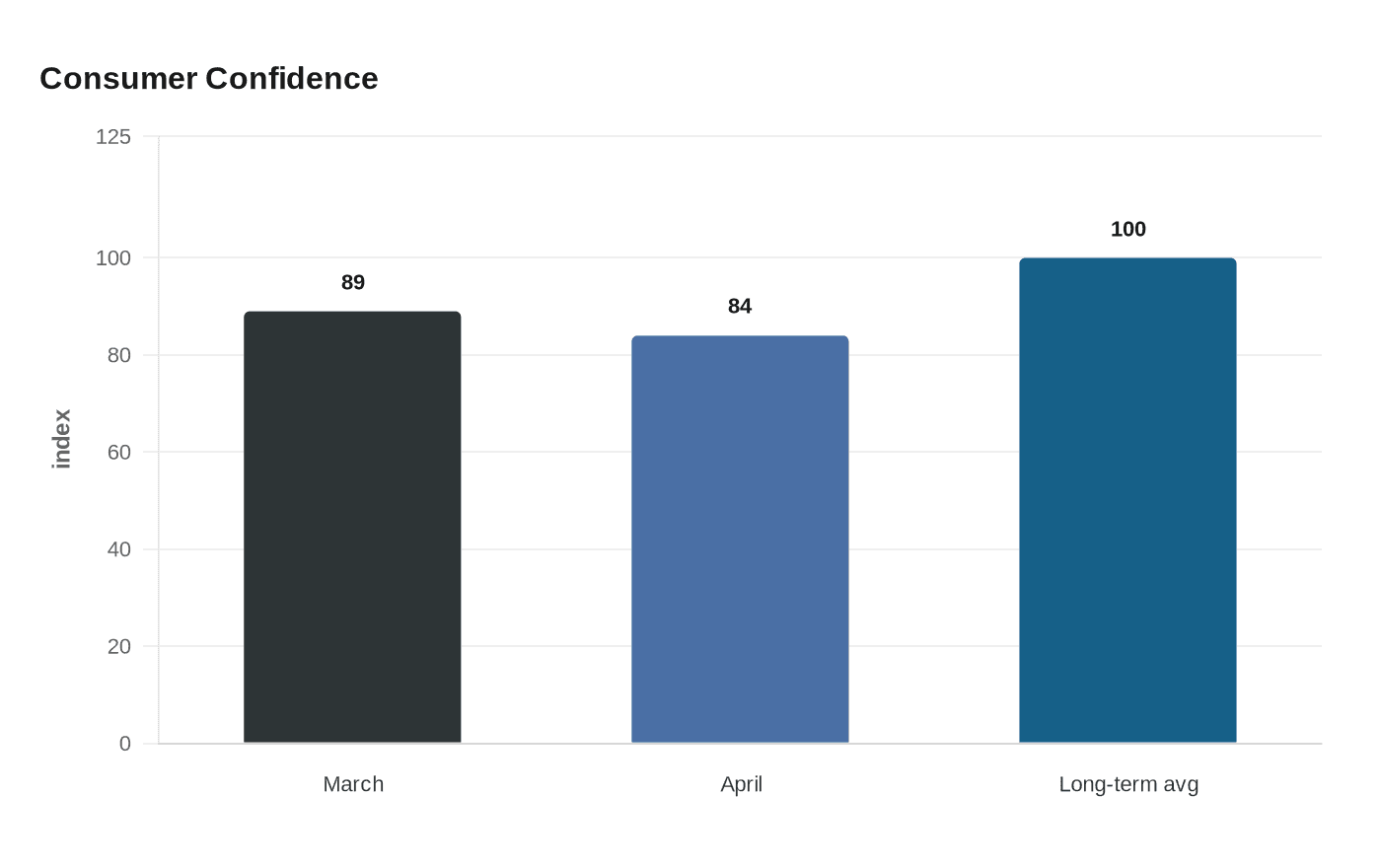
French household confidence fell to 84 in April, the steepest monthly drop since the Ukraine war began. Families grew more wary of spending, inflation and unemployment.

French consumer confidence snapped lower in April, with INSEE’s household confidence indicator falling to 84 from 89 in March. The five-point drop was the sharpest since March 2022, when Russia’s invasion of Ukraine jolted households across Europe, and it left the gauge well below its long-term average of 100.
The scale of the decline matters because it was broad-based. INSEE said views of both future and past personal finances deteriorated clearly, with the balance on future personal financial situation down 7 points and the balance on past financial situation down 6. The measure of whether it was a good time to make major purchases also fell 6 points, while fears of unemployment increased. Together, those shifts suggest that French households are becoming more hesitant not just about the near term, but about making larger spending commitments.
Price anxiety also flared again. INSEE said perceptions of past inflation worsened sharply, and the share of consumers saying prices had risen steeply over the previous year jumped by 30 points, the biggest monthly rise in more than four decades. That is a powerful sign that inflation memory is still shaping behavior in France, even though headline consumer-price growth has eased to 1.7% year on year. For households, the recent cooling in inflation has not erased the sense that prices remain high.
The timing is important for the wider economy. Consumer confidence is a leading signal for spending on holidays, durable goods and everyday purchases, so a drop of this size can foreshadow weaker demand. France’s household consumption of goods already fell 1.4% in February, GDP rose only 0.2% in the fourth quarter of 2025, and the household savings rate slipped to 17.9% from 18.3% in the previous quarter. A softer confidence reading now raises the risk that consumers will keep more cash aside rather than spend it.
The April fall may still reflect a war-driven shock rather than a deeper domestic slump, but the latest data also shows how fragile sentiment remains. INSEE’s consumer survey has been running since 1958 and was harmonized with the European framework in 1972, giving this reading a long record for comparison. The next release is scheduled for May 27 at 08:45, and it will help show whether April was a one-month anxiety spike or the start of a more durable retreat in French demand.
This article was produced by Prism’s automated news system from verified source data, official records, and press releases, then run through automated quality and moderation checks before publishing. The system is built and supervised by the people who set the standards it runs under. Read our full AI policy.
Did this article answer your question?

