French government survives two no-confidence votes over EU-Mercosur deal
French government survives two no-confidence votes, defusing immediate threat while protests over the EU-Mercosur deal intensify.
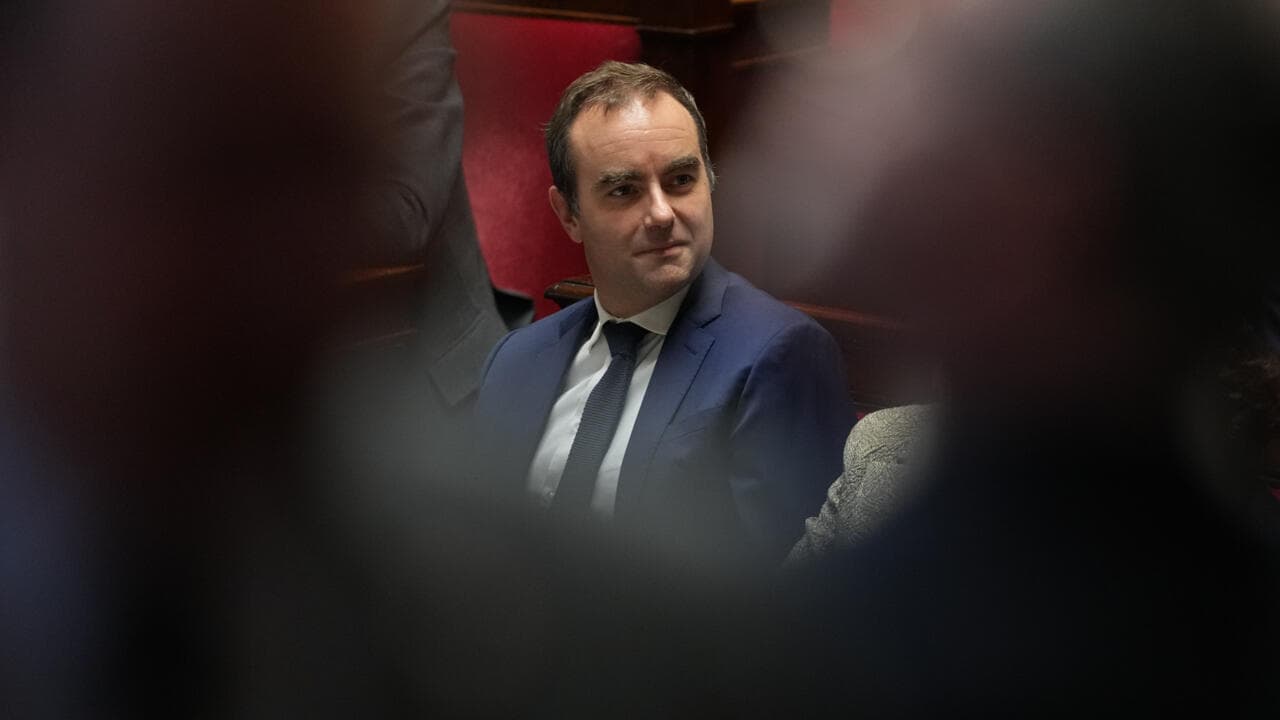
Prime Minister Sébastien Lecornu’s minority government survived two successive no-confidence motions in the National Assembly after weeks of political and economic turbulence sparked by the European Union’s provisional backing of the long-awaited EU-Mercosur trade deal.
The first motion, lodged by the hard-left La France Insoumise (LFI), won 256 votes in favour, 32 short of the 288 needed for adoption in the 577-member Assembly. The second, tabled by the far-right National Rally (RN), drew 142 votes. Both measures failed, leaving the cabinet intact but underscoring its precarious hold on power and the depth of cross-party opposition to the trade accord.
The European Council gave provisional backing to the EU-Mercosur deal in a qualified-majority vote last week, a step that clears the path for a signature ceremony reportedly scheduled to take place in Paraguay on Saturday. Several member states opposed or abstained in that vote: France, Poland, Austria, Ireland and Hungary voted against the deal, while Belgium abstained. Despite Paris’s opposition, enough capitals backed the agreement to advance it toward signature, a development that has become a focal point of domestic anger.
LFI framed its motion as a rebuke of what it called capitulation to Brussels and accused the executive of failing to defend national interests. Group president Mathilde Panot said France was "humiliated" in Brussels and charged the government had "left the door open to France’s capitulation." The RN accused the president and executive of repeated "U-turns" and "contradictory statements" on the deal. Prime Minister Lecornu in turn denounced the motions as partisan maneuvers that were obstructing urgent domestic work, saying the no-confidence efforts were "further stalling" budget debates and accusing opponents of "acting like snipers lying in wait, firing into the executive’s back."
The refusal of the Socialist Party and the conservative Republicans to back either motion was decisive. Socialist leader Olivier Faure said his party did "not see the point" of bringing down the government over Mercosur, while the Republicans likewise withheld support, enabling the cabinet to survive despite the vocal protests.

The dispute has spilled into the streets and onto key logistics arteries. Farmers have mounted large-scale actions: about 350 tractors that had gathered near the Assembly left Paris at dawn and motorways and several fuel depots were blocked across the country, disrupting deliveries and raising short-term supply risks for affected regions. The unrest highlights the domestic economic stakes, farmers cite competition and environmental concerns, and raises the prospect of broader political fallout ahead of 2026 budget talks.
With confidence preserved, attention moves to fiscal policy. Government sources say Lecornu may consider invoking Article 49.3 of the Constitution to push through the 2026 finance bill without a full vote after negotiating a text with parliamentary groups, an option available to him after talks with all groups except RN and LFI. Foreign Minister Jean-Noël Barrot sought to put the setback in context, saying France had "not lost the war," while noting that the agreement still requires European Parliament approval and subsequent ratification by member states.
The episode reinforces the fragility of a minority administration operating in a fragmented Assembly and signals that future economic and trade policy decisions will continue to test France’s political cohesion and market confidence as the government navigates looming budget battles.
This article was produced by Prism’s automated news system from verified source data, official records, and press releases, then run through automated quality and moderation checks before publishing. The system is built and supervised by the people who set the standards it runs under. Read our full AI policy.
Did this article answer your question?


