French judge who oversaw landmark Klaus Barbie trial dies
André Cerdini, who calmly led the 1987 Klaus Barbie trial, died at 96, closing a chapter in France's first crimes-against-humanity case.
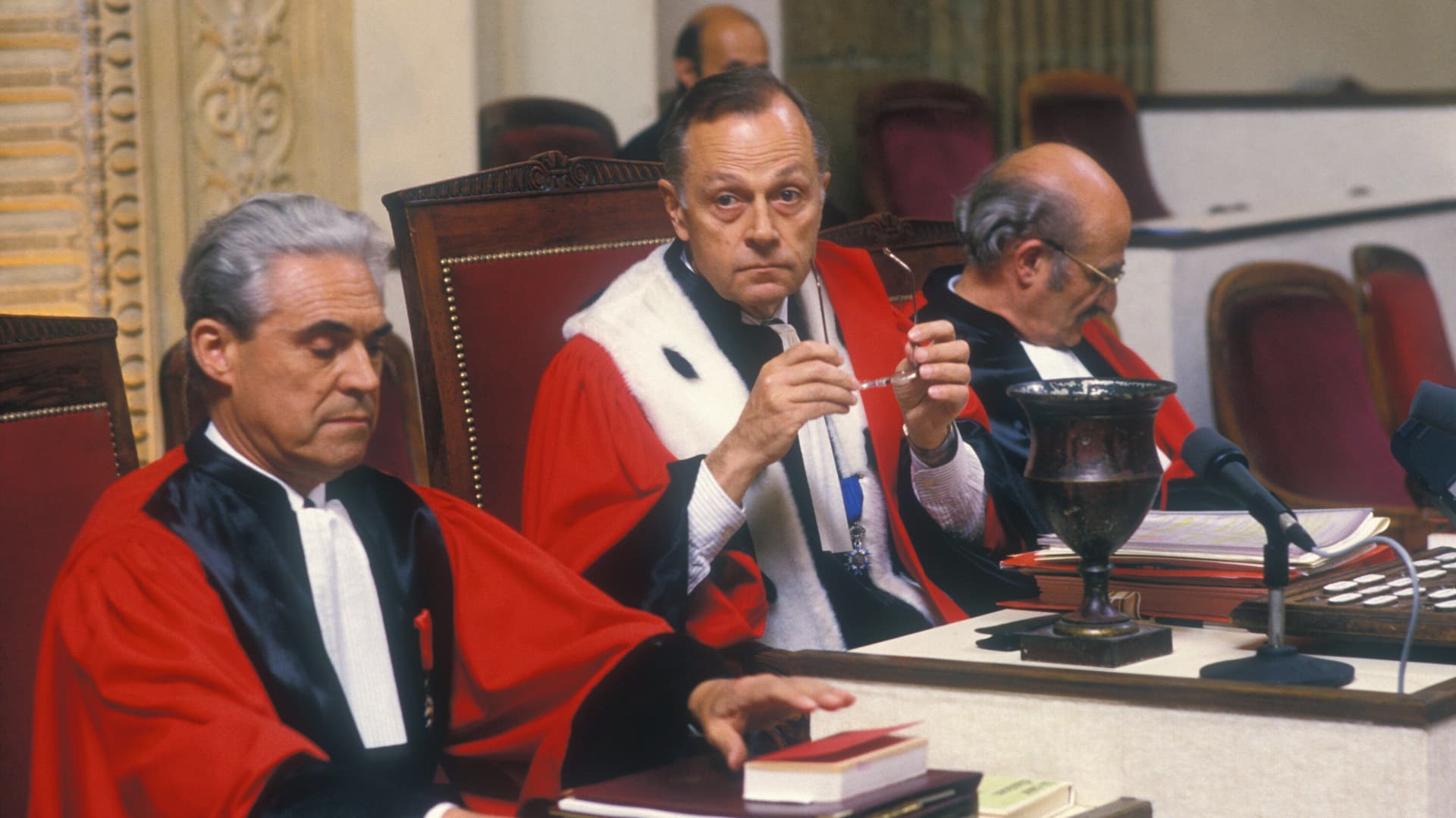
André Cerdini, the judge who presided over France’s first trial for crimes against humanity, died on May 4 in Vals-les-Bains at age 96. His courtroom manner became part of the historical memory of the Klaus Barbie case, a proceeding that forced France to confront both Nazi atrocities and the country’s long, uneasy silence about Vichy-era collaboration.
The trial opened in Lyon on May 11, 1987, after four years of pre-trial investigation and more than three decades after the war. Barbie, the former Gestapo chief in Lyon, stood accused of the execution or murder of more than 4,000 people and the deportation of about 7,500 Jews, most of whom died at Auschwitz. Among the atrocities highlighted in court was the deportation of the 44 children of Izieu in April 1944.
The legal importance of the case went far beyond Barbie himself. France had already made crimes against humanity imprescriptible under the law of December 26, 1964, but the Lyon proceedings gave that principle real force in a French courtroom. The trial helped sharpen the distinction between crimes against humanity and war crimes, and it established a precedent that has echoed through later efforts to prosecute mass violence and state-sponsored persecution.

The case also carried a rare public intensity. Every major French newspaper had a representative in Lyon, and most of the national press ran daily coverage. The proceedings were followed as both a criminal trial and a civic reckoning, with survivors, relatives and witnesses called to testify about events that had taken place 40 years earlier. From February 1983 to October 1985, investigators worked to find those witnesses, a task that underscored how much evidence had nearly vanished with time.
Serge and Beate Klarsfeld played a leading role in tracking Barbie down, completing a decade-long hunt that ended with his arrest. When the trial began, Cerdini was part of a judicial bench that included Pierre Truche, and the defense was led by Jacques Vergès, ensuring the case drew not only moral attention but fierce legal contest. Barbie was sentenced to life imprisonment on July 4, 1987, the maximum penalty under French law.

Jean-Olivier Viout, then part of the prosecution team, later described Cerdini as a “grand humaniste” whose delicacy toward victims helped preserve the trial’s serenity. That calm mattered because the case did more than punish one man. It showed that French justice could name atrocity for what it was, and it remains a reference point whenever courts confront war crimes, crimes against humanity and the struggle to hold perpetrators accountable before history catches up.
This article was produced by Prism’s automated news system from verified source data, official records, and press releases, then run through automated quality and moderation checks before publishing. The system is built and supervised by the people who set the standards it runs under. Read our full AI policy.
Did this article answer your question?