French minister urges euro stablecoins, tokenized deposits to curb U.S. dominance
France’s finance minister backed euro stablecoins and tokenized deposits, casting digital payments as a fight over monetary power, not just crypto.
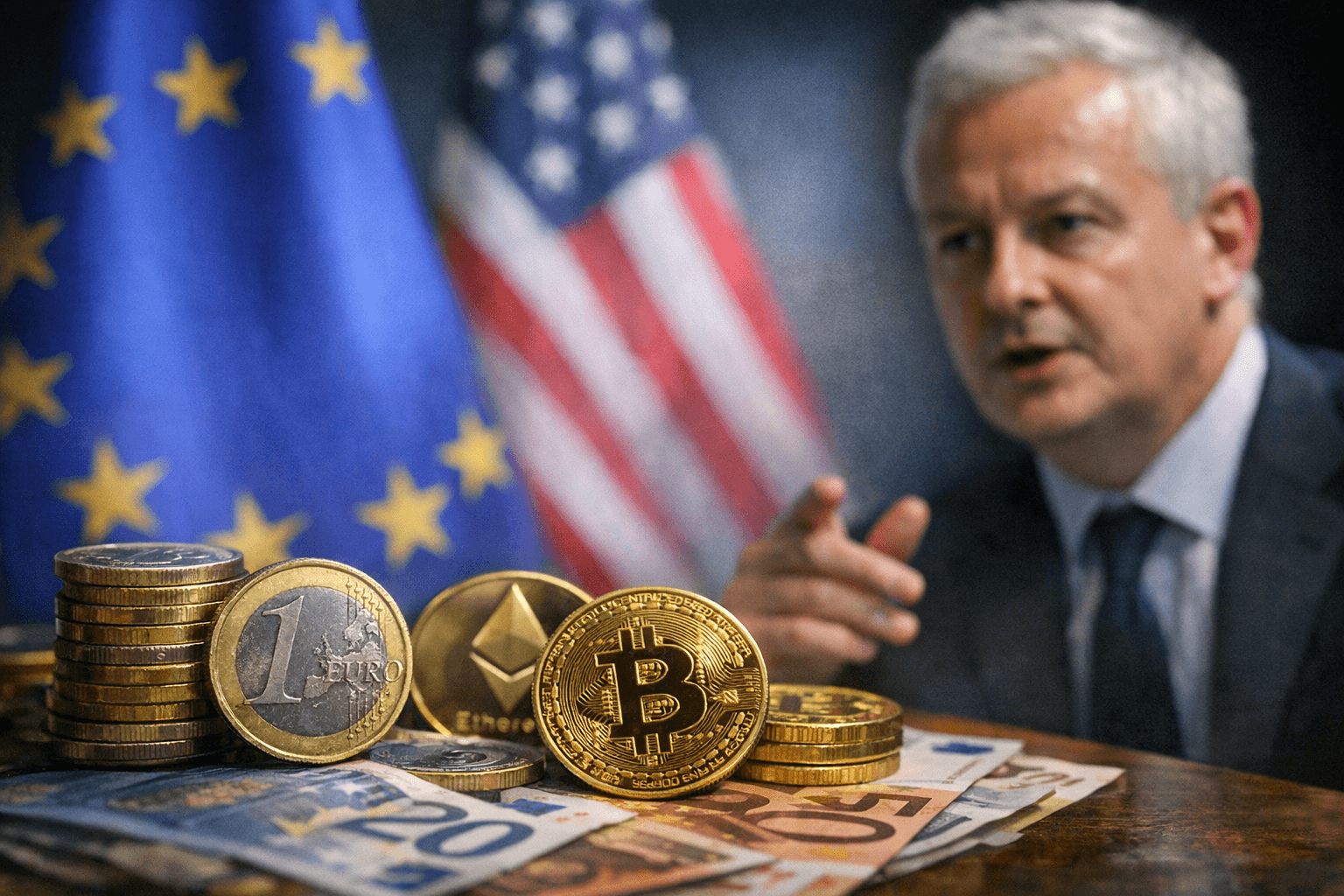
Europe’s contest with the United States over digital money moved into the open in Paris, where French Finance Minister Roland Lescure urged the bloc to build more euro-based stablecoins and push banks toward tokenized deposits. Lescure said the current volume of euro-pegged stablecoins was “not satisfactory,” framing the issue as one of sovereignty as much as finance.
His message cut to the heart of a broader European worry: if digital payments, tokenized assets and stablecoins remain dominated by dollar-linked infrastructure, the euro area risks extending U.S. influence deeper into the plumbing of modern finance. Lescure backed a euro-pegged stablecoin project involving banks such as ING, UniCredit and BNP Paribas, and said that effort was “what we need” and “what we want.”
The timing matters because Europe already has a regulatory base in place. The Markets in Crypto-Assets Regulation, known as MiCA, entered into force in June 2023 and sets uniform EU rules for crypto-assets including e-money tokens and asset-referenced tokens. At the same time, the European Central Bank has moved its digital euro project beyond the preparation phase, which ran from November 2023 to October 2025, and now into the next stage of technical work and legislative support. The ECB defines the digital euro as a central-bank-issued digital form of cash available to everyone in the euro area.
That backdrop explains why the debate is no longer confined to crypto traders. The ECB has said stablecoins in the euro area remain small, but it has also warned about risks tied to rapid growth, including de-pegging, runs and cross-border regulatory arbitrage. The Bank for International Settlements has gone further, saying stablecoins fall short of what is needed to serve as the mainstay of the monetary system, while tokenized deposits are more compatible with the singleness of money and settlement in central bank money.
The bank-led response is gathering shape. BNP Paribas said Qivalis, the Amsterdam-based entity formed by European banks, is seeking an electronic money institution license and is preparing to launch a euro-backed stablecoin in the second half of 2026. BNP Paribas said it operates in 64 countries and has nearly 178,000 employees, including more than 144,000 in Europe, underscoring the scale of the institutions trying to build an alternative to dollar-based digital payment rails.
The stakes now reach beyond one product or one conference. If euro stablecoins and tokenized deposits gain traction, Europe could strengthen its monetary autonomy while giving banks a foothold in digital payments. If they do not, the digital economy may keep reinforcing U.S. dominance, one transaction at a time.
This article was produced by Prism’s automated news system from verified source data, official records, and press releases, then run through automated quality and moderation checks before publishing. The system is built and supervised by the people who set the standards it runs under. Read our full AI policy.
Did this article answer your question?

