Fresno COG launches dual studies for urban streetcar, countywide zero-emission rail
Fresno COG has launched two linked rail studies: an urban light-rail/streetcar plan with a public draft expected by summer 2027 and a Caltrans-funded countywide zero-emission rail feasibility study.
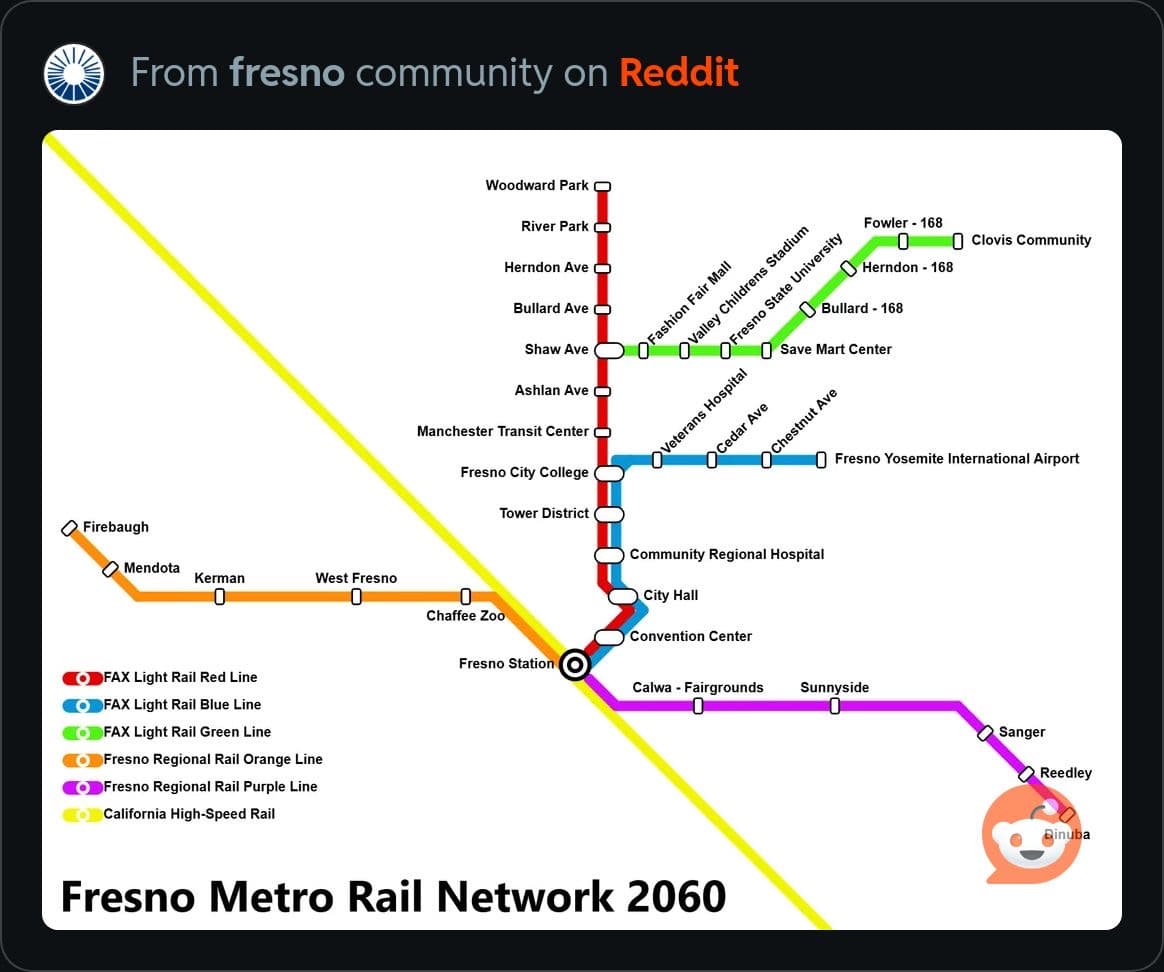
Fresno Council of Governments has launched two parallel planning efforts to expand passenger rail in Fresno County, moving from concept toward technical work that must show connections to the future downtown Fresno High-Speed Rail station. The first is an urban light rail or streetcar study tied to City of Fresno planning and Fresno Area Express, and the second is the Fresno County Regional Rail Feasibility Study, an RFP-led effort that is funded by Caltrans via a sustainable transportation grant.
Deputy Director Paul Herman, in an email to Fresnoland, said Fresno COG is "exploring light rail in response to community feedback." Fresnoland also reported Herman saying, "Officials plan to kick off the study this winter" and that "A public draft of the latest light rail study is expected by the summer of 2027." The urban work will examine corridors identified in a 2023 plan, including Blackstone Avenue and Cesar Chavez Avenue based on bus ridership trends, with Shaw Avenue between Fresno State and Clovis highlighted as a high-ridership corridor. Fremont-era context will factor in: the city’s early 20th century streetcar network and prior efforts such as Mayor Alan Autry’s 2007 Portland trip and a 2010 streetcar study through downtown, Chinatown, and the Tower District.
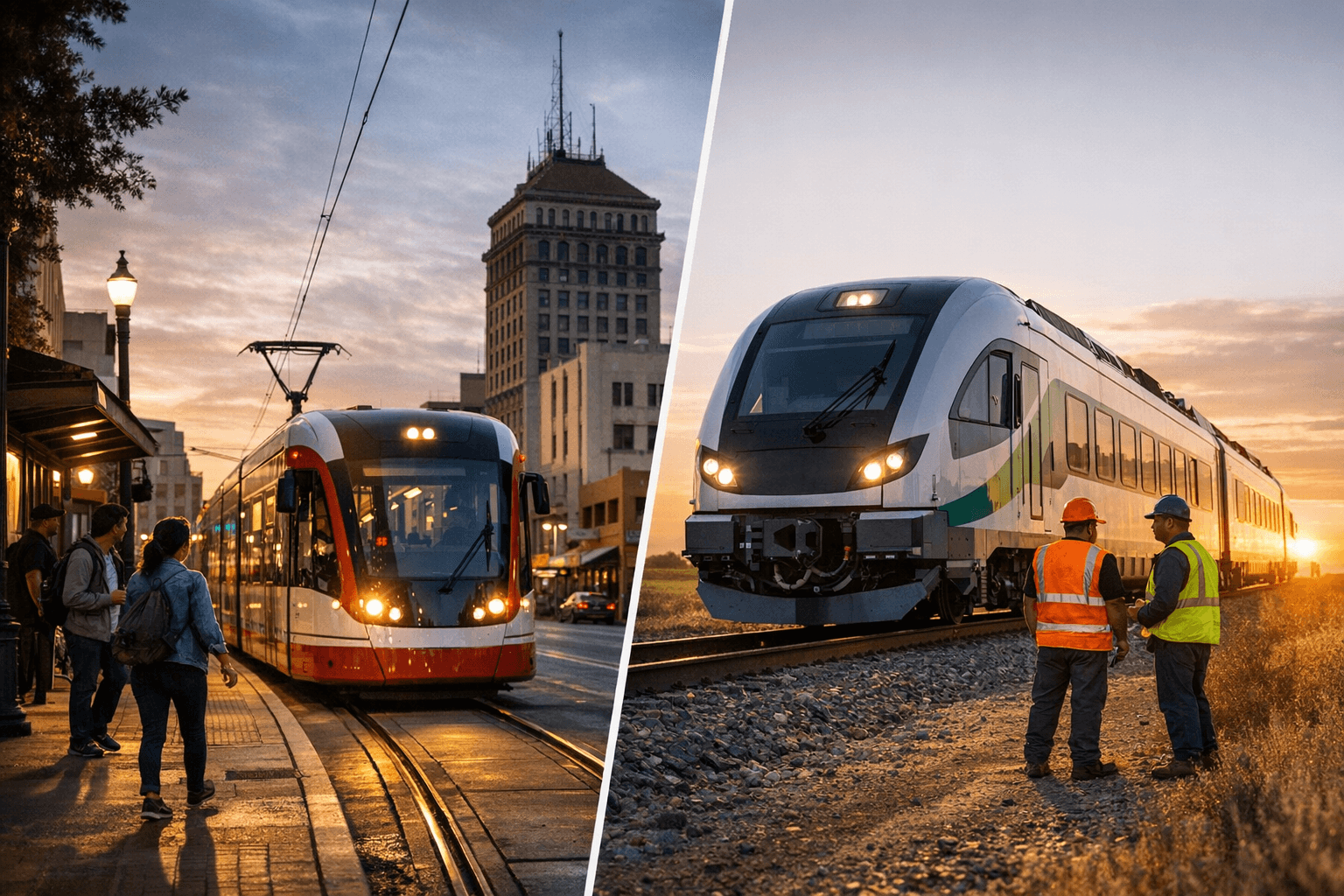
The countywide study, titled Fresno County Regional Rail Feasibility Study in Fresno COG agendas and the RFP, names DB E.C.O. North America Inc as the consultant team on project materials and specifies a focus on a zero-emission regional rail system. PublicInput’s project page frames the concept plainly: "Imagine Amtrak, but focused entirely within Fresno County." The RFP directs analysis of using existing San Joaquin Valley Railroad corridors to connect Fresno with Firebaugh, Kerman, Mendota, Reedley, San Joaquin, Fowler, Selma, Kingsburg, Sanger, and Dinuba, with the stated goal to "enhance connectivity between these communities and the future downtown Fresno High‑Speed Rail Station."
Technical deliverables in the Fresno COG RFP include a requirement to "Develop commercial zero‑emission rail vehicle technology memo with emphasis on operational capabilities, regulatory compliance, and comparative costs," and a Task 4 RFP objective to "Develop a preliminary operations plan for the overall regional rail network that shows connectivity to the future California High‑Speed Rail system, as well as local and regional public transit systems. This plan will include a conceptual schedule with running times between communities and connections between the different regional rail lines." The RFP also calls for ridership demand modeling and preliminary operations planning tied to those conceptual schedules.
Feasibility work must reckon with existing modeling and density thresholds in Fresno COG planning. A Measure C planning study notes that "at minimum, central business districts with 15,000 to 20,000 jobs per square mile are necessary for light rail to be considered" and that "Fresno City and County currently fall short of these thresholds." That same study found a proposed Highway 99 corridor between Fresno and Kingsburg was dropped because planned residential and employment densities were insufficient.
Regional timing and policy context are immediate. Fresnoland reported the regional transportation board "greenlit a study in May" to explore rail across the county, the Measure C sales tax renewal negotiations are slated for the November 2026 ballot, and San Joaquin Valley Council of Governments materials place early operations of the Merced-Fresno-Bakersfield high-speed rail segment between 2030 and 2033. PublicInput and SJVCOG materials also identify local benefits from zero-emission service, including reduced air pollution, quieter faster trips, and improved access to destinations such as the Fresno County Fairgrounds and Chaffee Zoo at Roeding Park.
Next steps to watch include the Fresno COG kickoff described by Herman, RFP progress under DB E.C.O., the vehicle technology memo and ridership modeling deliverables, and the public draft tied to the urban light rail work anticipated by summer 2027.
Know something we missed? Have a correction or additional information?
Submit a Tip