From Kennedy to Artemis, NASA’s milestones mark America’s space age
From Kennedy’s moonshot to Artemis, NASA’s biggest milestones trace how space became a test of American ambition, risk, and national purpose.
The American space program has never been just about rockets. It has been one of the clearest expressions of national ambition, turning Cold War rivalry, technical daring, and public investment into milestones that still shape how the United States sees itself. As the country marks its 250th year, NASA is pairing that legacy with Artemis, its next bid to define what comes after Apollo and the Space Shuttle.
Kennedy sets the goal
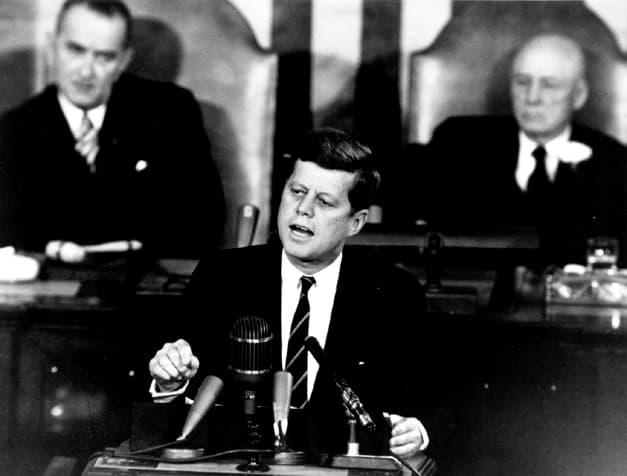
The modern era began with a political challenge as much as a scientific one. On May 25, 1961, President John F. Kennedy told Congress the United States should commit itself to landing a man on the Moon and returning him safely to Earth before the end of the decade. The speech came at a Cold War moment when the space race with the Soviet Union was central to national prestige and policy, and NASA has long treated it as the statement that helped define the agency’s mission.
That goal was not abstract. It gave the country a deadline, a measurable target, and a public reason to build the industrial and scientific capacity to reach it. In an era when Washington was trying to prove American competence on the world stage, the Moon became more than a destination: it became a national project.
Apollo turns the promise into proof
Apollo 11 gave Kennedy’s pledge its defining answer. The mission launched on July 16, 1969, and on July 20, 1969, Neil Armstrong and Buzz Aldrin walked on the Moon, with Michael Collins orbiting above in the command module. The sequence mattered as much as the landing itself: launch, descent, first steps, and return formed the most visible fulfillment of a presidential promise in the history of American science.
Apollo 11 was also a demonstration of what large-scale federal investment could do when focused on a single national objective. It stitched together engineering, manufacturing, communications, computing, and human spaceflight into a result that was watched around the world. The mission did not just reach the Moon; it translated American resources into symbolic power.
The shuttle era changes the model
If Apollo was the peak of a single-purpose race to the Moon, the Space Shuttle era marked a different ambition: routine access to orbit. Columbia made the first shuttle launch on April 12, 1981, beginning a program that NASA describes as a fleet setting records for 30 years of missions. The shuttle program ultimately flew 135 missions before its final landing on July 21, 2011.
The shuttle changed the visual language of American spaceflight. Instead of one-off triumphs, it promised reuse, endurance, and a more permanent presence in space. It also became the backbone of U.S. human space operations for three decades, carrying astronauts, satellites, and major scientific hardware while making the launch system itself part of the story.
Challenger’s loss defined the cost of ambition
That same era also exposed the consequences of pushing too hard and too fast. Challenger broke apart 73 seconds after launch on January 28, 1986, killing its seven-member crew in what became one of the most devastating moments in American aerospace history. STS-51L was the 25th mission of the shuttle program and the final flight of Challenger, which had already completed nine successful missions before the accident.
The loss landed differently because the shuttle was supposed to embody reliability. Instead, the disaster forced a national reckoning over risk, engineering judgment, and the price of treating spaceflight as routine. Challenger became part of the country’s institutional memory, a reminder that every launch carries both technical achievement and human consequence.
Artemis returns the Moon to the center of strategy
Artemis is NASA’s answer to the question of what comes next after Apollo and the shuttle. The agency says the program will return humans to the Moon and prepare for Mars, linking near-term lunar flight to a longer interplanetary strategy. Artemis I served as the first integrated flight test of NASA’s Orion spacecraft, the Space Launch System, and upgraded Exploration Ground Systems, giving the agency a chance to validate the architecture before astronauts return to the stack.
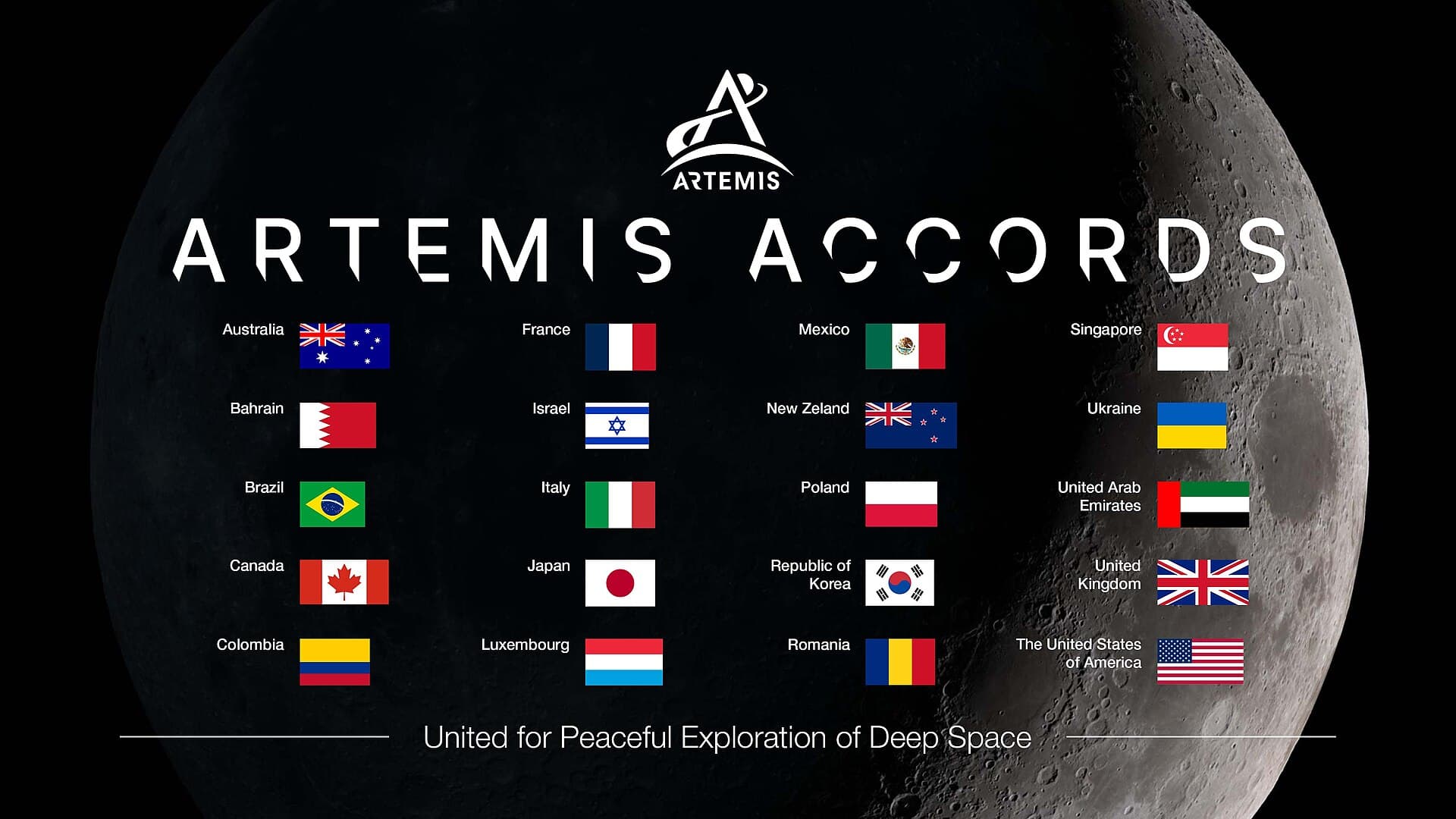
Artemis II is the next major step. NASA describes it as the first crewed lunar flyby in more than 50 years, with four astronauts on a roughly 10-day mission around the Moon. The mission will not repeat Apollo 11’s landing, but it will move human spaceflight back into deep-space operations, where time, distance, and reliability all matter in ways low-Earth orbit does not.
The program also reflects a changed national environment. Spaceflight now sits at the intersection of government, industry, and long-term strategy, with public agencies setting the destination and private-sector capability carrying more of the hardware and logistics load than in the Apollo era. That shift raises a larger policy question: whether the United States still has a single, unifying space mission, or whether ambition in space is now distributed across multiple goals, contractors, and timelines.
Freedom 250 links space to the semiquincentennial
NASA is using the country’s 250th anniversary to tie its current missions back to the older American story of exploration and identity. Through its Freedom 250 initiative, the agency is updating storytelling, imagery, and tributes to mark the semiquincentennial. That includes the America 250 emblem on the twin solid rocket boosters of the Space Launch System for Artemis II.
The symbolism extends beyond the launch pad. NASA’s Chandra X-ray Observatory has released red, white, and blue cosmic images for the 250th celebration, turning the national milestone into an astronomical one. Together, those efforts show how deeply space still functions as civic language in the United States: not just as science, but as a way of defining the country’s reach, confidence, and future.
From Kennedy’s 1961 directive to Artemis II’s planned lunar flyby, NASA’s milestones mark the moments when American power chose to measure itself against distance. The pattern is unmistakable: the Moon, the shuttle, the setbacks, and the return all show that space remains one of the few arenas where public purpose, technological capacity, and national identity still converge.
This article was produced by Prism’s automated news system from verified source data, official records, and press releases, then run through automated quality and moderation checks before publishing. The system is built and supervised by the people who set the standards it runs under. Read our full AI policy.
Did this article answer your question?