From volunteer to Haiti’s top emergency medevac operator
A volunteer who arrived after Haiti’s 2010 quake now runs the country’s closest thing to a medical 911, moving patients by helicopter when roads and hospitals cannot.
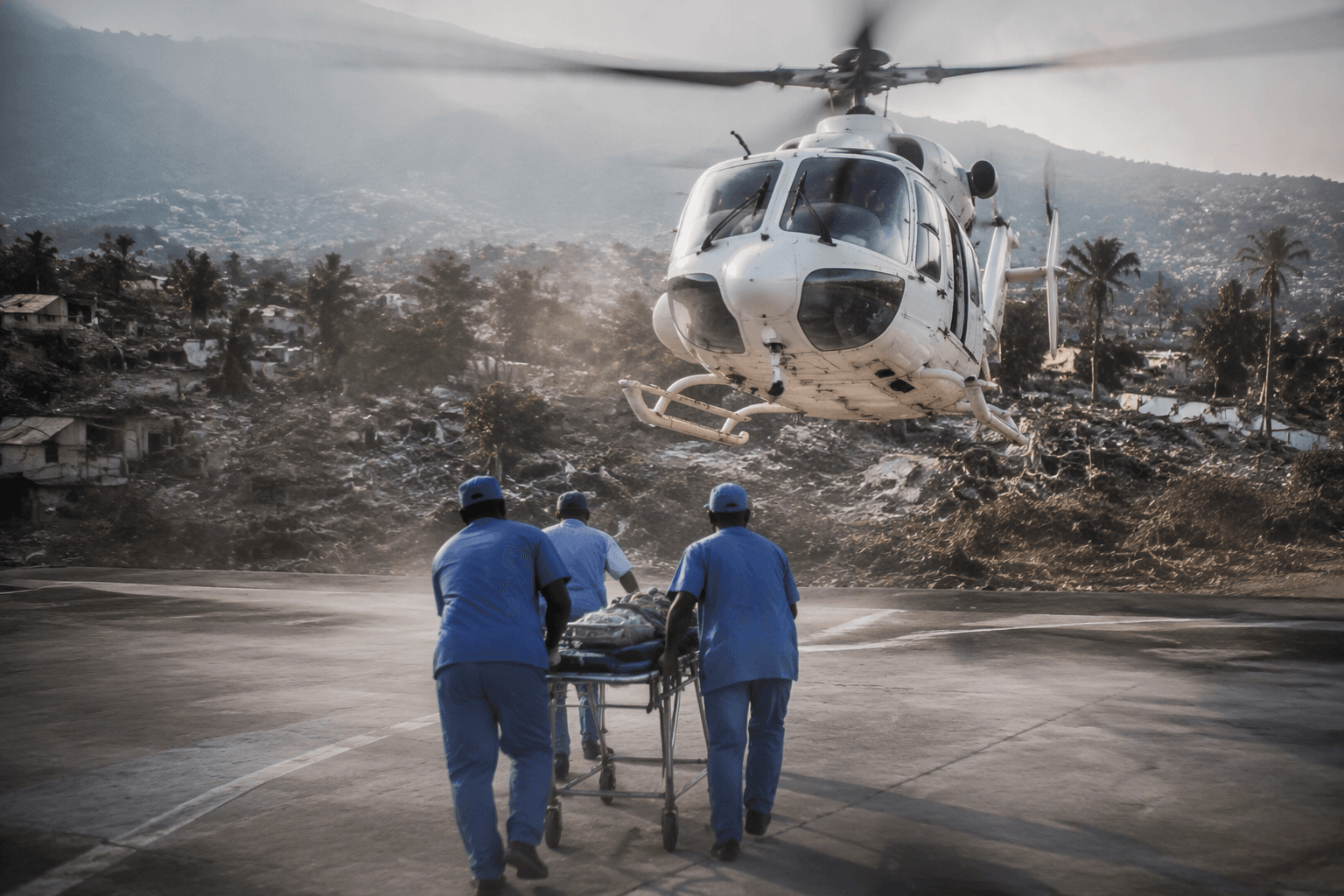
A volunteer who arrived in Haiti after the 2010 earthquake ended up building the country’s closest thing to a medical 911. Sixteen years later, Stacy Librandi Bourne runs what is described as Haiti’s largest emergency ambulance and medevac service, a system that exists because the state’s emergency network never recovered enough to meet the need.
From earthquake volunteer to emergency operator
Librandi went to Haiti in 2010 as a volunteer new to disaster relief, stepping into a country whose health system was already under extreme strain. A 2026 CBS News segment framed her arc plainly: a volunteer arrived after the quake and now runs a Haitian 911. That transformation matters because it is not just a personal success story, it is evidence of an institutional vacuum that a nonprofit air rescue operation has spent years trying to fill.
The organization she runs, HERO Client Rescue, describes itself as a 24/7 emergency ambulance and medevac flight rescue service in Haiti. It says its mission is to bridge critical medical and emergency infrastructure gaps in the country, language that captures the core problem behind the operation: when roads, hospitals, security conditions, and terrain all block rapid care, the emergency response system becomes a transport problem as much as a medical one.
How the service works in practice
By 2025, the operation had become routine enough that Mitch Albom described HERO Client Rescue as flying nearly every day in Bell 407 helicopters. Each aircraft seats six passengers at a time, a detail that shows how limited but essential the capacity is. The flights carry patients from Port-au-Prince to distant hospitals, turning the helicopter fleet into an emergency bridge between the capital and care that would otherwise be out of reach.
HERO’s own site says the service can request urgent helicopter evacuation and medevac support. On social media, the organization says it can cover the cost of flights for cases in Haiti and that it provides humanitarian and emergency response operations. Taken together, those details show a model that is part ambulance service, part humanitarian airlift, and part ad hoc national rescue line.
The scale of the need is visible outside the organization itself. The U.S. Embassy in Haiti maintains a page listing charter flights and air ambulance companies, a striking reminder that emergency transport is a recurring need rather than a rare contingency. In a country where getting a patient to the right hospital can be a crisis in itself, the existence of a public embassy directory for air transport options is revealing.
Why helicopters became necessary long before today’s violence
Librandi Bourne has said on Facebook that helicopters were needed for urgent medical transport in Haiti even before gangs tightened their grip on the country, because the terrain made ground transport difficult. That point is important because it shifts the story away from a single security crisis and toward a deeper structural problem. Even without armed groups blocking roads, Haiti’s geography alone can make fast medical transfer impossible.
The security collapse has only widened the gap. When the emergency road network is unreliable and hospitals are hard to reach, air transport stops being a luxury and becomes a backstop for survival. That is why the same helicopter that might be seen as extraordinary in another country has become the practical center of emergency medical movement in Haiti.
The nonprofit infrastructure behind the aircraft
The operation is not standing on one plane and one founder alone. The University of Florida International Center lists an active international memorandum of understanding titled Haitian Emergency Response Operations Ambulance, with an expiration date of November 29, 2026. That kind of agreement signals formal institutional ties beyond Haiti’s borders, the sort of structure that often props up essential services in fragile settings when local systems cannot supply enough capacity.
There is also a Florida footprint around the work. HERO Foundation lists contact information in Coral Springs, Florida, underscoring how much of the operational support sits outside Haiti even as the flights are inside the country. That split between Haitian need and external nonprofit infrastructure is central to understanding how the service functions: the patients are in Haiti, but much of the financing, administration, and institutional scaffolding is connected to the United States.
What her story says about Haiti’s long-term fragility
HERO’s growth into humanitarian flights and search and rescue says as much about Haiti’s governance gap as it does about one company’s ambition. Librandi Bourne has said the country’s need is pushing the program to expand beyond medevac into additional services, including search and rescue. That expansion makes sense in a place where one emergency often exposes several others at once: medical access, transport, security, and disaster response all collapse together.
The result is a system built around improvisation but sustained by repetition. Nearly daily helicopter flights, six seats at a time, from Port-au-Prince to distant hospitals are not a sign of a healthy emergency state. They are the clearest evidence that years after the earthquake, Haiti still relies on a nonprofit air rescue network to do the work that a robust public system would normally perform.
In Haiti, the question is no longer whether one volunteer stepped up after catastrophe. It is how a country comes to depend for so long on a private humanitarian air bridge to deliver something as basic as emergency medical transport.
This article was produced by Prism’s automated news system from verified source data, official records, and press releases, then run through automated quality and moderation checks before publishing. The system is built and supervised by the people who set the standards it runs under. Read our full AI policy.
Did this article answer your question?