G7 leaders meet in France after U.S.-Iran war deal announcement
Trump’s U.S.-Iran deal announcement upended the G7 opening in Évian, forcing allies to confront war, Ukraine and questions of unity all at once.

Donald Trump’s announcement of a preliminary agreement with Iran to end their war reshaped the G7 opening in Évian-les-Bains, where leaders gathered expecting to manage war risk and instead faced the political shock of Washington’s latest move. The lakeside summit in France quickly became a test of whether allies would see the deal as stabilizing leadership or another unilateral decision they would have to absorb.
The June 15 to 17 meeting was being held under France’s rotating G7 presidency at Évian, on the shore of Lake Geneva and close to the Swiss border. The European Union was represented by European Council President António Costa and European Commission President Ursula von der Leyen, underscoring the broader stakes for Europe as war and diplomacy collided in one of the group’s most sensitive gatherings in years.
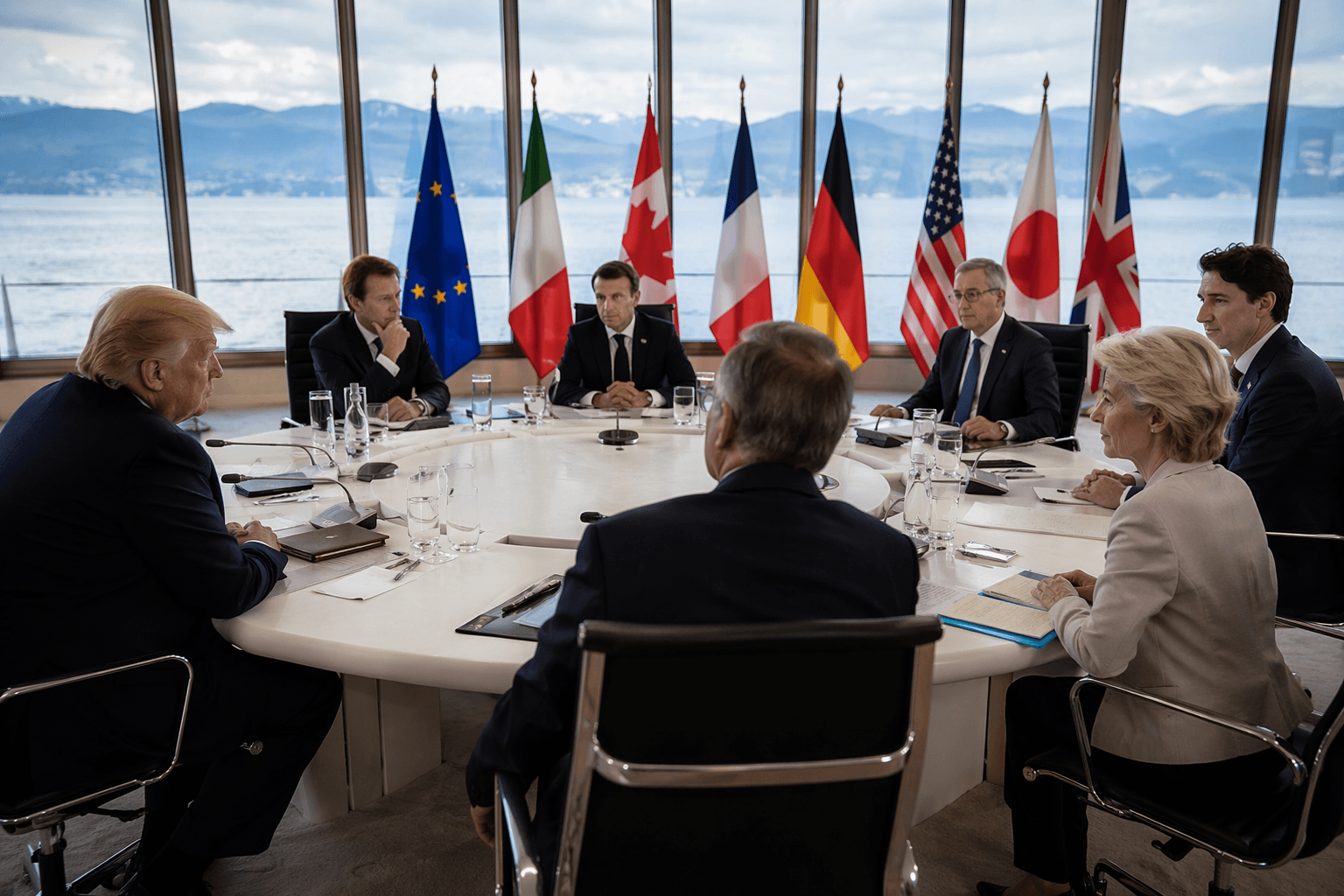
Reuters said the wars in the Middle East and Ukraine were set to dominate the agenda, while France pushed to frame the summit around unity and restraint rather than confrontation with Trump. That effort came as Trump prepared to speak with allies he has often criticized for not joining the conflict, putting him in direct conversation with leaders who were not part of the U.S.- and Israel-linked war with Iran.
France has said the Évian talks were meant to produce responses to conflicts, economic imbalances, fragile global governance and declining development aid. The Élysée described the site as a return to the international stage 23 years after the 2003 G8 summit in Évian, a symbolic choice that now carries fresh urgency as Europe faces war on its eastern flank and renewed instability across the Middle East.
Bloomberg reported that Trump was expected to hold bilateral meetings on the sidelines with leaders from France, Qatar, the United Arab Emirates, Egypt and India, a sign that the Iran agreement was drawing in partners far beyond the G7 table. Switzerland also said it had mobilized major security preparations because the summit site sits near its border, adding a layer of operational pressure to an already charged diplomatic week.
For Emmanuel Macron, the immediate challenge was less the setting than the politics. France sought to keep Trump engaged through the full summit, but the new deal shifted the focus from shared strategy to whether the G7 could still project a common line when Washington had already moved first.
This article was produced by Prism’s automated news system from verified source data, official records, and press releases, then run through automated quality and moderation checks before publishing. The system is built and supervised by the people who set the standards it runs under. Read our full AI policy.
Did this article answer your question?


