Gas prices hit four-year high, squeezing budgets and consumer sentiment
Gasoline hit $4.56 over Memorial Day weekend, the highest holiday average in four years, and lower-income families felt the squeeze most.

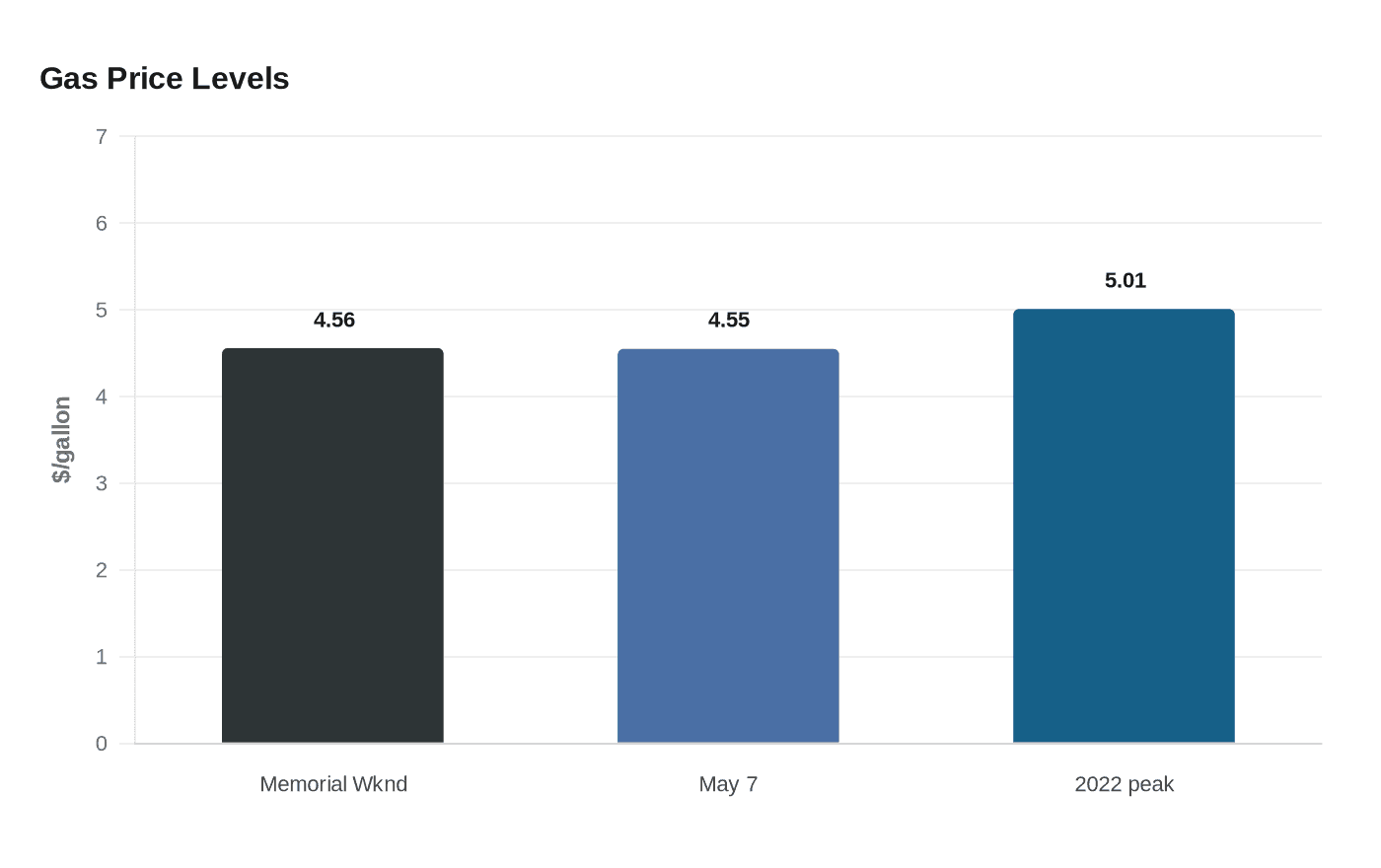
Americans went into Memorial Day weekend paying the highest gas prices for the holiday in four years, with the national average for regular gasoline at $4.56 a gallon, according to AAA. That was just above the $4.55 average AAA reported on May 7, and roughly $1.40 higher than a year earlier, leaving drivers near the highest level since 2022, when the national average peaked at $5.01.
The jump matters because gasoline is not a discretionary expense for millions of households. Families that must drive to work, school and medical appointments cannot simply wait out a price spike, so every extra dime at the pump compresses the rest of the monthly budget. In practice, that means less breathing room for other routine spending and a faster transmission of fuel costs into broader inflation fatigue.
The burden has fallen hardest on households with the least flexibility. Survey results from the University of Michigan showed lower-income consumers and people without college degrees were especially sensitive to higher gasoline prices. An Associated Press report on May 7 found that lower-income Americans sharply reduced gas consumption in the month after the Iran war, yet still ended up spending more at the pump, a sign that restraint alone cannot offset a price shock when driving remains unavoidable.
That strain showed up in the national mood. Reuters reported on May 22 that U.S. consumer sentiment fell to a record low in May as surging gasoline prices linked to the Iran war intensified affordability concerns. AP-NORC polling conducted May 14-18, with 1,117 adults and a margin of sampling error of plus or minus 3.8 percentage points, found concern about the economy still elevated, reinforcing how fuel prices can spill into wider anxieties about the cost of living.
The spring spike also arrived as travelers were still preparing to hit the road in record numbers for Memorial Day, according to AAA, suggesting that higher prices were reshaping choices without stopping travel altogether. The U.S. Energy Information Administration’s gasoline and diesel fuel update, released May 19, provided the official price backdrop for the surge. For many households, the message was blunt: even a modest rise at the pump can force tighter spending, and when fuel costs rise nationwide, the pressure reaches far beyond the gas station.
This article was produced by Prism’s automated news system from verified source data, official records, and press releases, then run through automated quality and moderation checks before publishing. The system is built and supervised by the people who set the standards it runs under. Read our full AI policy.
Did this article answer your question?