Geelong refinery fire threatens Australia’s petrol supplies amid global crunch
A fire at Geelong’s refinery hit one of Australia’s last fuel plants, tightening pressure on petrol supply as reserves, imports and prices already face strain.
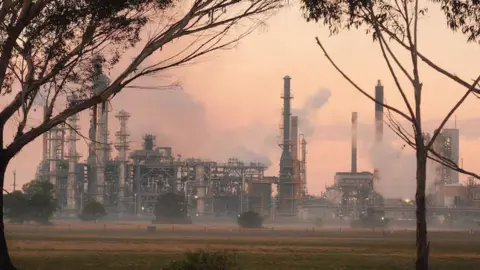
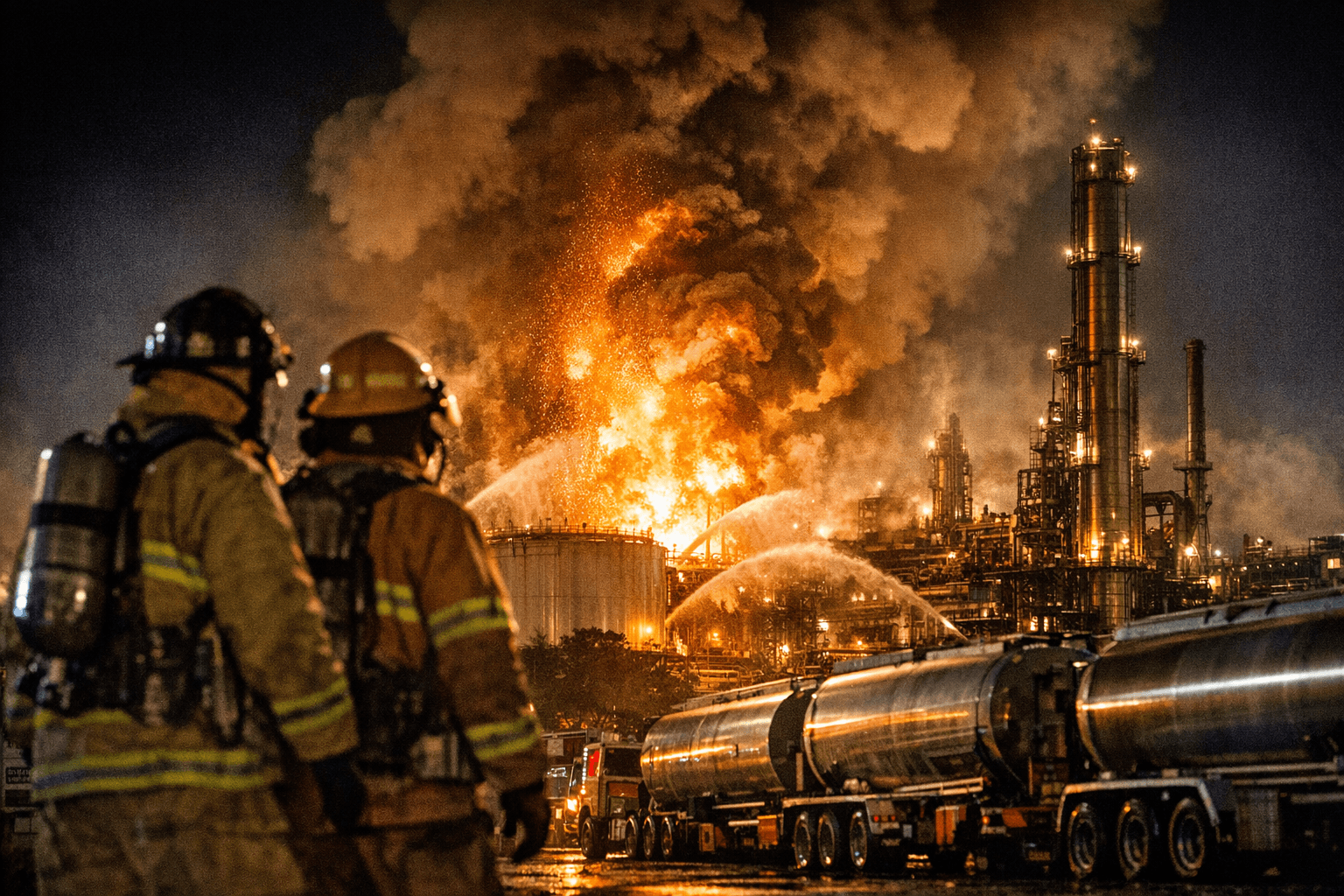
A fire at Viva Energy’s Geelong refinery has put one of Australia’s most important fuel plants under pressure just as global supply conditions have tightened. The blaze broke out just after 11pm at the Corio site near Geelong, and the refinery, which supplies about 50 per cent of Victoria’s fuel and 10 per cent of Australia’s fuel, was still facing an uncertain production outlook as crews worked to contain it.
The Geelong plant is one of only two operational oil refineries left in the country, alongside Ampol’s Brisbane refinery, making any disruption far more significant than a local industrial incident. Viva Energy says the site can process up to 120,000 barrels of oil a day and employs more than 1,100 people. It has been operating since 1954, leaving Australia with far less domestic refining capacity than it once had.
Federal Energy Minister Chris Bowen said the fire would affect petrol production for some time, although the scale of the disruption was still unclear. Viva Energy chief executive Scott Wyatt said the company’s first priority was making the site safe before assessing the full impact, adding that some petrol-producing units were not affected even though petrol remained among the products that could be hit. Refinery manager Bill Patterson said other units might be able to pick up the slack if production was interrupted.
Fire Rescue Victoria described the blaze as unprecedented, while the Country Fire Authority issued a Watch and Act warning for part of Geelong before later downgrading it after the risk fell. All refinery staff were accounted for, easing fears of casualties at a facility that is a major employer and a critical piece of national infrastructure.
The fire comes as Australia already sits on a narrow fuel cushion. In March, the federal government said Australia held about 36 days of petrol supply, 29 days of jet fuel and 32 days of diesel, after recently releasing about six days’ worth of petrol and five days’ worth of diesel from emergency reserves. With the Middle East conflict already adding pressure to global fuel markets, any prolonged outage at Geelong could force more imports into an already strained system and leave pump prices more exposed to overseas shocks.
The bigger risk is structural. In 2025, Viva in Geelong and Ampol in Brisbane produced 12 billion litres of petrol, diesel and jet fuel, about 20 per cent of Australia’s annual needs. The Department of Climate Change, Energy, the Environment and Water says the Fuel Security Services Payment, which began on 1 July 2021, is designed to keep those refineries running, with operators committing to continue until at least 30 June 2027 and possibly to 30 June 2030. The Geelong fire has shown how thin that margin is, and how quickly a single incident can ripple through supply chains, reserves and the national fuel balance.
This article was produced by Prism’s automated news system from verified source data, official records, and press releases, then run through automated quality and moderation checks before publishing. The system is built and supervised by the people who set the standards it runs under. Read our full AI policy.
Did this article answer your question?

