German carmakers lose ground as tariffs and rivals bite in 2026
German carmakers’ revenues fell 4% as tariffs, China weakness and EV costs hit, a sign the strain could push up U.S. prices and reshuffle supply chains.
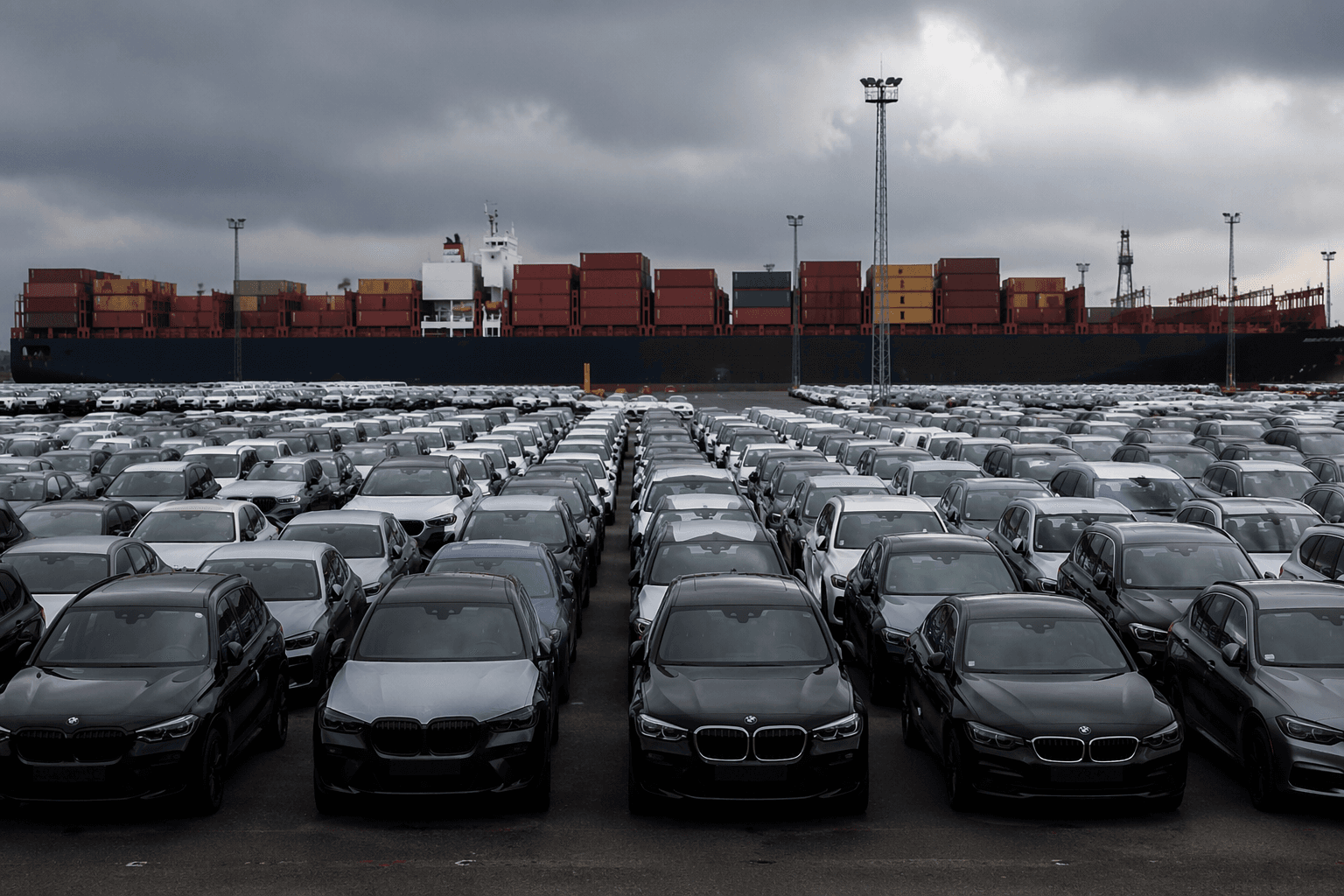
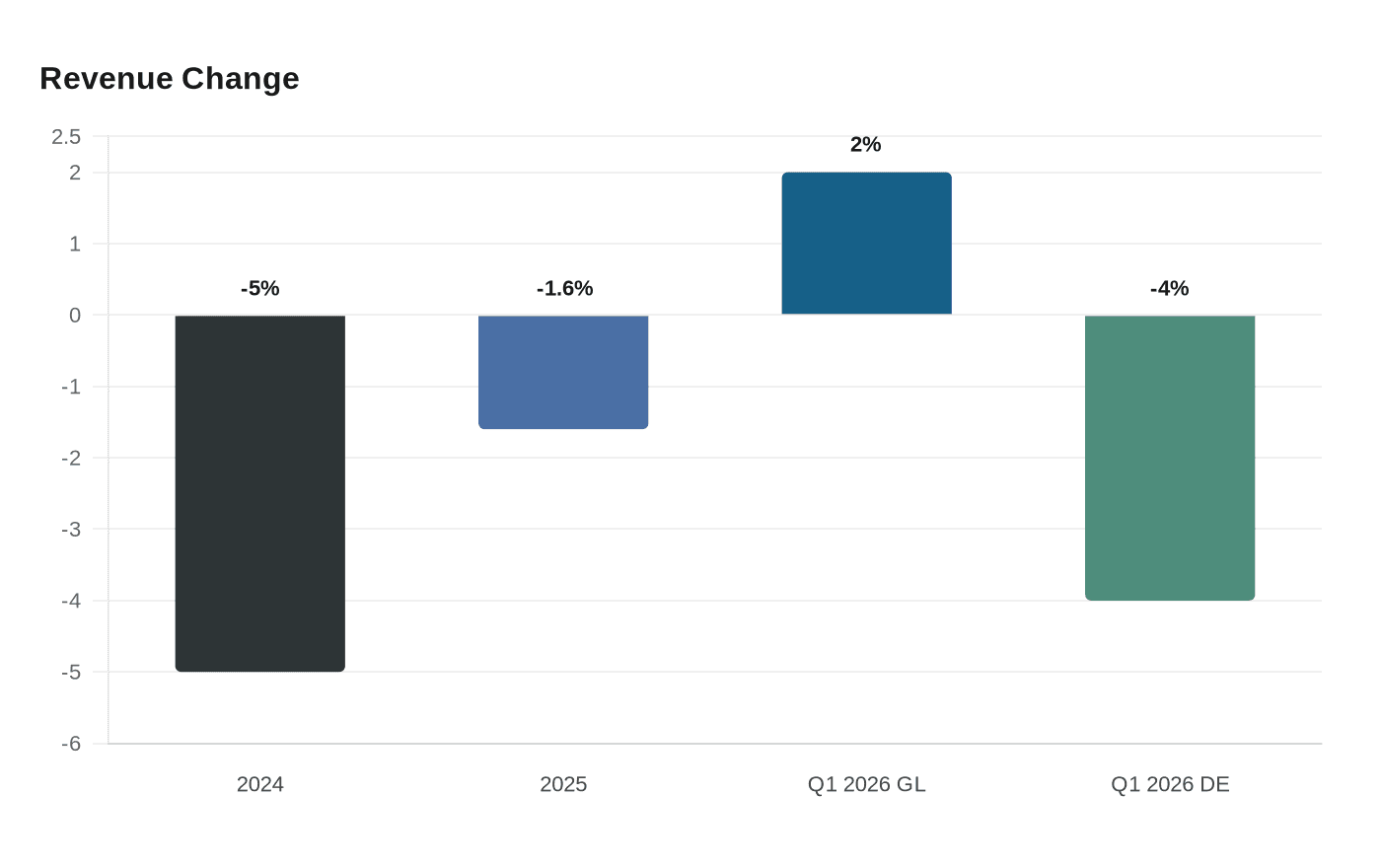
Germany’s carmakers are losing their edge just as the global auto market tilts further toward tariffs, software costs and electric-vehicle upheaval. An EY analysis of the first quarter of 2026 found that revenue at the world’s major auto groups rose 2%, helped by Japanese and U.S. manufacturers, while German brands saw revenue fall 4%, a split that points to a deeper competitiveness problem rather than a one-off slowdown.
Constantin Gall, EY’s sector specialist, said the German industry is in “a profound structural transformation,” with losses in the United States and China, expensive overcapacity, heavy software spending and a slow transition to electric mobility all weighing on performance. The pressure is not confined to factories in Germany. Higher fuel prices and inflation tied to the Iran crisis could further soften European demand, while tariffs threaten to make imported vehicles and parts more expensive for American buyers and more difficult for suppliers that serve both sides of the Atlantic.
The damage is already visible in the German auto economy. EY said industry revenue fell 1.6% in 2025 after a 5% decline in 2024. Employment dropped 6.2% to 725,000, the lowest level in 14 years. Auto-supplier insolvency filings reached a 14-year high, with 39 filings between January and November 2025, while supplier employment has fallen 23% since 2019, equal to 73,000 lost jobs. Those numbers matter well beyond Berlin or Stuttgart because German carmakers sit at the center of a dense supplier network that stretches into logistics, metals, electronics and machine tools.
The strain has also spread to the industry’s balance sheets. EY said the 19 largest automakers cut combined profit 59% in 2025, to 59 billion euros from 143 billion euros a year earlier. Average profit margin fell to 2.8%, a 10-year low, from 6.7%, and European and U.S. automakers wrote down nearly 60 billion euros on revised EV strategies. That reset suggests the old playbook, built on scale manufacturing and export dominance, is no longer enough in a market where software and battery platforms set the pace.
The tariff risk is especially important for the United States market. The German Association of the Automotive Industry warned in March 2025 that proposed 25% U.S. tariffs on imported passenger cars and light commercial vehicles would send a disastrous signal for rules-based trade and burden global supply chains. The European Automobile Manufacturers’ Association has pushed for a negotiated settlement and for the European Union to reduce costs and regulatory burdens. German exporters still shipped 3,174,853 passenger cars in 2025, but that reliance on foreign demand leaves the industry exposed if trade barriers harden. Volkswagen said it delivered 2.05 million vehicles worldwide in the first quarter of 2026, down 4% from a year earlier, and BMW reported deliveries of 565,748, down 3.5%. With China still punishing old strengths and U.S. trade policy now a live threat, the weakness in Germany looks less like a national problem than an early warning for the entire auto industry.
This article was produced by Prism’s automated news system from verified source data, official records, and press releases, then run through automated quality and moderation checks before publishing. The system is built and supervised by the people who set the standards it runs under. Read our full AI policy.
Did this article answer your question?

%3Amax_bytes(150000)%3Astrip_icc()%2FCertificate-of-deposit-2301f2164ceb4e91b100cb92aa6f868a.jpg&w=1920&q=75)
