German exports rise unexpectedly in March as industrial output falls
German exports beat forecasts in March, but a 0.7% drop in industrial output kept the recovery story in doubt. The lift came from Europe, not a broad rebound.
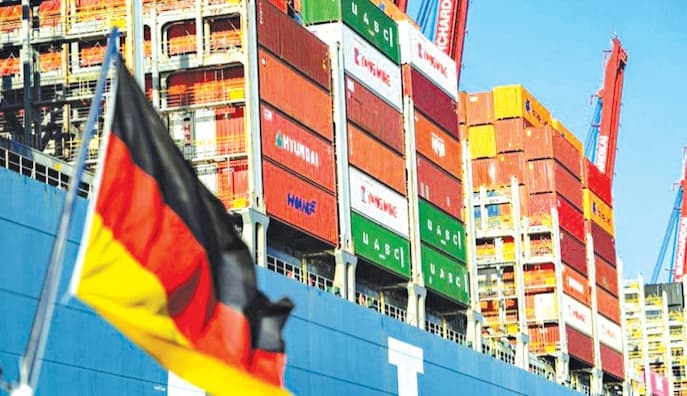
German exports rose unexpectedly in March, but the stronger trade figure did little to disguise a still-fragile industrial backdrop. Exports increased 0.5% from February to €135.8 billion, the Federal Statistical Office said, easily beating a Reuters poll that had pointed to a 1.7% decline.
The detail that mattered most was where the strength came from. Shipments to other European Union countries helped lift the total, while exports outside the bloc weakened. Euro-area exports rose 4.1% to €54.8 billion, but exports to non-EU countries fell 3.3% to €57.4 billion, according to trade data cited by Anadolu Agency. Germany’s largest single export market remained the United States, yet shipments there dropped 7.9% on the month to €11.2 billion and fell 21.4% from a year earlier, the sharpest annual decline since June 2020.
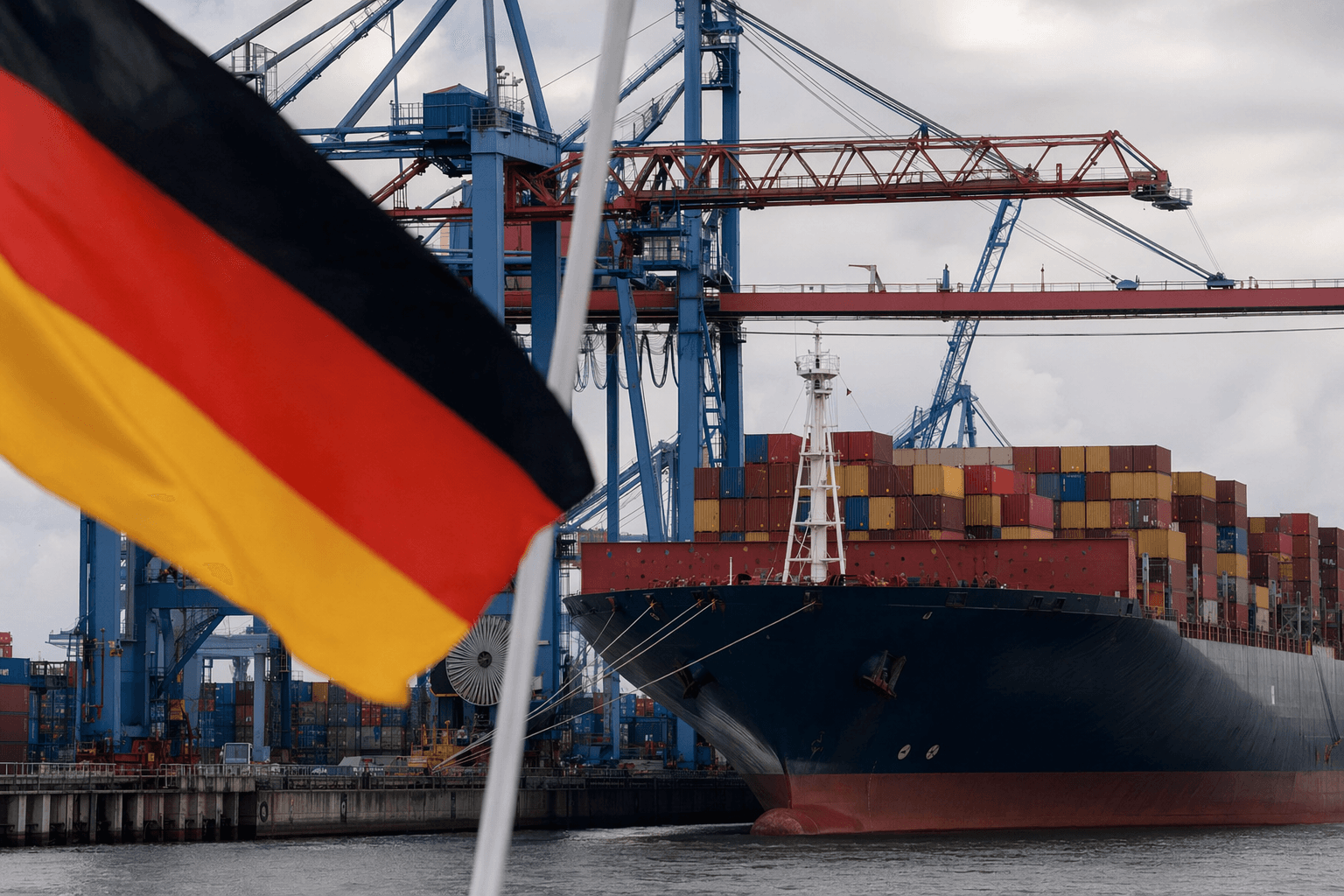
That makes the March increase look less like a broad demand rebound than a partial offset from nearby markets. Germany’s trade surplus narrowed less than feared, but the composition of the numbers showed how dependent Europe’s biggest economy remained on regional demand at a time when global trade was uneven and the U.S. market was slipping.
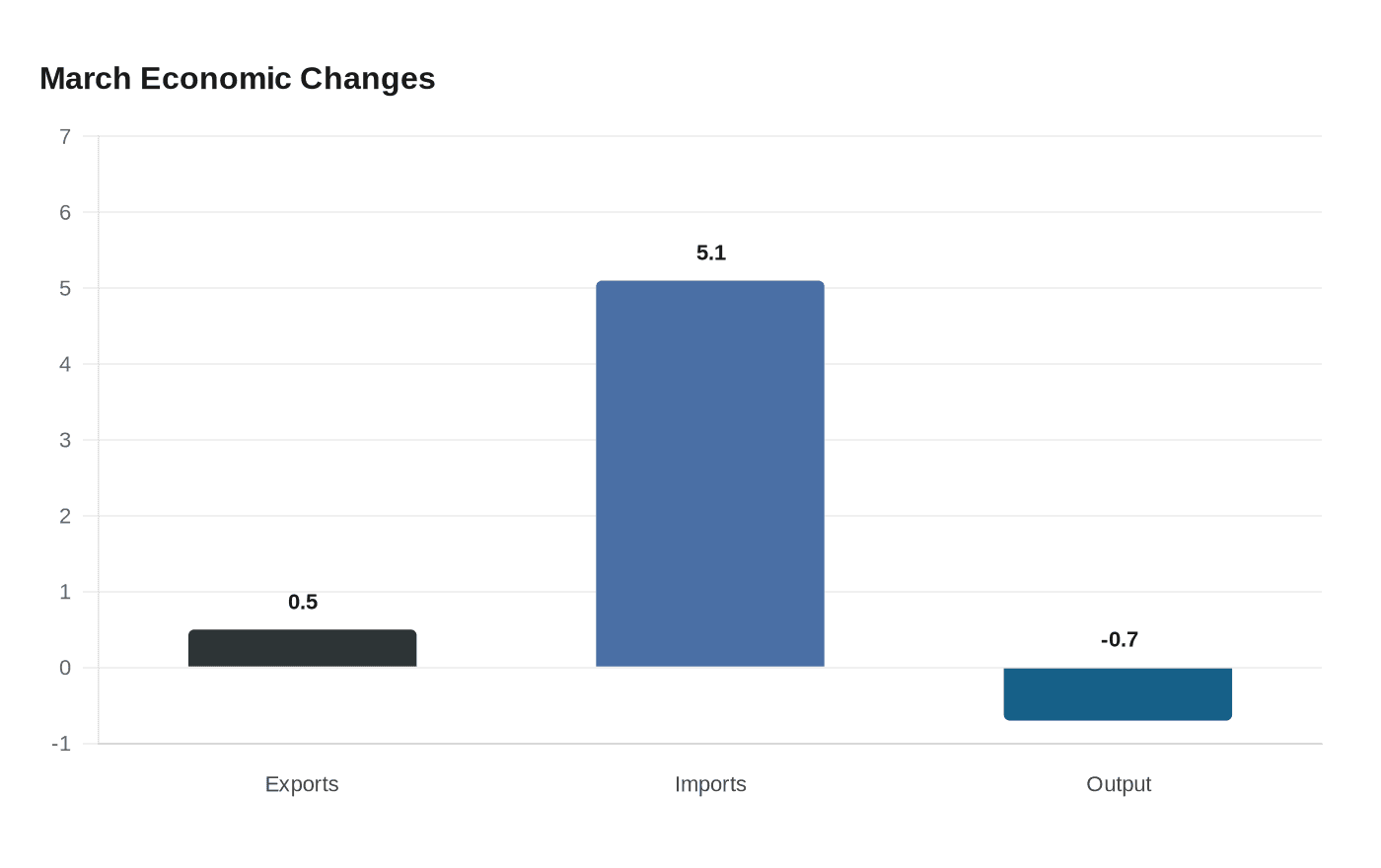
Imports also moved higher, adding another sign that the headline export gain was not translating into a clean improvement in the wider economy. German imports rose 5.1% month on month to €121.5 billion in March, leaving a trade surplus of €14.3 billion. On a yearly basis, exports were up 1.9% and imports rose 7.2%.
The industrial picture was weaker still. Industrial production fell 0.7% in March, missing expectations for a 0.5% rise and underscoring the strain on factories after months of soft manufacturing demand, high energy costs and geopolitical uncertainty. Reuters-linked reporting said weaker energy production helped drive the decline.
For Berlin and investors trying to judge whether Germany is stabilizing, the mixed March data offered only limited comfort. The export surprise may ease fears of a steeper slowdown, but it does not erase the structural problems weighing on output, investment and factory activity. For now, the better trade number looks more like a misleading bright spot than proof that the economy has turned a corner.
This article was produced by Prism’s automated news system from verified source data, official records, and press releases, then run through automated quality and moderation checks before publishing. The system is built and supervised by the people who set the standards it runs under. Read our full AI policy.
Did this article answer your question?

