German state inflation cools, signaling softer national June reading
Inflation cooled in four major German states in June, a sign the national reading may ease too, even as energy costs and ECB policy stay restrictive.
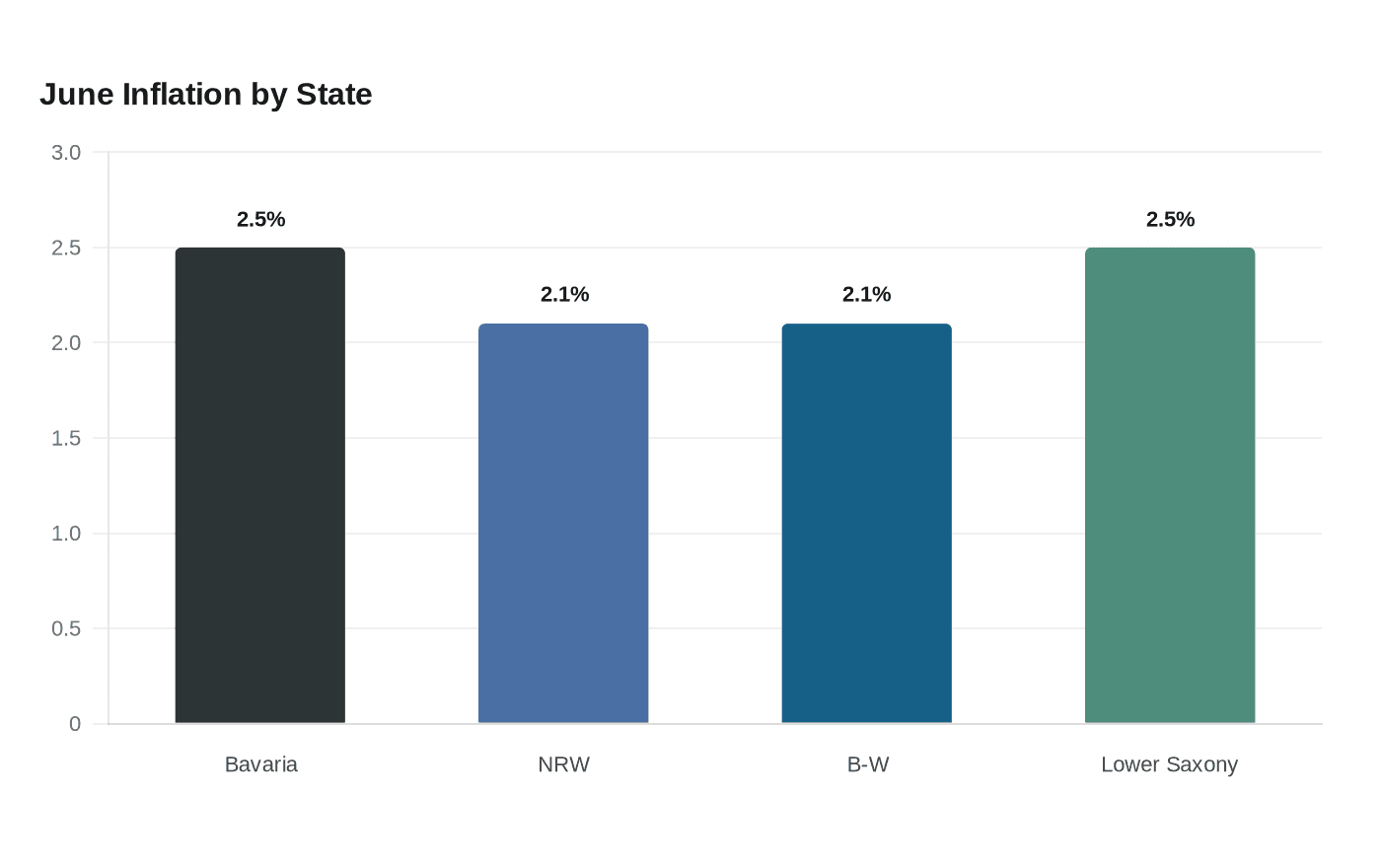
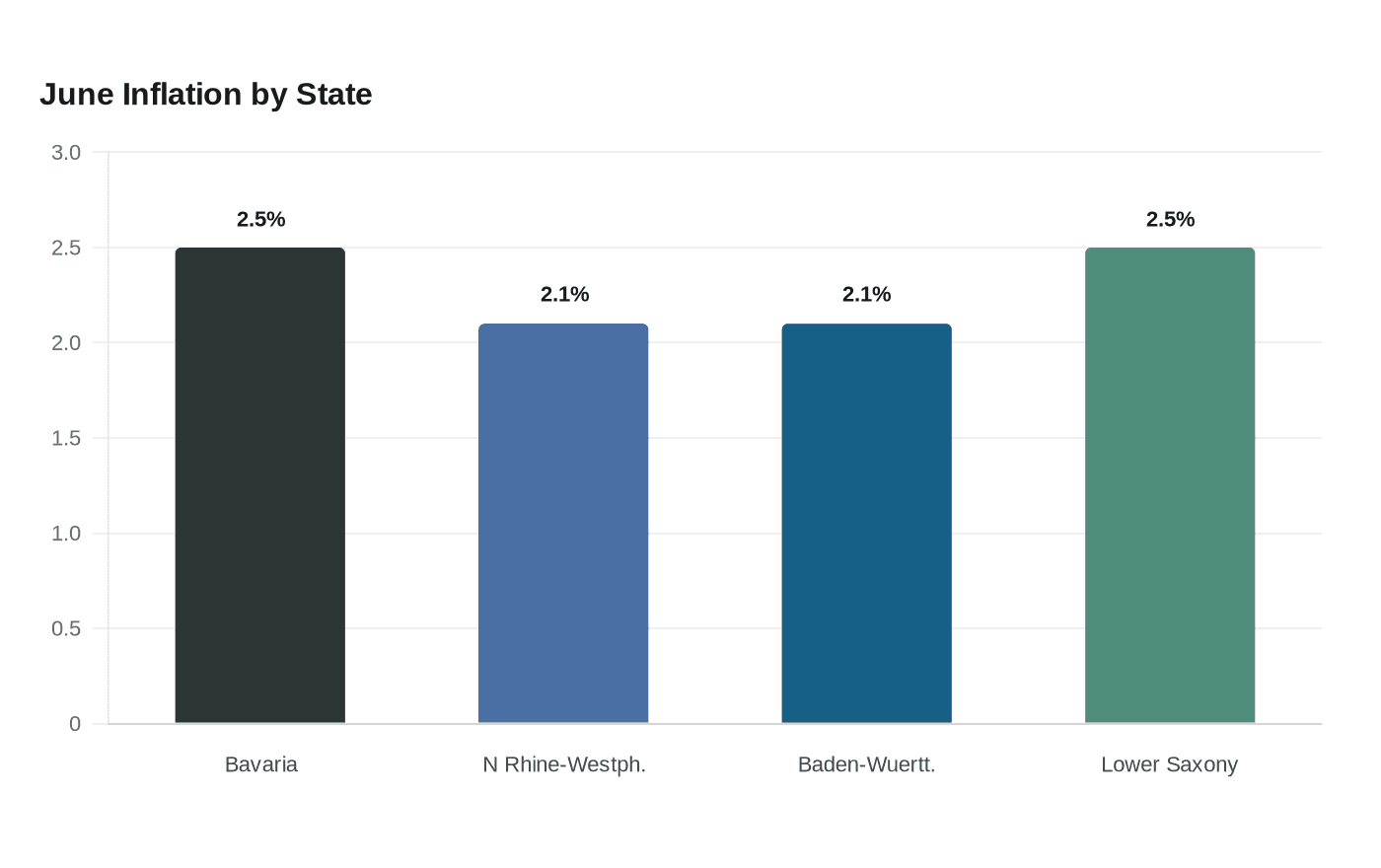
Inflation eased across four major German states in June, offering an early signal that Germany’s national reading could soften when federal figures are released. Prices rose 2.5% in Bavaria, down from 2.6% in May, while inflation fell to 2.1% in North Rhine-Westphalia and Baden-Wuerttemberg from 2.4%, and slipped to 2.5% in Lower Saxony from 2.7%.
The state data matter because Germany’s overall price trend has been cooling only gradually. The German Federal Statistical Office said inflation was 2.6% in May 2026, down from 2.9% in April and 2.7% in March. Destatis linked part of that moderation to a reduction in motor-fuel tax that took effect at the start of May, but said energy prices remained high because of the Iran war.
Economists had been looking for a harmonised national rate of 2.5% for June, below 2.7% in May, with the euro zone reading due on Wednesday. Destatis had scheduled provisional June consumer price index results for June 30, putting the state numbers squarely in line with what markets were watching at the end of the month. If the national figure follows the regional pattern, it would suggest that the latest burst of price pressure is losing some momentum without returning inflation to target.
That still leaves the European Central Bank with little room for complacency. On June 11, the ECB raised its three key policy rates by 25 basis points, lifting the deposit facility rate to 2.25%, the main refinancing operations rate to 2.40% and the marginal lending facility rate to 2.65%. The central bank said the war in the Middle East is generating inflation pressures, and its June staff projections put euro-area headline inflation at 3.0% in 2026, 2.3% in 2027 and 2.0% in 2028.
The broader euro area backdrop remains stubborn. Eurostat said annual inflation in the currency bloc was 3.2% in May 2026, with energy posting the highest annual rate among inflation components at 10.8%. Germany’s own government expects inflation to rise to 2.7% this year and 2.8% in 2027, underscoring how quickly easing price pressure can reverse when energy markets are hit by geopolitics.
This article was produced by Prism’s automated news system from verified source data, official records, and press releases, then run through automated quality and moderation checks before publishing. The system is built and supervised by the people who set the standards it runs under. Read our full AI policy.
Did this article answer your question?