Ghislaine Maxwell invokes Fifth in closed virtual deposition before House Oversight panel
Maxwell refused to answer substantive questions in a closed virtual deposition, complicating congressional efforts and deepening survivors' calls for accountability.
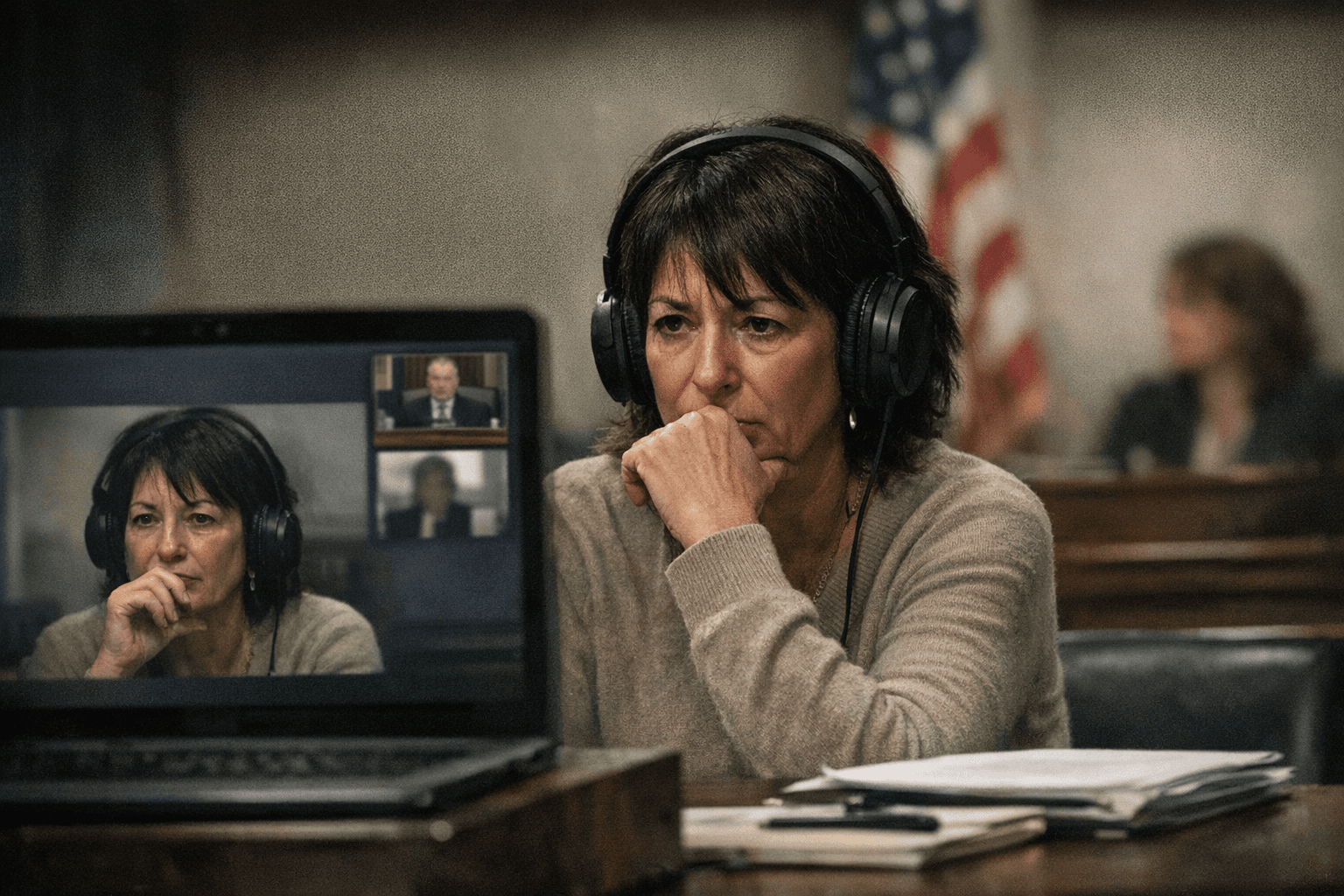
Ghislaine Maxwell appeared by video from federal custody and invoked her Fifth Amendment right against self-incrimination, refusing to answer substantive questions during a closed-door deposition before the House Oversight Committee on Monday. The virtual session, conducted as a video call into a federal prison camp in Bryan, Texas or described more generally as a minimum-security prison in Texas, left lawmakers without new testimony as they press an expansive probe into Jeffrey Epstein’s network and government handling of related files.
Maxwell, who was convicted in 2021 on charges including sex trafficking of a minor and is serving a 20-year federal sentence, has a petition pending in federal court in New York seeking to overturn her conviction or reduce her sentence. Her attorney, Davis Oscar Markus, told the committee that Maxwell “invoked her constitutional right” and would only answer questions if granted clemency by President Donald Trump. Markus also argued that she “must remain silent because Ms. Maxwell has a habeas petition currently pending that demonstrates that her conviction rests on a fundamentally unfair trial.”
Chairman James Comer said he was frustrated by the refusal to cooperate. “Ghislaine Maxwell took the fifth and refused to answer any questions. This is obviously very disappointing. We had many questions to ask about the crime she and Epstein committed, as well as questions about potential co-conspirators. We sincerely want to get to the truth to the American people and justice for the survivors. That’s what this investigation is about,” Comer said after the session.
The closed deposition coincided with lawmakers gaining access to unredacted Epstein-related files at the Department of Justice, an action the committee has said is central to mapping potential co-conspirators and assessing government responses to Epstein’s years of abuse. Lawmakers who exited the meeting said Maxwell previously spoke with the deputy attorney general over two days in July, telling him she “never witnessed nor heard of any criminal or inappropriate activity by President Donald Trump, former President Bill Clinton, nor any of the well-known men who associated with Epstein.” The deputy attorney general’s name appears in records with variant spellings, including Todd Blanche / Todd Blanch / Todd Blanch.
Democrats on the panel interpreted Maxwell’s posture through a political lens. “It's very clear she's campaigning for clemency,” Rep. Melanie Stansbury said, reflecting a broader concern that legal maneuvering may be aimed at securing leniency rather than providing factual accounts to survivors and investigators.
Legal analysts note a practical effect of Maxwell’s choice: by appearing voluntarily and then invoking the Fifth, a witness limits Congress’s ability to enforce answers through contempt, a procedural reality that critics called an effective stonewall. That maneuver deepens an investigatory impasse even as the committee obtains sensitive documents.
The deposition underscores a broader public-health and community impact. Survivors and trauma specialists have long warned that protracted investigations without testimony can retraumatize survivors, erode trust in institutions, and strain limited mental-health and legal supports. The committee’s inability to secure on‑the‑record answers complicates not only legal accountability but also efforts to design more equitable systems for victim services, prevention and oversight of powerful networks that exploit vulnerabilities.
For now, the panel must rely on documentary evidence and closed-door briefings. Committee members said some lawmakers were expected to attend the deposition, but no live public testimony was heard. The refusal to answer leaves open critical questions about co-conspirators, institutional failures and whether further steps, including subpoenas or referrals, will follow as the Oversight Committee continues its inquiry.
This article was produced by Prism’s automated news system from verified source data, official records, and press releases, then run through automated quality and moderation checks before publishing. The system is built and supervised by the people who set the standards it runs under. Read our full AI policy.
Did this article answer your question?