Giant deep-sea isopods survive starvation with oversized stomachs and stolen gene
Deep-sea isopods survive famine with a stomach that fills two-thirds of the body and a borrowed bacterial gene. The discovery shows how life adapts to the abyss.

In the black depths off southern China, giant deep-sea isopods survive with a stomach that can occupy about two-thirds of the body cavity and an unusual metabolic gene that once came from bacteria. When carrion or slow-moving prey drifts within reach, these oversized relatives of pill bugs and roly-polies can gorge; then they slow their energy use so dramatically that they can stretch those meals for more than five years without eating.
Anatomy for the rare feast
The most obvious clue is physical. In the giant species studied here, the enlarged stomach creates an enormous internal storage space for an animal that spends much of its life in food-poor water. It gives the isopods a way to convert a single opportunistic meal into a long-term reserve in an environment where the next carcass may be months away.
Researchers focused on two species from different depths: Bathynomus jamesi, collected at about 898 meters, and Bathynomus doederleini, found at around 300 meters. Both live in the dim deep sea, but the deeper species sits in a harsher regime of pressure, darkness and nutritional uncertainty. The comparison let the team separate traits tied to body plan from those tied to the most extreme habitat.
The animals’ feeding strategy is simple in concept. They do not hunt like fast predators; they exploit what the abyss delivers. Carrion, scraps and other slow-moving prey are rare rewards, so the isopods swallow large amounts at once and then sharply reduce energy use for long periods.
A stolen gene that helps with starvation
The more surprising adaptation is molecular. Researchers identified ND1, a metabolic gene they traced to a horizontal transfer from an exogenous symbiotic bacterium into an ancestral isopod more than 16 million years ago. In other words, a bacterial gene crossed into the animal lineage, duplicated and was expressed at very high levels.
That transfer matters because ND1 is tied to energy metabolism. In the deep-sea isopods, it helps the animals tolerate long periods without food by lowering the cost of staying alive when calories are scarce. The researchers also found an epigenetic, histone-based regulation system that helps control energy use with unusual efficiency and precision.
Laboratory tests pushed the idea further. When researchers engineered zebrafish to carry the gene, the fish showed about a 37 percent boost in starvation endurance under cold conditions. At normal temperatures, though, the benefit disappeared: the gene recipients burned energy faster and became less tolerant of starvation. That temperature split suggests the gene is not a universal upgrade, but a context-dependent tool tuned to the deep sea’s cold conditions.
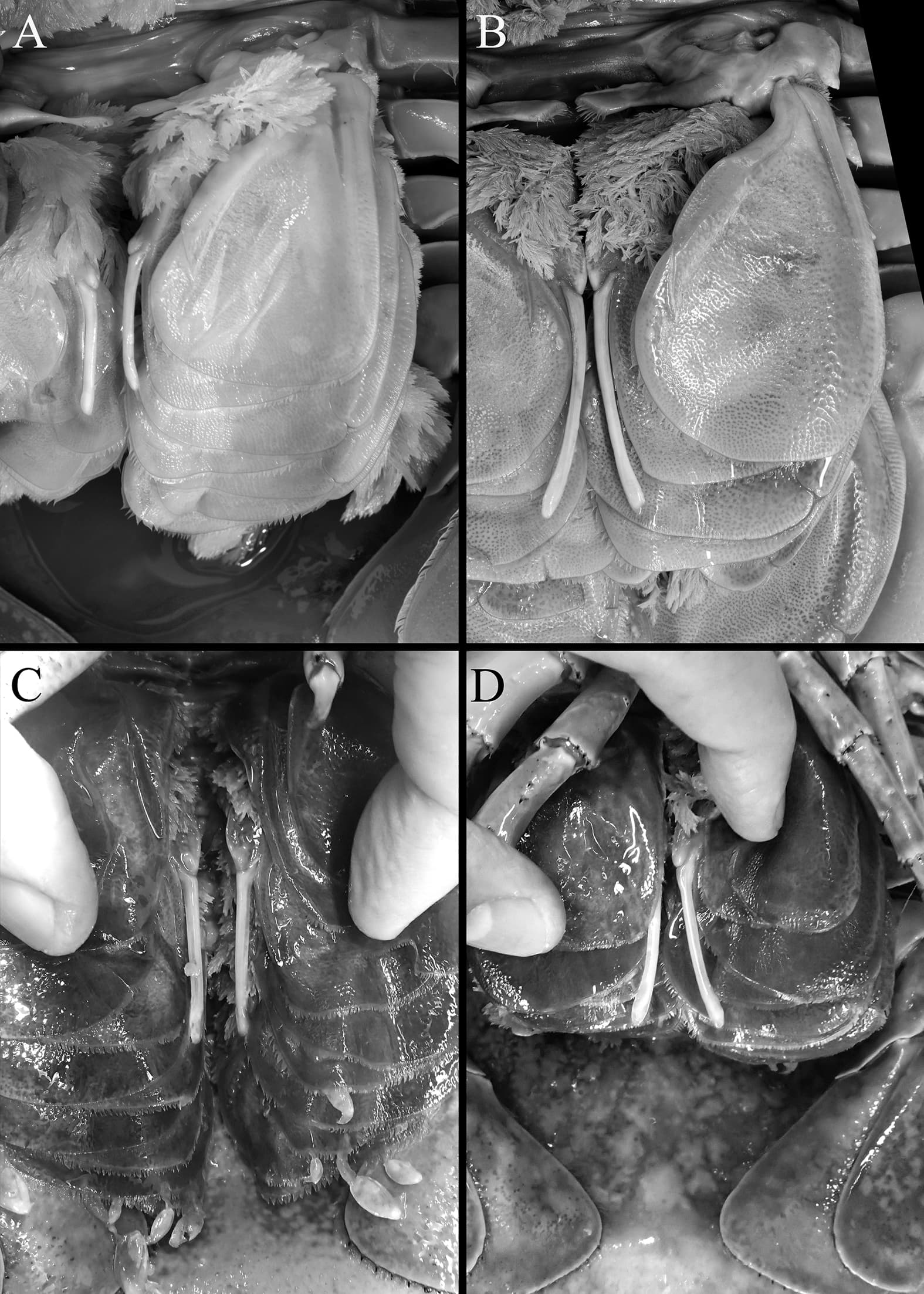
How the study was built
The work combined comparative genomics, morphology, physiology, behavior and metagenomics, along with functional assays. Deep-sea animals are hard to observe directly in their own environment, and no single method can explain how they survive. Genome data can point to candidate genes; anatomy can show how the body stores food; lab tests can reveal whether a gene actually changes starvation resistance.
The project brought together the Institute of Oceanology of the Chinese Academy of Sciences in Qingdao, the Chinese University of Hong Kong and Northwestern Polytechnical University in Xi'an. It also builds on a June 2022 genome paper on Bathynomus jamesi that provided a high-quality genome assembly for the first deep-sea crustacean genome and traced the species to a 898-meter expedition near Hainan Island in the northern South China Sea.
That earlier assembly gave scientists a reference point for understanding the species in finer detail. The newer work adds the missing pieces: how the isopods store energy, how slowly they spend it, and how a transferred gene became part of that system.
Why the finding reaches beyond one strange animal
The work shows that survival under extreme food scarcity can hinge on body architecture, gene transfer and metabolic control. In this case, a bacterial gene persisted inside an animal lineage and became useful enough to be conserved, duplicated and amplified.
It is a rare example of a bacterial gene helping a multicellular animal adapt to environmental extremes.
This article was produced by Prism’s automated news system from verified source data, official records, and press releases, then run through automated quality and moderation checks before publishing. The system is built and supervised by the people who set the standards it runs under. Read our full AI policy.
Did this article answer your question?