Glasgow artist recreates Union Corner after fire destroys landmark
A Glasgow artist spent 10 weeks rebuilding Union Corner in cardboard, adding 74 windows and the roof signs lost in the fire. The miniature became a memorial before demolition even finished.
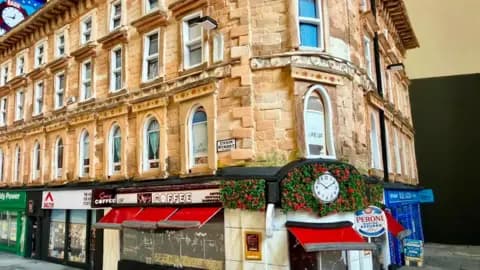
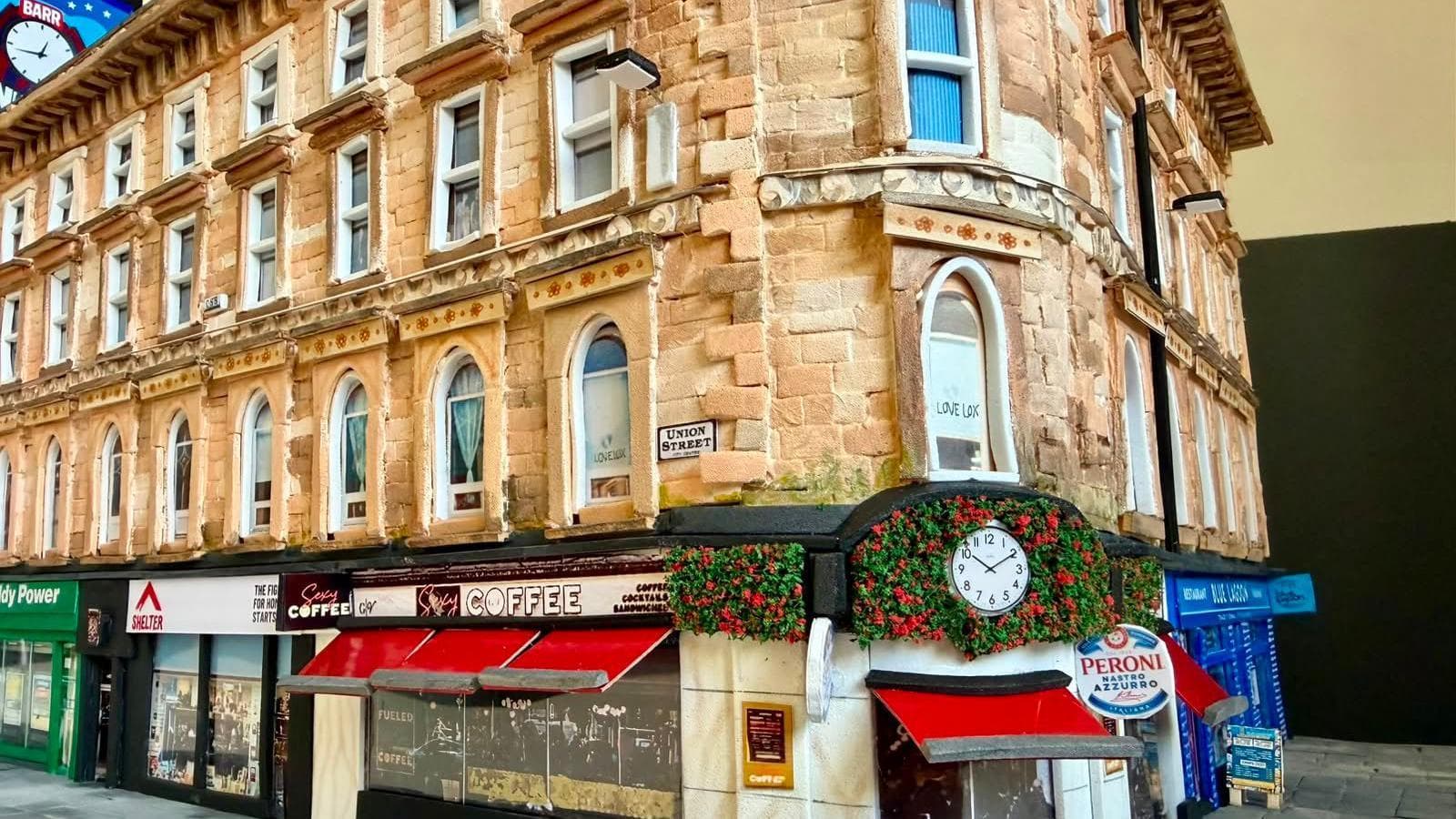
A 25cm-high cardboard replica is helping hold onto the memory of Union Corner after fire left only its facade standing beside Glasgow Central Station. Glasgow artist and model-maker Karen Bones spent 10 weeks recreating the B-listed Victorian building, down to its landmark dome, the roof signs that once crowned it and the businesses caught up in the blaze.
Bones made the model from recycled cardboard in her renovated caravan workshop in Larbert, where she runs Bricks & Bones. At 50cm wide, it is far larger than anything she had built before. She said the project grew out of what she saw on television after the fire and from childhood memories of walking along Union Street and noticing the Irn-Bru sign above the building.
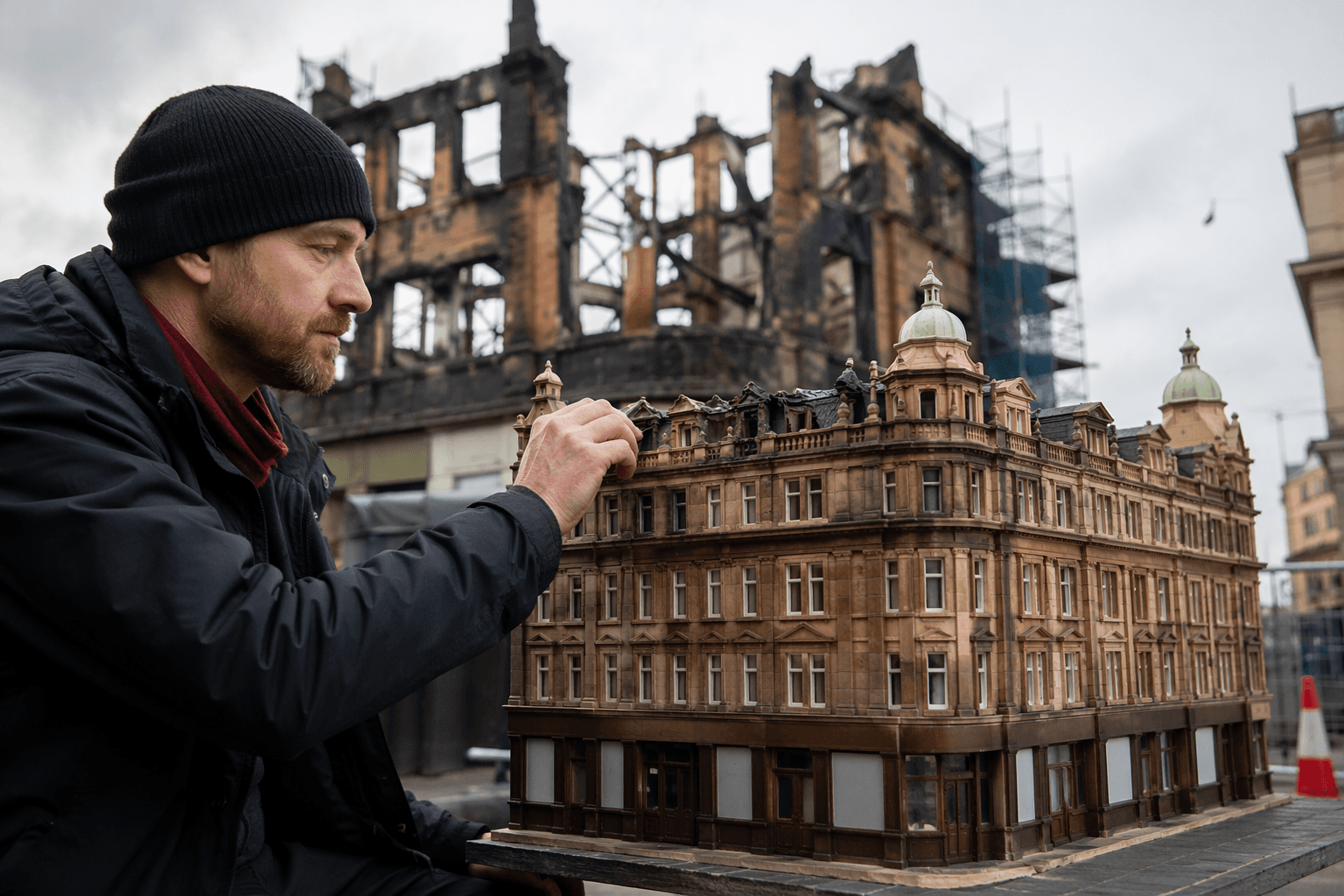
The miniature is detailed enough to carry more than nostalgia. Bones included thousands of individually hand-cut bricks and roof tiles, along with 74 windows. The model also shows the shops affected by the fire, turning the building into a record of what stood there before the damage, not just a tribute to what was lost. In that sense, it preserves a part of the city that official rebuilding plans have not yet restored.
Union Corner dates back to 1851, predating Glasgow Central Station, which opened in 1879. Its age and position at the corner of Union Street and Gordon Street made it one of the most recognisable buildings in the city centre, and the fire on 8 March 2026 hit it hard. The blaze began in a vape shop, spread through the structure and caused major disruption at Glasgow Central, Scotland’s busiest railway station.
Even now, demolition work continues and a cordon remains in place because of safety fears. The building’s partial collapse also damaged another Victorian structure nearby, deepening the loss in a part of Glasgow where rail traffic, commerce and daily life intersect. Bones’s model does not replace the real building, but it gives the city a handmade point of memory while the site remains closed and unstable.
This article was produced by Prism’s automated news system from verified source data, official records, and press releases, then run through automated quality and moderation checks before publishing. The system is built and supervised by the people who set the standards it runs under. Read our full AI policy.
Know something we missed? Have a correction or additional information?
Submit a Tip