Glasses boost productivity in Bangladesh garment factories
A sewing machine operator in Gazipur showed how prescription glasses can lift output in Bangladesh's garment mills, where one trial found a 6% productivity gain.
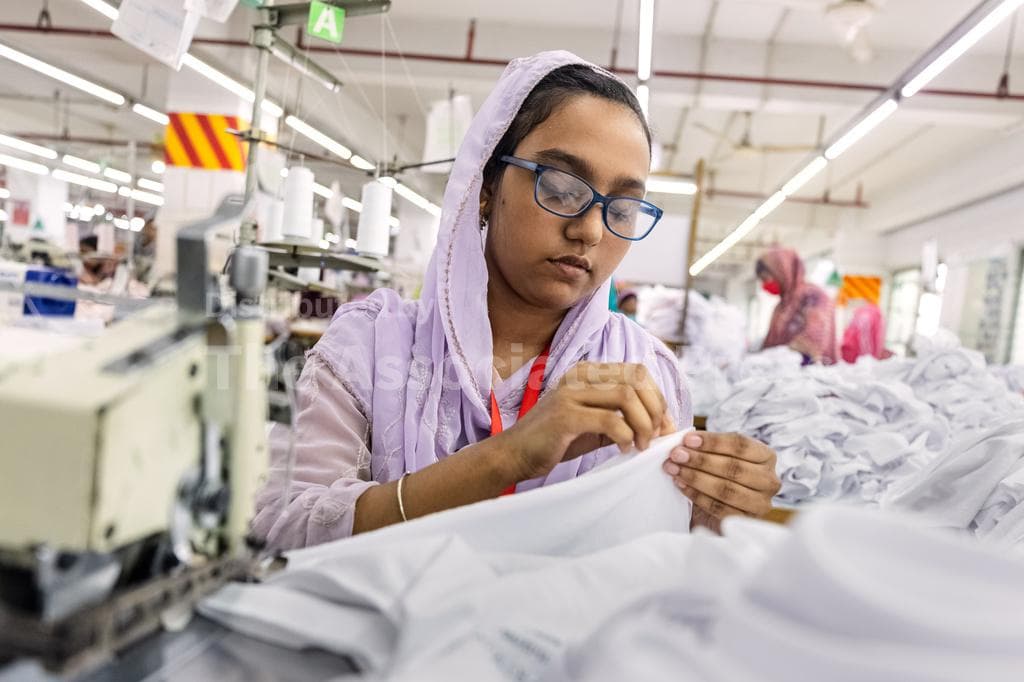
Ruma Aktar, a sewing machine operator in Gazipur on the outskirts of Dhaka, was photographed wearing prescription eyeglasses at work on June 30, 2026, as a low-cost fix began drawing attention inside Bangladesh’s garment factories. The example is simple, but the setting is not: this is an industry built on close-up sewing, cutting, inspecting and assembling, where even small improvements in speed and accuracy can matter.
Shahi Exports said on May 12, 2026 that a randomized controlled trial at its factory, conducted by Good Business Lab, found that eyeglasses boosted garment worker productivity by 6%. The International Agency for the Prevention of Blindness highlighted that result, underscoring how a basic pair of glasses can become an industrial input rather than just a health accessory. In a sector known for razor-thin margins, that kind of gain can change the calculation for factory owners weighing training, absenteeism and output targets.
The research base is broader than a single factory test. PubMed indexes a 2021 paper titled Vision Impairment and Productivity Among Female Garment Workers in Bangladesh, along with another 2021 study, Global economic productivity losses from vision impairment and blindness. Together, those papers point to a long-running problem: declining vision can quietly erode output in jobs that demand sustained focus at arm’s length. The AP story centered on Aktar because she makes that abstract issue visible on a factory floor in Gazipur, where clear sight directly affects a worker’s ability to keep pace.
The timing matters for Bangladesh. BGMEA’s export performance page shows how central ready-made garments remain to the country’s export economy, and the industry continues to face pressure from global demand shifts, higher costs and fierce competition. AP has also separately reported on wage protests in the sector, adding to the sense that labor conditions remain a live issue for factories and policymakers alike. Against that backdrop, glasses stand out as a rare intervention that is inexpensive, measurable and immediately usable.
For Bangladesh’s garment supply chain, the lesson is less about technology than about neglected worker health. A pair of lenses does not require a new machine line or a big capital program, yet it can raise productivity in a business where every percentage point is hard won.
This article was produced by Prism’s automated news system from verified source data, official records, and press releases, then run through automated quality and moderation checks before publishing. The system is built and supervised by the people who set the standards it runs under. Read our full AI policy.
Did this article answer your question?