Global Baby Bath Product Demand Rises on Premium, Natural Ingredient Trends
Baby bath products' $3.4B global market is on track to nearly double by 2035, driven by parents paying premium prices for natural, dermatologically tested formulas.
A market valued at $3.4 billion is poised to reach $6.9 billion by 2035, and the engine running that growth is something every new parent already knows: anxiety about what goes on a newborn's skin. IndexBox's World Baby Bath and Shower Product Market Analysis, updated March 25, confirmed that premium formulations and natural ingredients have become the dominant demand drivers in the global baby bath and shower category, reshaping what lands on registries and what gift-givers reach for at checkout.
The compound annual growth rate across the decade sits at 7.2%, and Technavio projects an additional $3.19 billion in market expansion between 2024 and 2029 alone. What's accelerating that pace is premiumization: products priced above $50 are on track to command 38.6% of total revenue by 2025, establishing the high end of the shelf as the segment's center of gravity, not its niche.
Shampoo leads all product types with a 42.7% market share, but the format drawing the most gifting and registry attention is body wash, which holds roughly 42% of the product-type segment in parallel analyses. Online retail now accounts for approximately 38% of distribution, a channel share that reflects both the subscription-model boom and the rise of platforms where registry curation happens before the shower invitations go out.
For anyone navigating a baby registry in 2026, the IndexBox analysis points toward a clear hierarchy of credibility: certifications matter more than marketing language. Hypoallergenic and dermatologist-approved designations have moved from nice-to-have to expected, as awareness of the potential health risks from harsh chemicals in conventional formulations continues to drive parents toward cleaner ingredient lists. Brands building around microbiome-safe and prebiotic-forward formulas are attracting particular attention, especially among millennial and Gen-Z parents who treat ingredient transparency as a baseline, not a bonus.
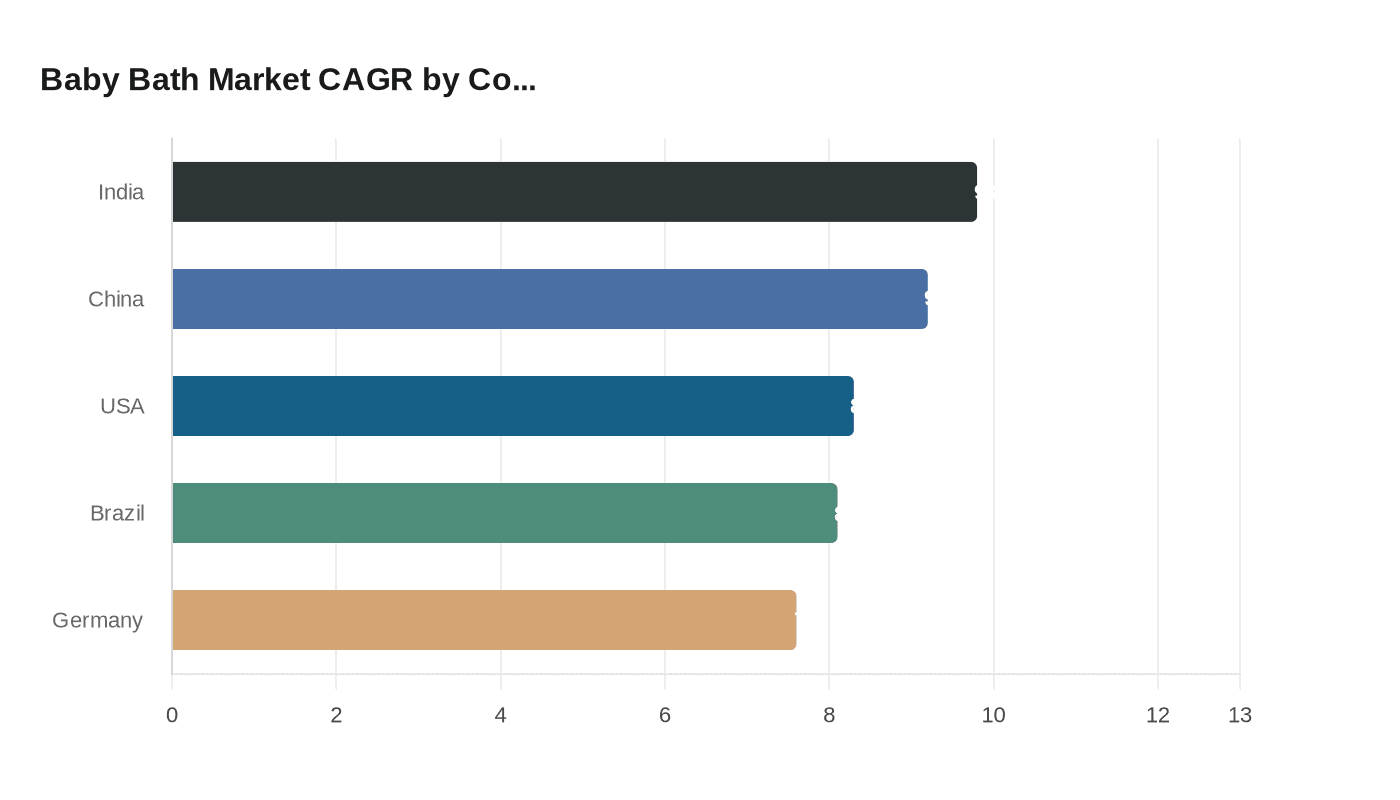
The category's geography is shifting, too. Asia Pacific is the fastest-growing region overall, with India projected at a 9.8% CAGR, China at 9.2%, and the United States at 8.3%. Brazil and Germany round out the top five at 8.1% and 7.6%, respectively. North America's growth is anchored in high disposable income and a strong premium-product culture, while Europe's expansion is being led by demand for organic and eco-certified options.
For the shower-gift economy specifically, the market signals point to curated bundles as the smart play over single-item selections. A gift set built around a hypoallergenic wash, a certified-organic shampoo, and a natural-fiber washcloth addresses both the premiumization trend and the safety-credential demand in a single, registry-ready package. Subscription tie-ins, offered as post-shower replenishment, are increasingly how D2C brands are converting one-time gift buyers into recurring customers.
The hype risk in this category is ingredient greenwashing: terms like "natural" and "gentle" carry no regulatory weight without supporting certifications. Gifts that carry EWG verification, dermatologist-tested documentation, or recognized organic seals will hold their value in a market where informed parents are doing the research before the box is even unwrapped.
Sources:
Know something we missed? Have a correction or additional information?
Submit a Tip