University Hospital Newark Hosts Annual Community Baby Shower for Local Families
University Hospital Newark's annual baby shower gave pregnant families a direct on-ramp to WIC enrollment and safe-sleep education in a city with persistent infant mortality disparities.
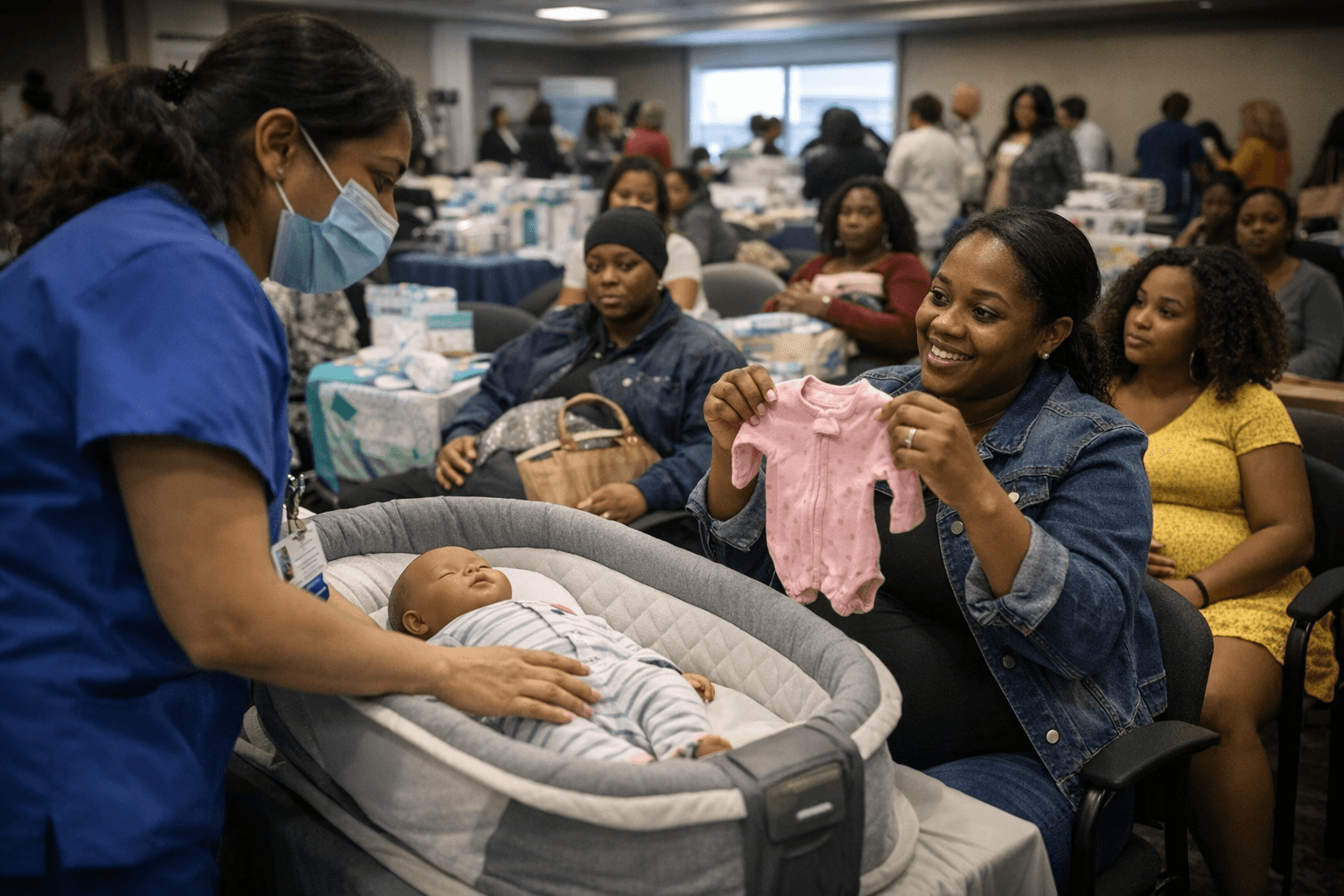
University Hospital Newark turned a two-hour window on March 27 into something closer to a clinical intake than a celebration. The hospital's Annual Community Baby Shower, held on the D Level of its Orange Avenue location from noon to 2 p.m., brought together pregnant people and new parents with a tightly assembled network of public health partners, WIC program representatives, and lactation specialists. Registration was required; space was limited.
The practical core of the event was deliberate. Families left with diapers and newborn kit essentials, but the hospital structured the program so that those tangible items functioned as a draw into a series of on-site education sessions covering safe sleep practices, feeding basics, and warm referrals to follow-on community resources. That sequencing matters operationally: supplying immediate material need alongside actionable clinical guidance is a model that research has consistently linked to improved attendance and stronger uptake of referral services.
The setting makes the stakes concrete. New Jersey data covering 2019 through 2023 shows that the maternal mortality rate for Black, non-Hispanic women (64.7 deaths per 100,000 live births) was 7.6 times higher than for white, non-Hispanic women (8.5 per 100,000 live births). Newark, as one of New Jersey's most densely populated urban centers, sits at the center of that disparity. Research on the greater Newark area found that infant mortality rates vary significantly by zip code, with maternal characteristics associated with high infant mortality rates including lack of prenatal care and low household income. A community baby shower positioned at the hospital itself short-circuits one of the most common access problems: families who miss their first prenatal appointment often miss every subsequent referral tied to it.
Pregnant women invited to community baby showers by health systems receive safe sleep education alongside products to promote a safe sleep environment, including portable cribs and wearable blankets. University Hospital's model follows that framework, with safe sleep education as an explicit program component, reflecting data that most sudden unexpected infant deaths occur in non-recommended sleep environments.
New Jersey has awarded $3.5 million to community-based grantees to implement maternal and child programs specifically targeting communities with high non-Hispanic Black and Hispanic maternal and infant mortality rates, a funding environment that underscores how much the state is leaning on community-level touchpoints, rather than clinical settings alone, to close outcome gaps. University Hospital's annual event is one piece of that infrastructure: low-barrier, supply-forward, and built to hand off, rather than simply inform.
For health system planners, the University Hospital format offers a replicable operational blueprint. Free items address immediate material need. Brief, on-site education sessions deliver safe sleep and infant feeding guidance in a single encounter. Partner presence from WIC-affiliated programs and lactation specialists means families can begin enrollment and follow-up scheduling before they leave the room. The limited-capacity registration model, which University Hospital used this year, allows staff to ensure equitable distribution of supplies and maintain a manageable attendee-to-educator ratio. The real measure of the program's impact will show up in the months that follow: prenatal appointment adherence, safe sleep environment rates, and whether families who walked into the D Level on a Friday afternoon stayed connected to care through the fourth trimester and beyond.
Sources:
Know something we missed? Have a correction or additional information?
Submit a Tip