Global clean energy surges as governments tighten climate commitments
Clean energy and restoration are producing measurable gains, from lower-emissions power growth to ecosystems that are starting to recover.
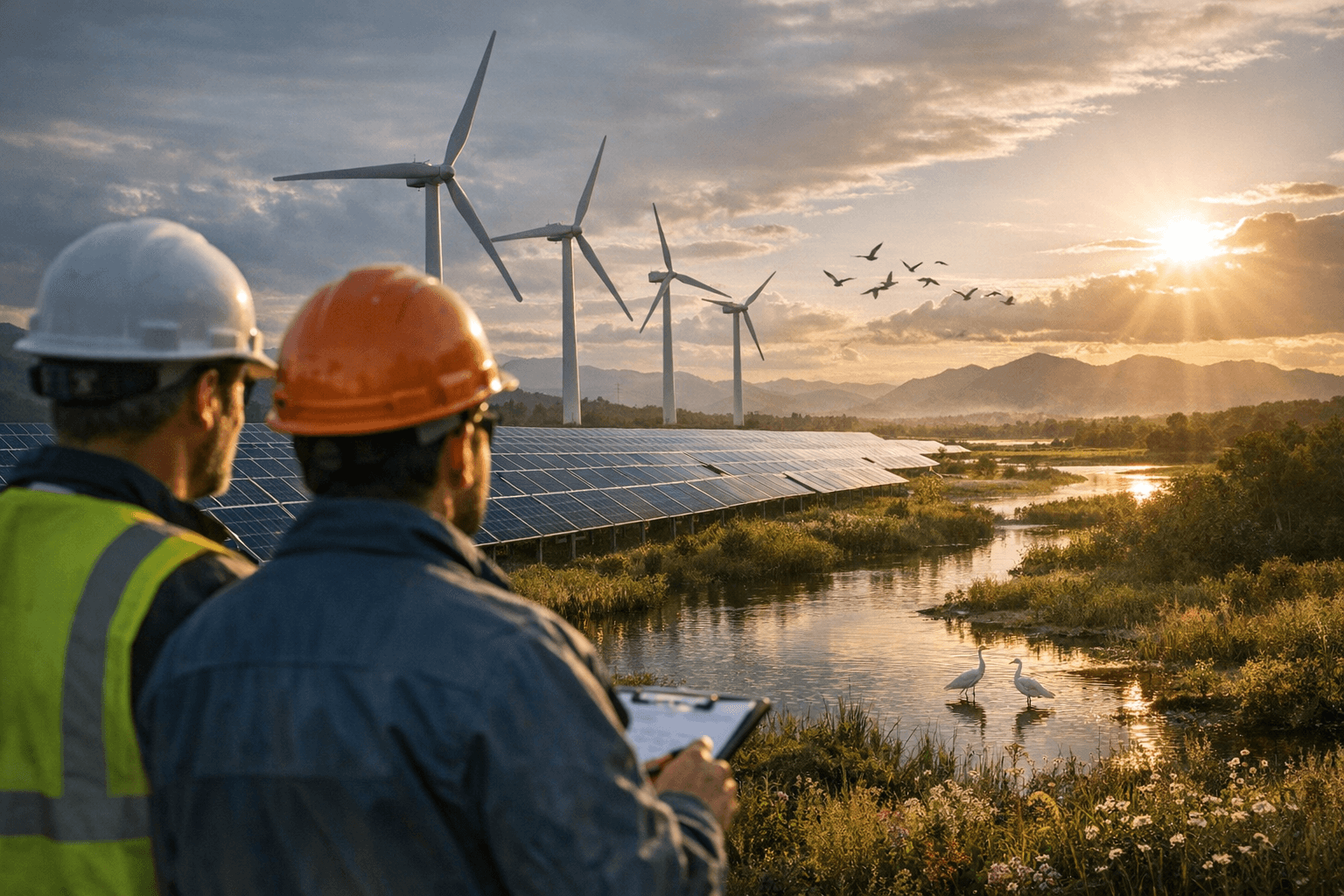
A rare climate story with hard numbers behind it
Global climate news often arrives with the same bleak drumbeat: hotter temperatures, stressed ecosystems, and political promises that seem to outrun delivery. Yet several measurable trends point in the opposite direction. Clean energy is expanding fast enough to slow emissions growth, governments are tightening standards in more places than many skeptics assume, and restoration work is producing visible ecological gains in forests, wetlands, farms, and coastlines.
The timing matters. The United Nations marks International Mother Earth Day on April 22 as a reminder that ecosystems sustain all life, and it says the observance falls within the UN Decade on Ecosystem Restoration, a global effort running through 2030. That framing is not ceremonial fluff. It reflects a practical shift in climate strategy: protect what still works, repair what has been damaged, and build energy systems that cut pollution before it reaches the atmosphere.
Clean energy is no longer a side story
The strongest evidence of progress comes from the energy system itself. The International Energy Agency says renewables are critical to keeping global temperature rise below 1.5°C, and it reported that modern bioenergy was the largest source of renewable energy globally in 2023. The United Nations adds a central economic point: renewable energy sources emit little to no greenhouse gases and are, in many cases, cheaper than coal, oil, or gas.
That combination of climate and cost is why clean power is gaining traction beyond countries with ambitious climate branding. Solar PV, wind, nuclear power, and electric cars all continued to expand in 2023, and the IEA said that growth helped limit the rise in global energy-related carbon dioxide emissions even as energy demand increased. That matters because the old assumption was that energy use and emissions would rise together almost automatically. The newer pattern suggests policy and technology are beginning to loosen that link.
Modern bioenergy’s position as the largest renewable source in 2023 also shows how broad the clean-energy mix has become. The transition is not being driven by a single technology or a single market. It is a portfolio change, with different regions leaning on different tools, but all moving in the same direction: lower-carbon energy with fewer pollution costs built in.
Governments are tightening faster than the cynics predicted
The political story is less dramatic than a summit speech, but more important in practice. The IEA says close to 150 countries, covering about 95 percent of global greenhouse gas emissions, have put forward new and more ambitious climate commitments. It also says around 50 governments have tightened energy-efficiency, renewables, and emissions standards since 2020, alongside clean-energy incentives.
That is not a total solution, and it does not erase the gap between pledges and implementation. But it does challenge the narrative that climate policy is stalling everywhere at once. Standards on buildings, vehicles, industry, and power generation are how governments turn abstract climate targets into market signals. When energy efficiency improves, renewable deployment accelerates, and emissions limits become more exacting, the policy architecture starts to shape investment rather than chase it.
The institutional significance is real. Climate progress is often measured by big international announcements, yet the actual emissions trajectory depends on dozens of national decisions made by regulators, ministries, and legislatures. The IEA’s figures show that many of those decisions are moving in the same direction, even if unevenly and not always fast enough.
Restoration is delivering proof that damaged ecosystems can recover
The environmental wins are not limited to energy. UNEP says ecosystem restoration can deliver major benefits for climate, food security, water supply, biodiversity, and health. That is an unusually broad policy dividend, and it explains why restoration has become a serious development tool rather than a niche conservation idea.
The World Bank says it has financed about 250 nature-based projects since 2012. Those projects have helped restore 1.1 million hectares of ecosystems and delivered climate-resilience benefits to 9.5 million people. Active projects are expected to benefit 19.4 million people and restore 3.5 million hectares of nature and green space. Those are not symbolic numbers. They describe land recovered, water systems stabilized, and communities getting some protection against heat, floods, erosion, and food stress.
UNEP has also highlighted six species saved by ecosystem restoration, a reminder that conservation gains can be specific and measurable rather than abstract. That matters at a time when one million of the world’s estimated 8 million species are threatened with extinction. Restoration will not solve the biodiversity crisis on its own, but it shows that decline is not always irreversible when habitat is repaired and management changes.
Why nature is part of climate infrastructure
The case for restoration is stronger than a moral appeal to protect landscapes. The World Bank argues that nature-smart policies can produce win-win outcomes for biodiversity and economic growth, and that better management of natural resources can substantially reduce pollution while improving resilience. UNEP likewise says healthy ecosystems are vital for resilience and sustainable development, while the United Nations notes that the Earth’s land and oceans serve as natural carbon sinks that absorb large amounts of greenhouse gas emissions.
That last point is central to climate policy. Forests, soils, wetlands, mangroves, and oceans are not decorative extras. They are working systems that absorb carbon, moderate flood damage, support agriculture, and buffer extreme heat. When they are degraded, the costs show up in emergency spending, lost harvests, damaged infrastructure, and public health burdens. When they are restored, they become part of the solution set.
This is also where the clean-energy story and the ecosystem story intersect. A lower-carbon grid cuts emissions at the source. Healthy ecosystems absorb, store, and buffer what still escapes. Together, they form a more credible climate strategy than either one alone.
What the data says about hope
The most useful environmental progress is the kind that can be counted. More renewable power, tighter government standards, hectares restored, people protected, species recovered: these are not vague signals. They are evidence that policy and investment can bend long-running trends, even while the broader climate picture remains dangerous.
That is why the current moment matters. International Mother Earth Day is meant to focus attention on harmony with nature and shared responsibility, but the real test is whether institutions act on that idea. The numbers now available suggest that, in energy and restoration alike, some of them are.
This article was produced by Prism’s automated news system from verified source data, official records, and press releases, then run through automated quality and moderation checks before publishing. The system is built and supervised by the people who set the standards it runs under. Read our full AI policy.
Did this article answer your question?


