Global Leaders Scramble to End American-Israeli War on Iran, Fear Trump's Next Move
Egypt, Pakistan, and Turkey proposed a 45-day ceasefire as Trump threatened to bomb Iran's power grid, leaving allies scrambling and unable to predict Washington's next move.
More than five weeks into Operation Epic Fury, the American-Israeli air campaign that began February 28, every capital with a stake in the Middle East is running its own diplomatic back channel, and none of them can predict what President Trump will do next.
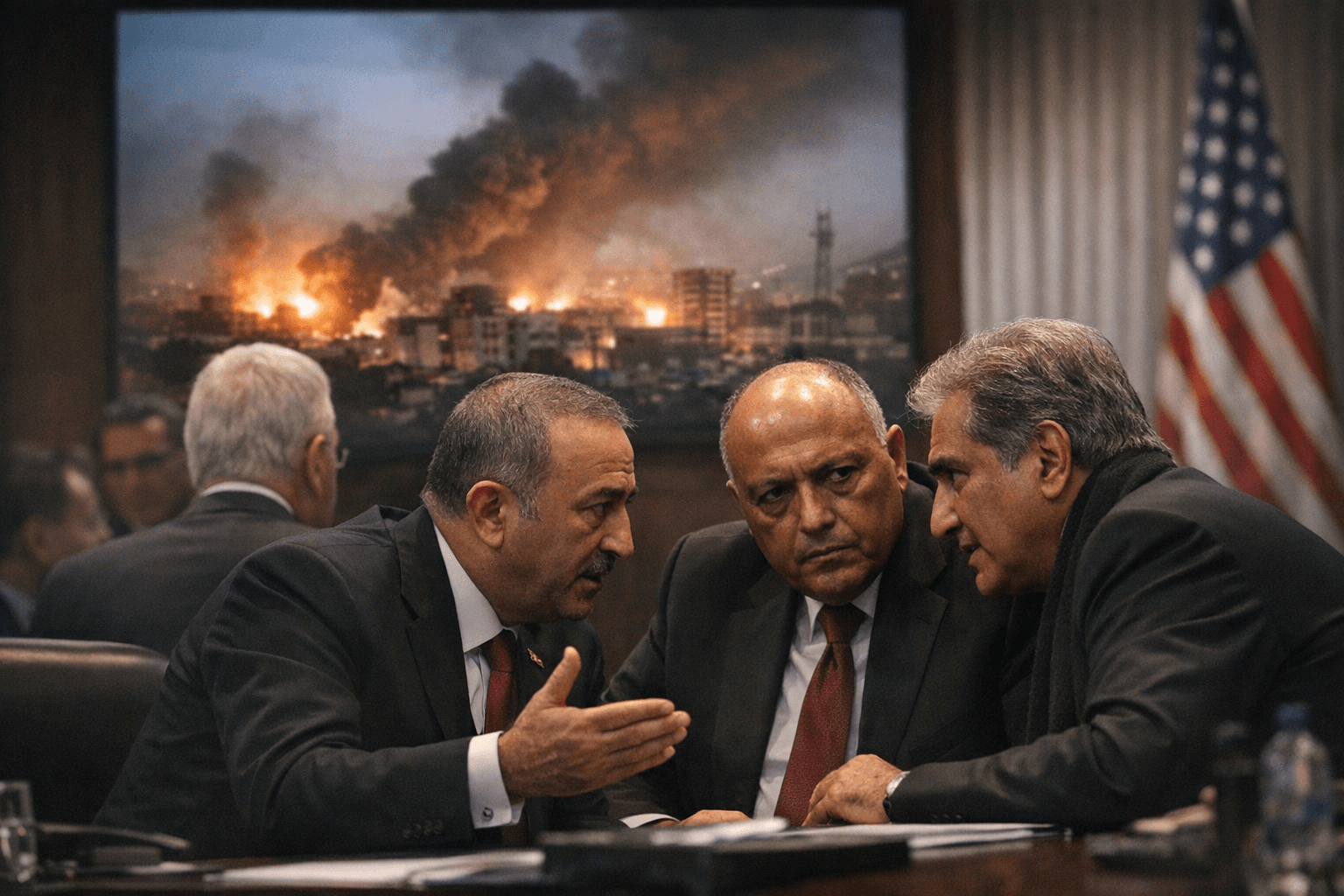
Egyptian, Pakistani, and Turkish envoys submitted a joint proposal for a 45-day ceasefire and the reopening of the Strait of Hormuz, the chokepoint whose closure has sent global energy markets into turmoil. The initiative landed alongside a separate joint statement from the Chinese and Pakistani foreign ministers calling for talks, an end to strikes on civilian infrastructure, and the reopening of the strait. Neither proposal has produced a deal. Iran's Foreign Minister Abbas Araghchi told reporters that no negotiations are ongoing with Washington, directly contradicting Trump's repeated public claims that Tehran was "begging" for a settlement and had agreed to "most of" a 15-point U.S. demand list relayed through Pakistan.
The contradictions are not incidental. They reflect the core problem paralyzing allied diplomacy: Washington's position changes faster than any mediator can transmit a message. On March 30, Trump posted to social media threatening to destroy all of Iran's power plants, oil wells, Kharg Island, and desalination plants if the Strait of Hormuz was not reopened. Days later he told Americans the war would be over "within maybe two weeks." In his April 1 national address he declared the U.S. military's performance "unstoppable" while declining to rule out ground troops or describe any concrete diplomatic off-ramp. Defense Secretary Pete Hegseth simultaneously claimed the U.S. had achieved "regime change" in a country still governed by the same ideological structure that preceded the war, with Supreme Leader Ali Khamenei's son Mojtaba elevated to replace his father, who was killed in the opening strikes alongside dozens of senior officials including Ali Larijani.
European capitals are making their own calculations. France denied overflight rights to planes carrying military supplies to Israel, drawing a furious rebuke from Trump, who labeled Paris "VERY UNHELPFUL." Britain's Keir Starmer held back from direct involvement, a posture Iran's embassy in London publicly welcomed and that put Starmer at odds with the White House. On February 28, Starmer joined the French and German leaders in condemning Iran's retaliatory missile strikes and calling for a resumption of diplomacy, a formulation that carefully avoided endorsing the original U.S.-Israeli strikes that opened the war.
Gulf states face a sharper bind. Saudi Arabia, the United Arab Emirates, Bahrain, and Kuwait absorbed Iranian retaliatory missile salvos for weeks and are now pressing Washington to finish the campaign rather than accept a premature ceasefire that leaves Iran's strike capability intact. Yet Iran had explicitly warned any state permitting its territory or airspace to be used in attacks would be treated as a co-belligerent, a threat that has constrained Gulf rulers' public posture even as their security calculations align more closely with the U.S.-Israeli campaign.
The most structurally destabilizing variable for any mediator may be Israel itself. Prime Minister Benjamin Netanyahu has publicly stated that Israel will continue striking Islamic Revolutionary Guard Corps naval and missile assets regardless of any U.S.-brokered pause, meaning any ceasefire framework Washington endorses could collapse within hours of its announcement.
Pakistan, which has served as the primary message relay between Washington and Tehran, has so far failed to bring the two sides to formal negotiations. Iran's Foreign Ministry spokesperson Esmaeil Baghaei confirmed on April 5 that mediators were passing messages but declined to characterize the substance, noting that "negotiation is in no way compatible with ultimatums." With Trump's self-imposed four-to-six-week war timeline now expiring and a ground invasion still officially unruled out, the race to engineer a durable exit is accelerating without a clear destination in sight.
This article was produced by Prism’s automated news system from verified source data, official records, and press releases, then run through automated quality and moderation checks before publishing. The system is built and supervised by the people who set the standards it runs under. Read our full AI policy.
Did this article answer your question?