Gold and silver forecasts climb as experts brace for June volatility
Gold’s 2026 forecast jumped to $4,746.50 an ounce, while silver’s wide range shows June could swing with rates, inflation and Iran headlines.

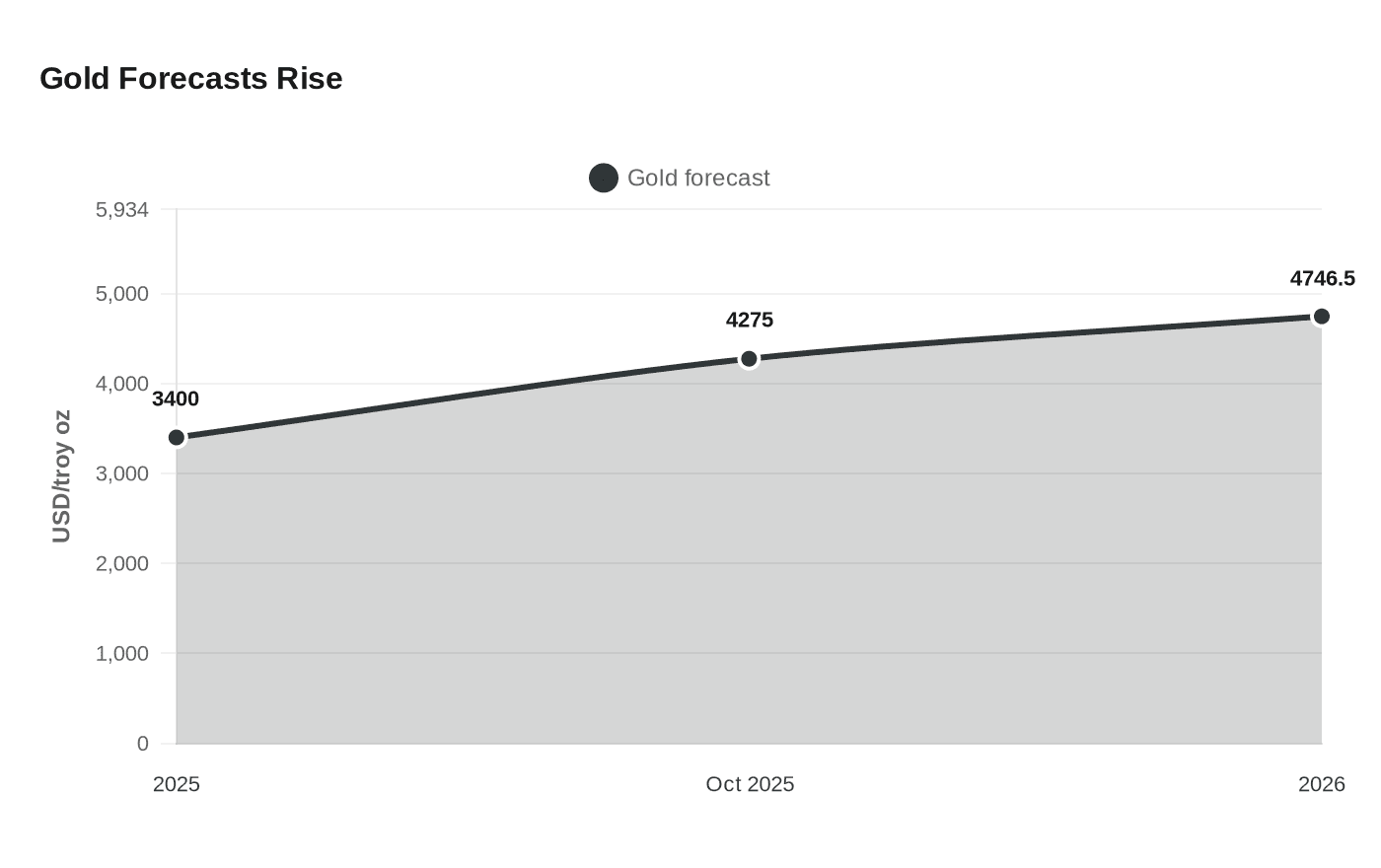
Gold’s 2026 forecast has moved sharply higher, with a Reuters poll of 30 analysts and traders putting the median at $4,746.50 per troy ounce, the highest annual forecast in Reuters polling data going back to 2012. That estimate was already above October 2025’s $4,275 median and far above the roughly $3,400 forecast for 2025, after gold briefly touched the $3,500 area in April 2025.
The upgrade reflects a market still leaning on the same forces that pushed bullion higher in the first place, including central-bank buying, tariff risk, geopolitical uncertainty and the expectation that precious metals will stay sensitive to monetary-policy shifts. For investors trying to judge whether gold still works as a hedge in 2026, the message is less about a straight-line rally than about how quickly macro shocks can change the tape.
May trading showed that clearly. Reuters market reports said gold fell on some days as rising oil prices, inflation fears, a stronger dollar and U.S.-Iran tensions pressured the market. Another Reuters-linked report said gold dropped to a two-month low on Thursday after fresh U.S. attacks in Iran pushed oil prices higher, reinforcing concerns about inflation and higher-for-longer interest rates. That matters because higher energy costs can feed expectations for stubborn inflation, while a stronger dollar can make dollar-priced metals harder to own.
Silver looks even more complicated. A Reuters-linked 2025 poll put silver on track to average $38.45 an ounce in 2025 and $50 in 2026, and later market commentary pointed to an even broader range, including J.P. Morgan near $81, the Reuters median at $79.50 and ING at $78. The silver case also has a structural tailwind: the Silver Institute’s World Silver Survey 2026 projected a sixth consecutive annual deficit. Unlike gold, silver trades as a safe-haven asset, an industrial metal and a leveraged proxy for gold at the same time, so it can react to monetary demand, factory demand and speculative flows all at once.
For ordinary investors, that mix argues for discipline rather than prediction theater. If rates stay elevated, the dollar remains firm and inflation fears cool, both metals can lose momentum. If oil prices, Middle East tensions or tariff headlines keep inflation and policy anxiety alive, gold may retain its hedge value and silver may swing even harder. June looks less like a smooth trend month than a test of how much protection investors still want to pay for.
This article was produced by Prism’s automated news system from verified source data, official records, and press releases, then run through automated quality and moderation checks before publishing. The system is built and supervised by the people who set the standards it runs under. Read our full AI policy.
Did this article answer your question?