Gold heads for biggest monthly drop since 2008 on hawkish Fed bets
Gold fell 1% and was headed for its worst monthly drop since 2008 as traders bet the Fed will keep rates higher for longer. Safe-haven demand has given way to interest-rate expectations.
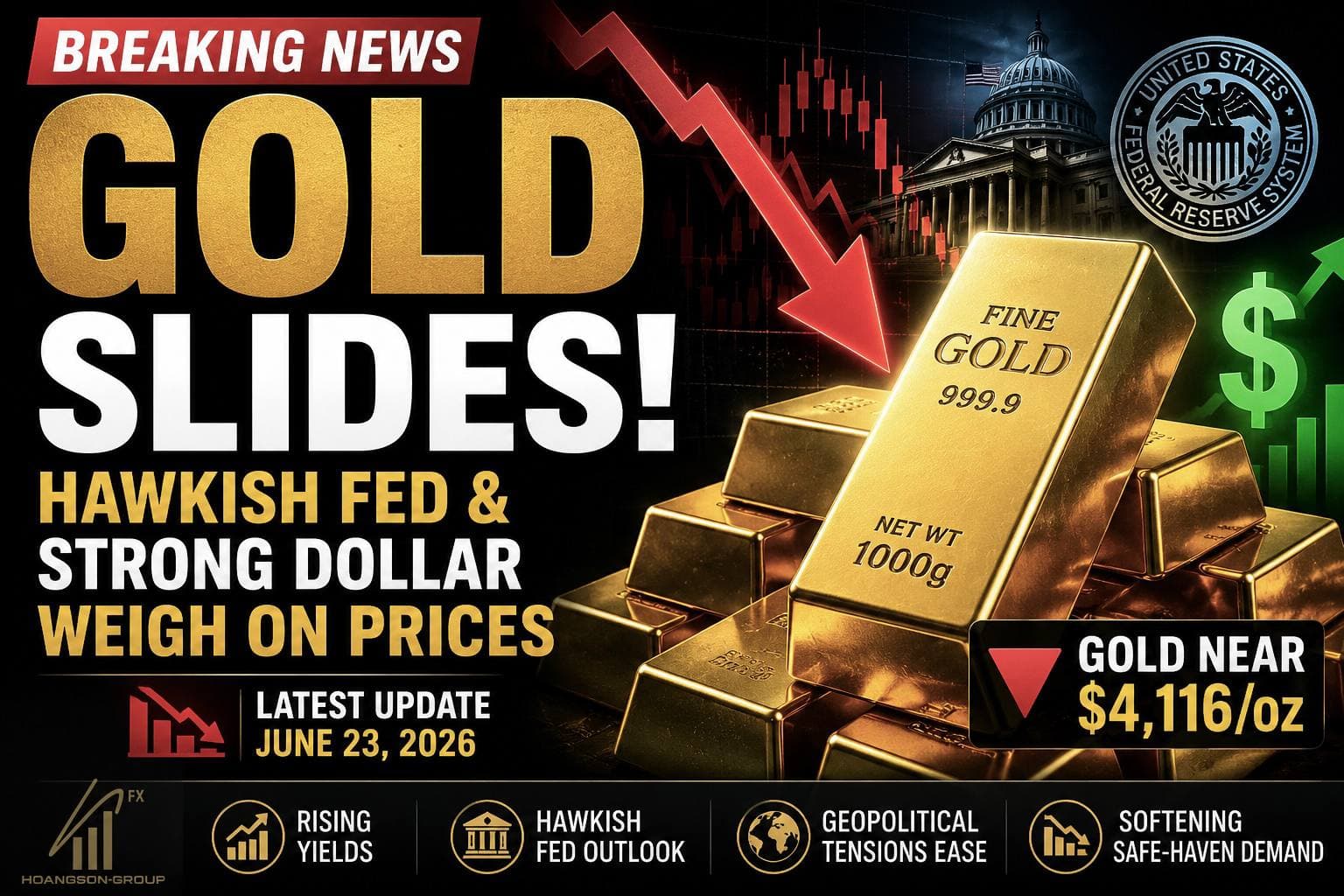
Gold fell more than 1% on Tuesday and was on track for its biggest monthly decline since October 2008, as investors shifted away from war-driven safe-haven buying and toward the Federal Reserve’s rate path. Spot gold was at $3,975.04 an ounce, down 1% in early trading, while U.S. August futures slipped 1.2% to $3,988.60.
The metal had already lost 12.4% for the month and was headed for a fourth straight monthly decline. It was also set for its first quarterly fall since 2024 and its biggest quarterly drop since the June quarter of 2013, a sharp turn for an asset that had been drawing support from geopolitical tension only weeks earlier.
The move reflected a simple calculation in markets: a hawkish Fed makes a non-yielding asset less attractive. Gold pays no interest, so when traders expect higher rates, the opportunity cost of holding bullion rises. Edward Meir of Marex summed up the pressure as a mix of “high inflation, high interest rate expectations, and a strong dollar,” a combination that is especially hard on precious metals.
Traders were pricing in three Fed rate hikes this year and about a 64% chance of a move in September, while waiting for fresh labor-market data, including the June ADP employment report and the nonfarm payrolls release. A stronger dollar added another brake by making bullion more expensive for buyers outside the United States, reinforcing the selloff.
The weakness was not confined to gold. Silver, platinum and palladium were all heading for monthly and quarterly losses, underscoring a broad retreat across precious metals rather than a single-asset move. That broad decline suggested investors were repricing the policy outlook faster than they were reacting to conflict headlines, even though gold still tends to draw support when fear rises.
For retirement savers and inflation-watchers, the message was straightforward: gold’s appeal as a hedge can fade quickly when central bankers are seen as more willing to keep borrowing costs elevated, or raise them again, to contain price pressures.
This article was produced by Prism’s automated news system from verified source data, official records, and press releases, then run through automated quality and moderation checks before publishing. The system is built and supervised by the people who set the standards it runs under. Read our full AI policy.
Did this article answer your question?