Gold Heads for Worst Monthly Drop Since 2008 as Iran War Reshapes Markets
Gold dropped more than 13% in March, its steepest monthly slide since 2008, as the Iran war paradoxically revived the dollar and bond yields that are crushing bullion.
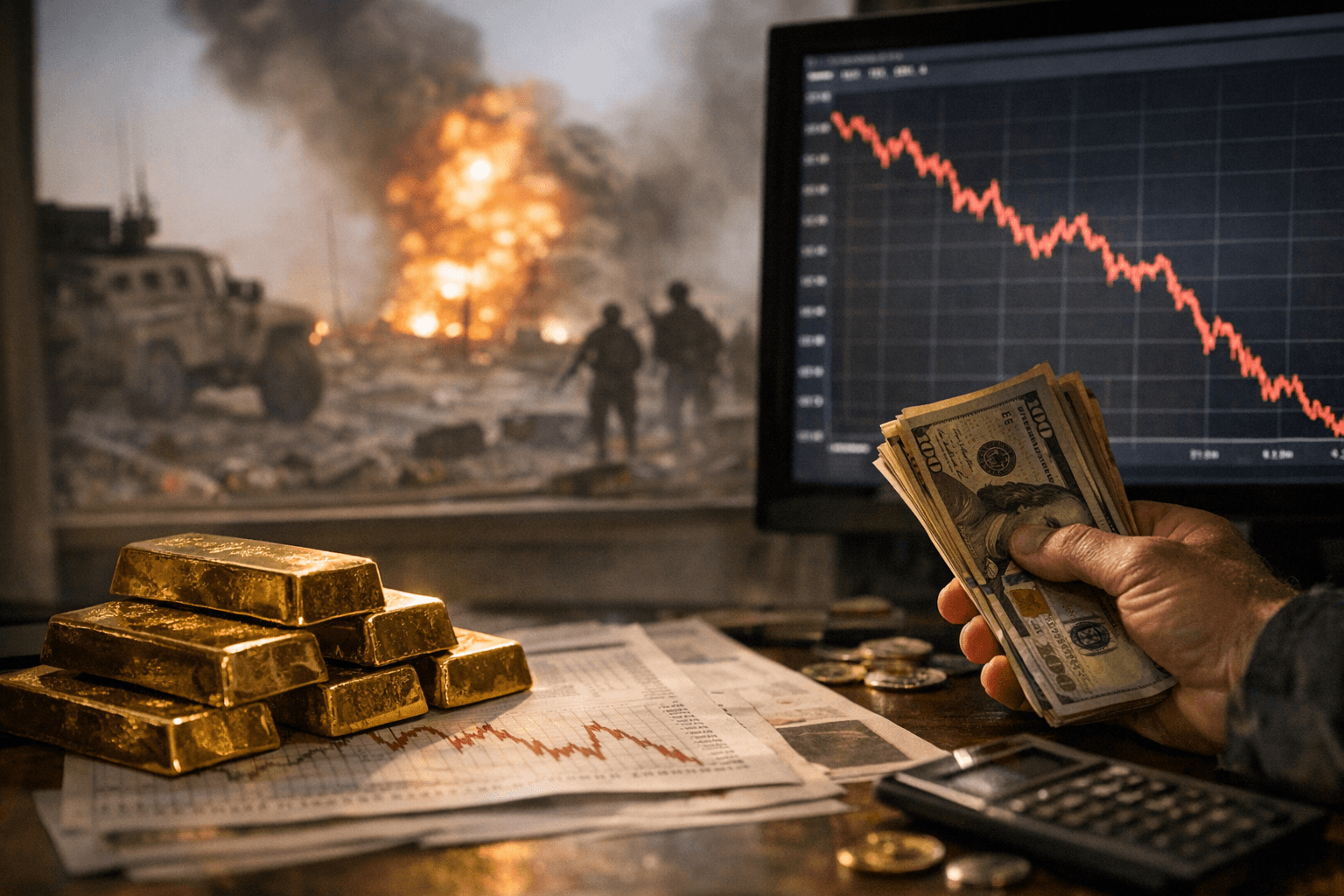
Gold closed out March in the grip of its worst monthly selloff since the 2008 financial crisis, shedding more than 13% as the Iran war upended the metal's role as a safe-haven hedge and snapped it back into a pattern it had broken for years.
Spot gold was trading at $4,559.46 an ounce on Tuesday, up 1.1% on the day but still locked into a month-to-date decline that eclipsed anything seen since the depths of the global financial crisis. The selloff is particularly jarring given where gold started the year. Gold had rallied 64.6% in 2025, its best annual return since 1979, and by late January spot prices had reached an all-time high of $5,589 per ounce.
The mechanism behind the reversal is the same one that defined gold markets for decades before the Ukraine war broke the mold. Wayne Nutland, investment manager at Shackleton Advisers, explained the structural shift plainly. "Prior to the Ukraine war, the gold price tended to be inversely correlated to real bond yields and the US dollar, with the gold price rising when those metrics fell, and gold falling when those metrics rose," he said. "The period after the Ukraine war upended these relationships, in particular in 2025 and into early 2026 when gold rose very strongly, far in excess of the moves suggested by those historic relationships."
The Iran conflict, now in its fifth week, restored those old mechanics rather than breaking them further. "Bond yields and the U.S. dollar have both moved higher, and against this backdrop gold has demonstrated its traditional inverse sensitivity to these metrics, falling as a result," Nutland said. He added that gold's declines have "perhaps also been exacerbated by the strength of the gold price going into 2026 and possibly a desire amongst investors to liquidate profitable positions."
The inflation logic that many traders expected to support gold has instead created a countervailing pressure. Surging oil and gas prices raised expectations of an inflation spike that would lead to a bout of interest rate hikes. U.S. oil settled above $100 a barrel for the first time since 2022 after President Trump said he wanted to "take the oil" in Iran, and Houthi forces joined the conflict. Higher rates make Treasury bonds more attractive relative to bullion, which pays no yield, so the same energy shock that might have once driven investors into gold is now pulling capital toward fixed income.
Polymarket traders now assign a 35% probability to zero Federal Reserve cuts in 2026, the single most likely outcome, and a 20% chance of a rate hike. That repricing of rate expectations has been a decisive drag.
Goldman Sachs, for its part, is not abandoning its bullish medium-term case. "We continue to forecast gold prices reaching $5,400 per troy ounce by end-2026, as central bank diversification continues, currently low speculative positioning normalizes, and the Fed delivers the 50 basis points of cuts our economists expect," the bank said. HSBC, meanwhile, told Kitco that gold has started to act more like a risk asset in 2026, though ongoing moves to diversify reserves away from the dollar still underpin its long-term appeal. Commerzbank analysts see potential rate cuts in the second half pushing gold up to $5,000 an ounce.
The broader market picture reinforces just how thoroughly the Iran war has scrambled traditional correlations. Stocks, bonds and gold have largely sold off simultaneously while energy commodities have surged, and foreign exchange and broader metal markets have also been rattled. For investors who positioned in gold as a hedge against exactly this kind of geopolitical disruption, the March rout is a pointed reminder that safe-haven logic has limits when the same shock that drives fear also drives the yields and dollar strength that price gold out of portfolios.
Know something we missed? Have a correction or additional information?
Submit a Tip

