Gold Prices Swing as Iran Conflict and Fed Rate Signals Create Uncertainty
Gold slipped 0.5% to $4,652 on April 6 as a blowout March jobs report and Trump's Iran threats pushed the dollar higher and rate-cut hopes further out.
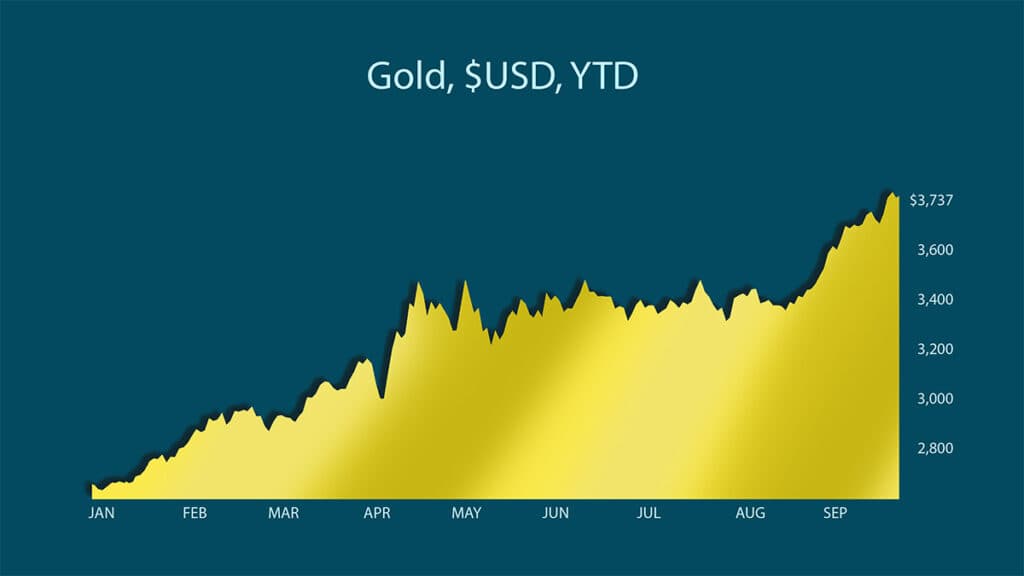
The intuitive bet when a Middle East war intensifies is to buy gold. What happened instead on April 6 illustrated the more complicated reality: spot gold slipped 0.5% to $4,652.89 per ounce as the very forces feeding geopolitical anxiety, surging oil prices and a resilient labor market, conspired to strengthen the dollar and kill prospects for Federal Reserve rate cuts, the two mechanisms most corrosive to bullion's appeal.
The immediate catalyst was March's nonfarm payrolls report, released Friday ahead of the holiday weekend. The Bureau of Labor Statistics recorded 178,000 new jobs, nearly three times the consensus forecast of 60,000 and a sharp reversal from February's revised loss of 133,000 positions. The unemployment rate dropped unexpectedly to 4.3%, below the 4.4% economists had projected. Futures markets responded by pricing in virtually zero probability of any action at the April 28-29 Federal Open Market Committee meeting, with roughly 77% odds that the Fed holds its 3.50%–3.75% target rate through the end of the year entirely, according to the CME's FedWatch tool.
Spot gold slipped 0.5% to $4,652.89 per ounce, while U.S. gold futures for April delivery held steady at $4,678.70 in thin trade, with many markets in Asia and Europe closed for the holiday. Gold prices fell on Monday, pressured by a stronger dollar as elevated oil prices on the back of a protracted Iran war and stronger-than-expected U.S. jobs data dampened hopes for interest rate cuts by the Federal Reserve.
The war itself, now entering its sixth week since military operations began February 28, has become a double-edged sword for gold holders. Gold extended a decline as the escalating war in the Middle East heightened energy-supply and inflation risks, while a surprise drop in U.S. jobless claims also reduced prospects for an interest-rate cut. Bullion fell as much as 1.6% to near $4,600 an ounce, having lost 1.7% in the session that preceded the long weekend. In a social-media post, Trump said he would bring "Hell" to Iran if it didn't open the Strait of Hormuz. Tehran rejected the ultimatum and kept up strikes on energy infrastructure in the region, including a barrage of attacks on Kuwait's oil-refining and petrochemical facilities.
Despite its inflation-hedge status, gold struggles when rates are high as it yields no interest. Spot gold has fallen 13% since the Iran conflict started on February 28. The mechanism is straightforward: higher oil prices feed broader inflation, which narrows the Fed's room to cut, which lifts real yields and the dollar, which makes dollar-denominated bullion more expensive for foreign buyers and less competitive against yield-bearing assets.
Gold managed to defend the $4,600 level despite the bearish opening gap on Monday. However, the metal remained defensive as hopes of any de-escalation in the Middle East conflict were dashed by Trump's latest threat on Iran's infrastructure if the Strait of Hormuz remains blocked. Technically, the 100-day simple moving average sits at $4,632, a line traders watched closely as intraday pressure mounted.
For investors relying on gold as an inflation hedge in retirement portfolios, the current dynamic demands a more nuanced read. The metal is not failing its traditional role outright; it is being outweighed by the rate-expectations trade in the near term. Goldman Sachs analysts said they were still constructive on gold despite the Iran sell-off, noting that markets had repriced the Fed's monetary policy path to one or no rate cuts this year. Goldman continues to forecast gold prices reaching $5,400 per troy ounce by end-2026, as central bank diversification continues, currently low speculative positioning normalizes, and the Fed delivers the 50 basis points of cuts their economists expect. J.P. Morgan predicts prices will reach $6,300 per ounce by the end of 2026, while Deutsche Bank is standing by a $6,000 year-end target.
The higher-for-longer rate environment carries direct consequences beyond gold portfolios. Mortgage rates, auto loans, and corporate borrowing costs all remain elevated as long as the Fed stays on hold, meaning that anyone counting on a rate-cut tailwind to time a major purchase faces a longer wait. Markets are now overwhelmingly pricing in zero rate cuts from the Federal Reserve for the rest of the year, according to the CME's FedWatch tool.
The path back for gold runs through two exits: a resolution in Iran that relieves oil-price pressure and restores the Fed's latitude to ease, or an economic slowdown severe enough to override inflation concerns and force the central bank's hand. Neither appears imminent, leaving the metal caught between its long-run structural case and the short-run arithmetic of real yields.
This article was produced by Prism’s automated news system from verified source data, official records, and press releases, then run through automated quality and moderation checks before publishing. The system is built and supervised by the people who set the standards it runs under. Read our full AI policy.
Did this article answer your question?

