Trump Threatens Iran Strikes, Setting Tuesday Deadline to Reopen Strait
Trump set a Tuesday 8 p.m. deadline for Iran to reopen the Strait of Hormuz or face strikes, as gas hit $4.11/gallon and oil topped $114 a barrel.
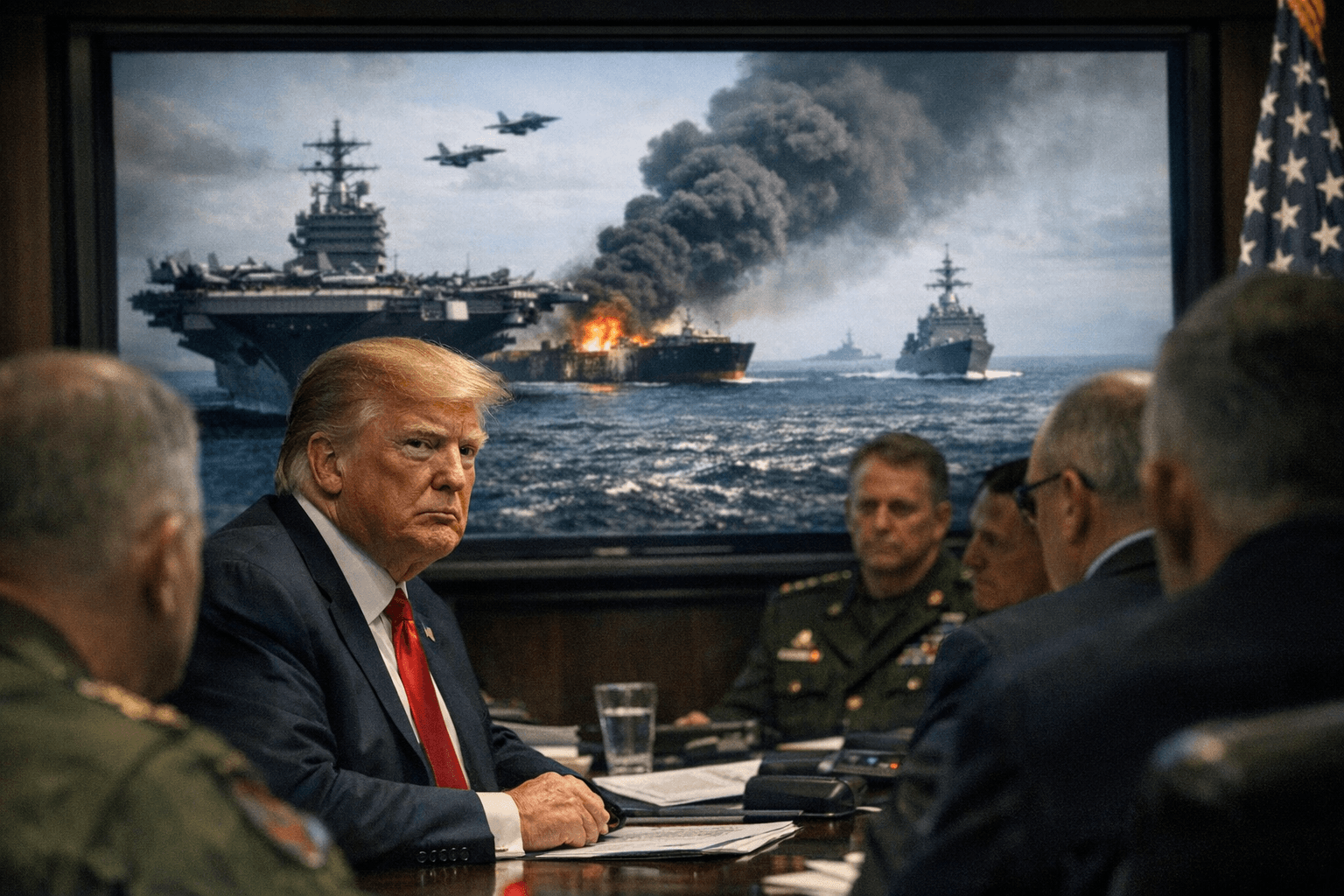
With gasoline averaging $4.11 a gallon nationwide, up nearly 38% since U.S. and Israeli forces launched joint strikes on Iran on February 28, President Donald Trump on Sunday escalated his ultimatum with a new deadline that would either reopen the world's most critical oil chokepoint or trigger strikes on Iranian power plants and bridges.
Trump set 8 p.m. Eastern Time Tuesday as his cutoff, posting on Truth Social that "Tuesday will be Power Plant Day, and Bridge Day, all wrapped up in one, in Iran" in a message that included an expletive demand to open the Strait of Hormuz. The post extended his original Monday deadline by 24 hours. He told ABC News he expected a deal "in days, not weeks," but added: "If it doesn't, we're blowing up the whole country." He declined to rule out ground troops when asked by The Hill.
Oil markets responded immediately. U.S. crude topped $114 per barrel Sunday before WTI futures for May pared gains to $112.08; international benchmark Brent for June traded at $110.47. Goldman Sachs raised its Brent forecast to an average of $110 per barrel for March and April 2026, a 62% jump from the 2025 annual average, warning that if Hormuz flows remain at 5% of normal for 10 weeks, prices will likely surpass oil's 2008 record high. TD Securities warned that onshore inventories could fall to multiyear lows as early as August. Dow futures fell 0.69% (324 points), S&P 500 futures fell 0.76%, and Nasdaq futures declined 0.91%.
The strategic weight of the Strait explains the severity of the reaction. The waterway, sitting between Iran and Oman at the entry to the Gulf of Oman, handles roughly 27% of the world's maritime trade in crude oil and petroleum products, according to Congressional Research Service data, with shipping lanes only two miles wide. Qatar alone ships more than 10 billion cubic feet per day of LNG through the passage. IEA Executive Director Fatih Birol called the disruption "very severe," worse than the 1970s oil shocks and the Russia-Ukraine gas crisis combined. IEA member nations agreed March 11 to release a record 400 million barrels from strategic stockpiles. OPEC+ agreed Sunday to increase production by 206,000 barrels per day in May, though with the Strait still closed, how that oil reaches global markets remains unresolved.
The industries most directly exposed include airlines, trucking, and petrochemical manufacturers. Rapidan Energy president Bob McNally told CNBC: "I can't believe the U.S. military didn't start degrading Hormuz interdiction capabilities on day one. Just as you wouldn't imagine a parachutist diving out of a plane without putting on the parachute."
Diplomatic channels have not produced results. Indirect negotiations between the U.S. and Iran through Pakistan, Egypt, and Turkey over the past ten days yielded no significant progress. Oman held talks with Iranian officials Sunday, and more than 40 countries attended a videoconference hosted by British Prime Minister Keir Starmer. French President Emmanuel Macron called forcibly liberating the Strait militarily "unrealistic." UN Security Council Resolution 2817, adopted March 11, called on Iran to immediately stop blocking the Strait; Iran did not comply.
Iran rejected Trump's ultimatum across multiple fronts. Parliament Speaker Mohammad Bagher Ghalibaf posted on X that Trump's "reckless moves are dragging the United States into a living HELL for every single family." Deputy Foreign Minister Kazem Gharibabadi invoked Article 8(2)(b) of the Rome Statute, calling the threatened strikes on power plants and bridges potential war crimes. Iran's joint military command warned it would escalate attacks on Gulf energy infrastructure if Iranian civilian facilities are struck. Kuwait Petroleum Corporation reported Sunday that several of its facilities had been damaged in drone attacks. Pentagon figures show 365 American service members have been wounded in U.S. operations against Iran.
Rystad Energy analyst Matthew Bernstein offered the market's longer-term verdict: "Moving forward, there will be no going back to the prewar status quo. Prices will be supported even after the war ends by new demand for stockpiling, heightened insurance and freight costs, and a broader geopolitical risk premium.
Sources:
Know something we missed? Have a correction or additional information?
Submit a Tip