Gold slides as dollar strengthens and Treasury yields stay high
Gold fell back toward $4,472 an ounce as a stronger dollar and elevated Treasury yields drained momentum from the safe-haven trade.
Gold retreated to about $4,472 an ounce, its weakest level since March 30, as a firmer dollar and Treasury yields near a more-than-one-year high made the metal harder to justify at current levels. U.S. June futures also slipped, underscoring how quickly the market’s defensive bid has cooled after gold’s surge to a record high earlier this year, when some market sources put the January peak above $5,500 an ounce.
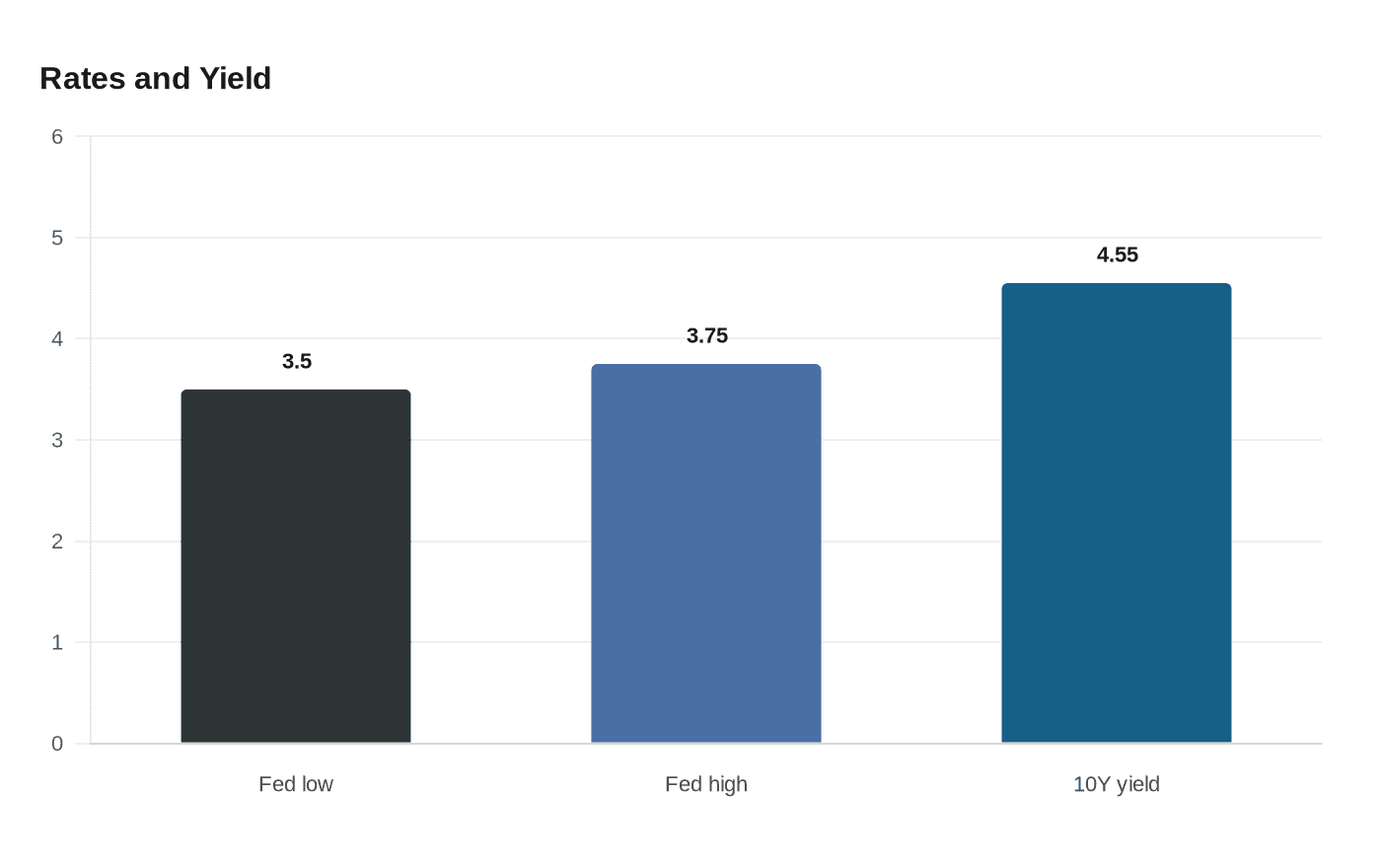
The move marked a reset in a trade that had been driven by inflation worries, war risk and expectations that central banks would soon pivot to easier policy. Instead, the dollar hovered near a six-week high, raising the cost of gold for buyers using other currencies, while the benchmark 10-year Treasury yield, recently around 4.55%, increased the opportunity cost of holding an asset that pays no interest. Tim Waterer of KCM Trade said rising yields and a firmer dollar were sapping gold’s momentum.
Geopolitical tension still offered some support, but not enough to offset the pressure from rates. U.S. signals on Iran were mixed, with Donald Trump warning that Washington might still need to strike Tehran, while JD Vance said there had been progress in talks and neither side wanted a return to conflict. That left enough uncertainty to keep safe-haven demand alive, but not enough to overcome the yield advantage now offered by Treasury debt.
The pressure on gold also reflected a broader change in expectations for Federal Reserve policy. At its April 28-29 meeting, the Federal Reserve held its target range at 3.50% to 3.75%, and Anna Paulson of the Federal Reserve Bank of Philadelphia said current interest rates looked appropriate for now. She also said it was healthy for investors to consider scenarios in which rates might need to rise, a sign that policymakers are still fighting elevated price pressures. The minutes from that meeting were due to offer more detail on divisions inside the Federal Open Market Committee.
For ordinary investors, the message is plain: gold can still act as protection in a crisis, but it weakens when real yields and the dollar move against it. Retirement savers who bought gold as an inflation hedge are seeing that hedge tested by a market that now looks more convinced rates will stay restrictive. Most economists surveyed expected the Fed to avoid cutting rates this year, with easing pushed into 2027 if inflation stays sticky. In that setting, gold’s next move depends less on fear and more on whether yields and the dollar finally lose their grip.
Know something we missed? Have a correction or additional information?
Submit a Tip