Gold surges past $4,500 an ounce, silver and platinum hit fresh records
Global precious metals climbed sharply on Dec. 24 as investors sought safe haven assets and priced in further U.S. rate cuts, sending spot gold above $4,500 an ounce for the first time and driving silver and platinum to new highs. The moves reflect a mix of central bank buying, speculative inflows and lingering supply dislocations that could sustain pressure on markets into 2026.
Global precious metals markets rallied on Dec. 24, with spot gold breaking above $4,500 an ounce for the first time in intraday trade and closely related markets also printing record highs. Trading venue data showed an intraday peak for spot gold at $4,525.19 before the metal eased, trading around $4,479.38 per ounce at 1:57 p.m. Eastern Time after a modest retreat of 0.2 percent. U.S. gold futures for February delivery were quoted around $4,520 during the session.
Silver posted an all time intraday high of $72.70 per ounce and was changing hands near $72 in subsequent prints, reflecting fast moving speculative flows that have driven the metal up sharply this year. One market note cited year to date gains for silver exceeding 150 percent in certain trading venues, underscoring extreme momentum from both investor demand and residual effects of a short squeeze in October that tightened physical supply chains.
Platinum also reached new heights, peaking around $2,377.50 per ounce in intraday trade, while palladium showed divergent readings across the session with one snapshot near $1,815 and another above $1,897, illustrating how prints can differ by time zone and exchange. Base metals strengthened alongside precious metals, with three month rolling copper futures on the London Metal Exchange breaching $12,000 per ton this week, hitting an intraday high near $12,160 and closing around $12,060.50, a year to date rise approaching 38 percent.
Market participants pointed to several structural and cyclical drivers. Policy expectations for additional U.S. interest rate cuts next year have pushed real yields lower and weakened the U.S. dollar, increasing the appeal of non interest bearing precious metals. Continued central bank buying has added a steady source of demand, while speculative inflows and fragmented physical market conditions after October have amplified price moves.
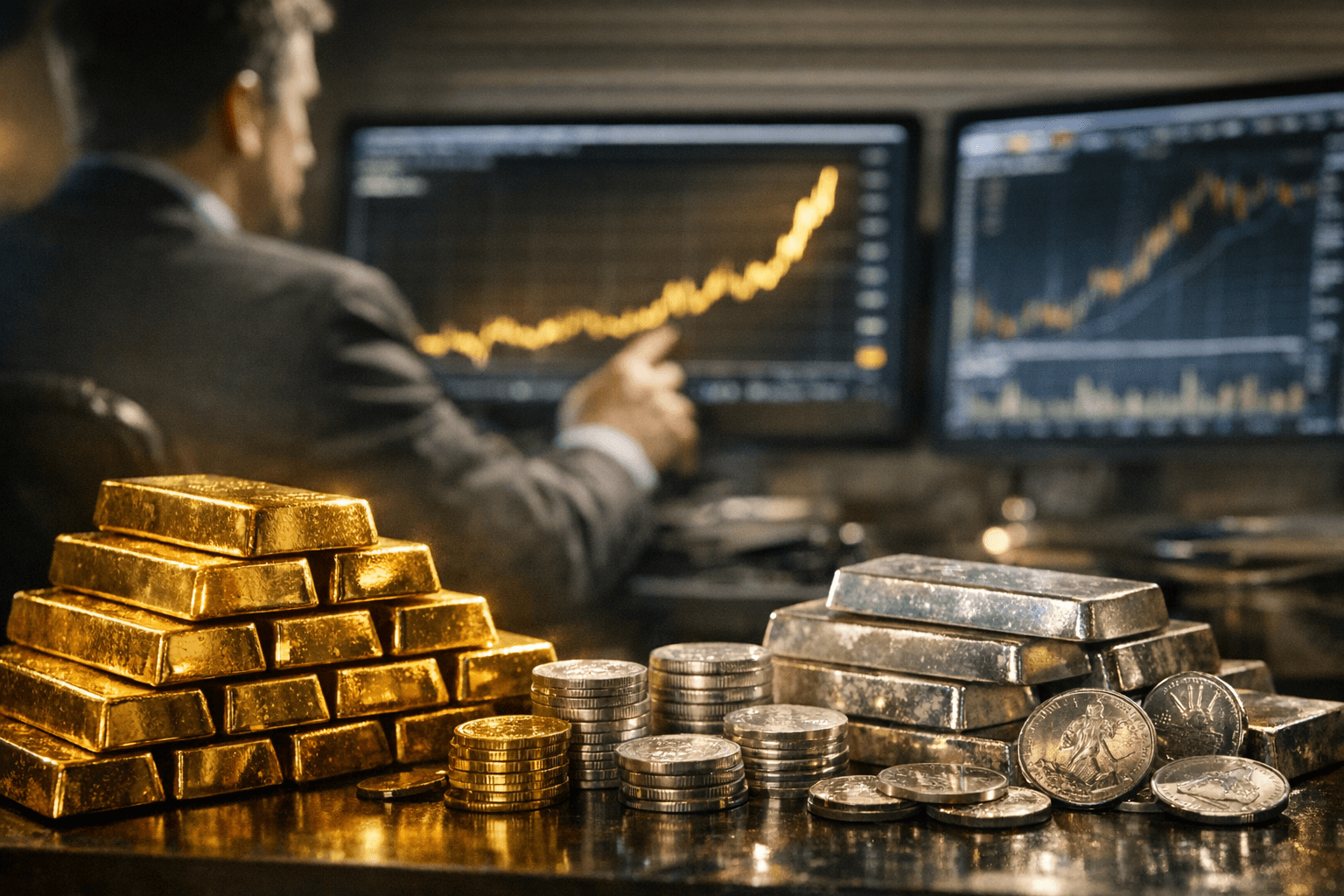
“The lack of any bearish factors and strong momentum, all backed by solid fundamentals, which include continued central bank buying, a falling U.S. dollar and some level of haven demand,” supports gold, said Fawad Razaqzada, market analyst at City Index and FOREX.com.
Institutional forecasts cited by market participants suggest the rally may have room to run, with some banks projecting a base case for gold near $4,900 an ounce in 2026. That outlook frames broader implications. Higher precious metal prices can lift mining sector revenues and spur exploration investment, while also complicating central bank strategies that weigh inflation dynamics against financial stability. For investors, rapid gains increase the risk of sharp reversals as positions unwind, particularly in futures and exchange traded products.
Volatility is likely to remain elevated as trading flows shift across global time zones and liquidity thins in holiday season hours. Yet the combination of policy bets, central bank appetite and constrained physical supply suggests metals will remain a focal point for markets and for policy makers monitoring inflation expectations and financial market resilience into next year.
This article was produced by Prism’s automated news system from verified source data, official records, and press releases, then run through automated quality and moderation checks before publishing. The system is built and supervised by the people who set the standards it runs under. Read our full AI policy.
Did this article answer your question?