Goldman Sachs' David Solomon on Geopolitics, AI and China at Australia Summit
David Solomon told audiences in Australia and Asia that AI infrastructure spending topped 1% of GDP in 2025 and that Goldman research sees white-collar roles most at risk from automation.
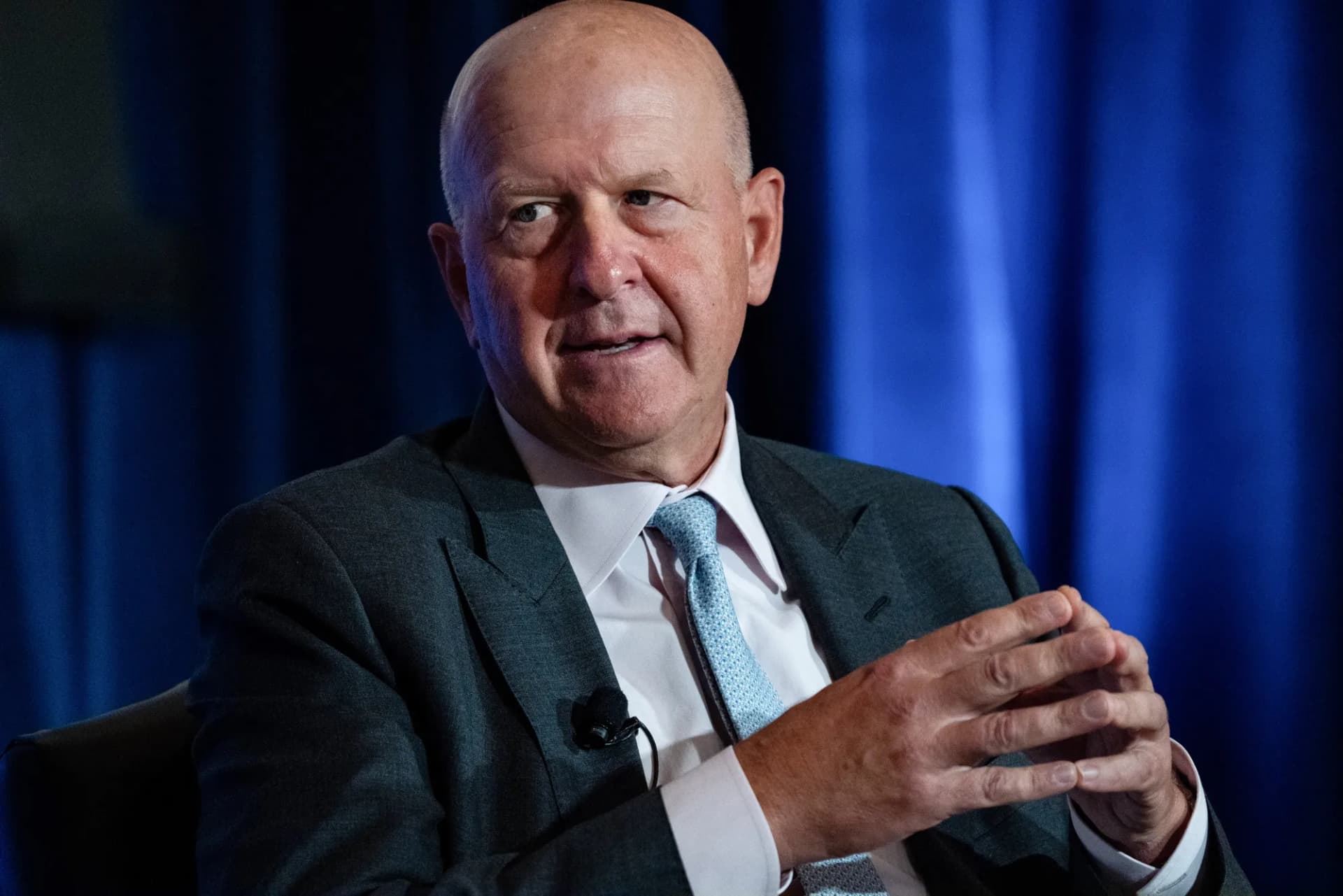
Goldman Sachs chairman and CEO David Solomon used a series of public appearances in Australia and Asia to underline a narrow trade- and technology-driven roadmap for 2026, arguing capital spending on AI will shape hiring and markets more than geopolitics. At the inaugural Australia Alternatives Summit Solomon addressed geopolitical tensions, AI developments, Australian and Chinese markets, and private credit, while appearing in conversation with editor-in-chief James Chessell at The Australian Financial Review Business Summit and in a Hong Kong interview posted November 4, 2025.
Solomon put the scale of AI investment in stark terms: in 2025 AI infrastructure spending “accounted for over a percent of GDP,” and the largest cloud providers together “spent up to $400 billion,” figures he referenced when describing a capex cycle that should support growth into 2026. That surge in AI-related capital demand, he said, is already feeding data-center construction, higher power consumption and job creation across parts of the economy.
The labour implications were highlighted with equal bluntness. Goldman Sachs researchers, Solomon said, have been studying “the potential for AI to disrupt jobs across the US economy over the next five years,” and their work points to shifts in job types rather than widespread shortages: despite short-term disruption, their analysis “suggests the economy’s resilience will prevent major labour shortages over a 10-year period.” Solomon and regional media also warned that “white collars will be susceptible to technology disruption,” a framing employees in control functions and advisory roles should note as teams plan reskilling and staffing.
Geopolitics remained a central theme in the sessions. Rishi Sunak, Senior Advisor at Goldman Sachs and former prime minister, described “the next decade as the most dangerous and transformational of our lifetime,” warning of “a shift from a unipolar to a volatile multipolar order, marked by rising coordination among authoritarian regimes and intensifying US–China competition.” Steven Mnuchin, identified as the 77th US Secretary of the Treasury and founder and managing partner of Liberty Strategic Capital, underscored the US economy’s “broad resilience” while flagging fiscal risks: “The budget deficit, enlarged due to excessive post-COVID spending and political resistance to spending cuts, is a key risk, and the debt-to-GDP ratio may become a bigger concern if US GDP does not grow at 3% per annum.”

Solomon sought to temper headlines about trade and conflict: “When there’s uncertainty in the world, from a geo-political perspective, it creates more risk. It certainly gives people a little bit more pause. But when you look at technology, innovation, growth, and what’s going on broadly in the economy, the economy is kind of parking that on the side.” He said there is “a reasonable chance we could get some sort of a trade deal” with China in 2026, reflecting his view that de-escalation is possible.
Markets have already reacted to AI spending: a long-term cloud deal between a hyperscaler and OpenAI will see a multiyear payment for GPU capacity in the tens of billions of dollars, a transaction cited by market commentators as fuel for a recent tech rally. For investors and deal teams at Goldman, Solomon’s message was concrete: alternatives and private-credit strategies must balance selectivity and strategic foresight to capitalise on AI-driven capex while managing geopolitical and fiscal tail risks into 2026.
Know something we missed? Have a correction or additional information?
Submit a Tip