Goldman Sachs directs employees to NLRB guidance on union organizing rights
Goldman Sachs directed employees to the NLRB’s “Your Rights during Union Organizing” page, an evergreen primer that lays out NLRA protections and how to file unfair labor practice charges.
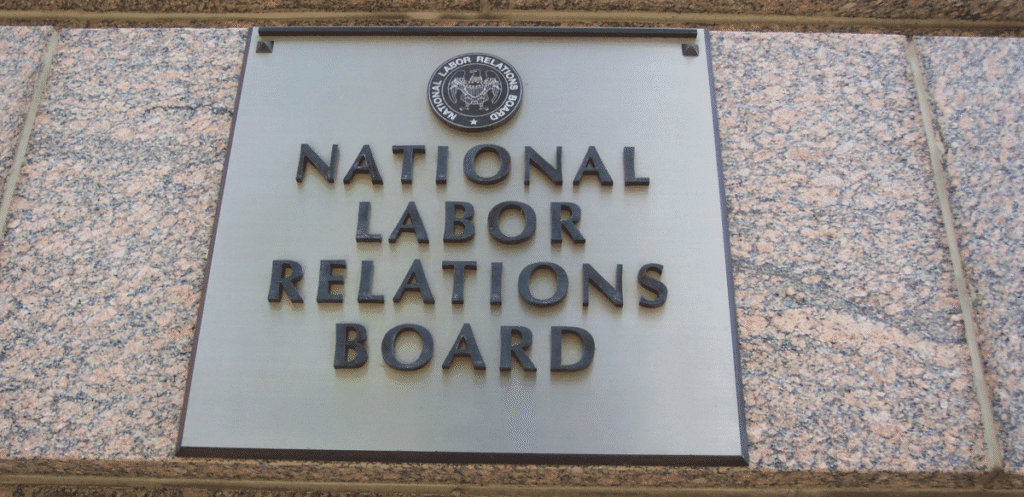
Goldman Sachs directed employees to the National Labor Relations Board’s “Your Rights during Union Organizing” page, which the NLRB describes as “an evergreen, authoritative primer that explains the employee protections guaranteed by the National Labor Relations Act (NLRA). The page is designed for workers, employers and practitioners and is a” — a truncated description the agency uses to position the guidance as the primary resource on organizing rights.
The AFL-CIO’s plain-language list of statutory protections echoes the NLRB frame: “Under the National Labor Relations Act, you have the right to: Join a union. Talk to your co-workers about joining a union. Pass out literature about joining a union (in non-work areas during non-work times). Sign up your co-workers on petitions in non-work areas and during non-work times. Join with your co-workers for the purpose of forming a union. Join with your co-workers for the purpose of improving working conditions in your place of employment.” The union federation’s text supplements UFCW1996’s election reminder that “You are entitled by federal law to vote your free choice in a fair, honest, secret-ballot election to determine whether employees want union representation.”
Employee-facing materials from IBEW list clear employer prohibitions that staff should note: “In response to union organizing, an employer can't: Fire, demote, or transfer employees for expressing pro-union views or reward employees for expressing anti-union views. Reduce pay, hours, or benefits. Impose new paperwork requirements to maintain employment. Contact law enforcement, including ICE. Make work more difficult or less desirable—like changing work schedules, denying overtime, or separating employees. Tell employees that it's pointless to choose a union. [...] Tell employees that it's pointless to choose a union.” The AFL-CIO adds complementary prohibitions, warning employers cannot “interfere with, restrain or coerce you” or “form a union that is financed or controlled by an employer.”
If employees believe their rights have been violated, the research notes preserve IBEW’s filing instructions verbatim: “If an employer is interfering with your right to form, join, or assist a union, you can file an unfair labor practice charge with the NLRB. We have interpretors available. Find your local NLRB office: bit.ly/NLRBOffices Call us: 1-844-762-6572 Email us: publicinfo@nlrb.gov File a charge: bit.ly/FileACharge More information at nlrb.gov.” UFCW1996 also supplies an NLRB contact number: “You can reach the National Labor Relations Board by calling (404) 331-2896.”

Coverage and exclusions under the NLRA are nuanced in the guidance cited. AFL-CIO notes the NLRA “applies to most workers in the private sector” but excludes many public-sector workers and some categories such as independent contractors and supervisors. The Department of Labor adds detail: “The NLRA covers most private sector employees and United States Postal Service employees, but it does not cover other government employees, agricultural laborers, most domestic workers, independent contractors, or supervisors (although supervisors that have been discriminated against for refusing to violate the NLRA may be covered).). The NLRA also does not cover workers in the railroad and airline industries who are covered by the Railway Labor Act.”
Management-oriented materials from the law firm Fisher & Phillips outline employer-focused procedures and Board doctrines. Fisher & Phillips says there are multiple paths by which an employer may become obligated to recognize and bargain with a union: “through an election conducted by the National Labor Relations Board; by remedial order as a consequence of committing unfair labor practices; by remedial order as a consequence of committing unfair labor practices; by voluntary agreement or by a private election; or by operation of law under several Board doctrines.” The firm also lists doctrines including the “one year rule,” the “contract bar rule,” the presumption of continuing majority status, the “taint doctrine,” a presumption that strike replace-ments are “temporary” employees, and the “unfair labor practice strike doctrine.”
For employers, the DOL recommends practical compliance steps and resources: “Make sure your employees are aware of their rights to organize and bargain collectively – for example, by circulating the poster developed under E.O. 13496.” The DOL’s resource list includes the National Labor Relations Board website, employer.gov, the Worker Organizing Resource and Knowledge Center, the Small Business Administration website, and the Federal Mediation and Conciliation Service. Worker-facing materials close with the AFL-CIO’s Spanish line “Sus derechos en el trabajo.” UFCW1996’s campaign fragments preserved in the notes — “Contact My Rep Join 1996 Contact My Rep Form a Union JOIN 1996” — reflect the call-to-action language union materials use alongside the official NLRB guidance.
Know something we missed? Have a correction or additional information?
Submit a Tip