Goldman Shares Plunge as Private-Credit Contagion Fears Roil Markets
Goldman shares plunged 7.5% in one session, capping a three-month slide from $985 to $860 as private-credit contagion fears tied to several shocks spread through markets.
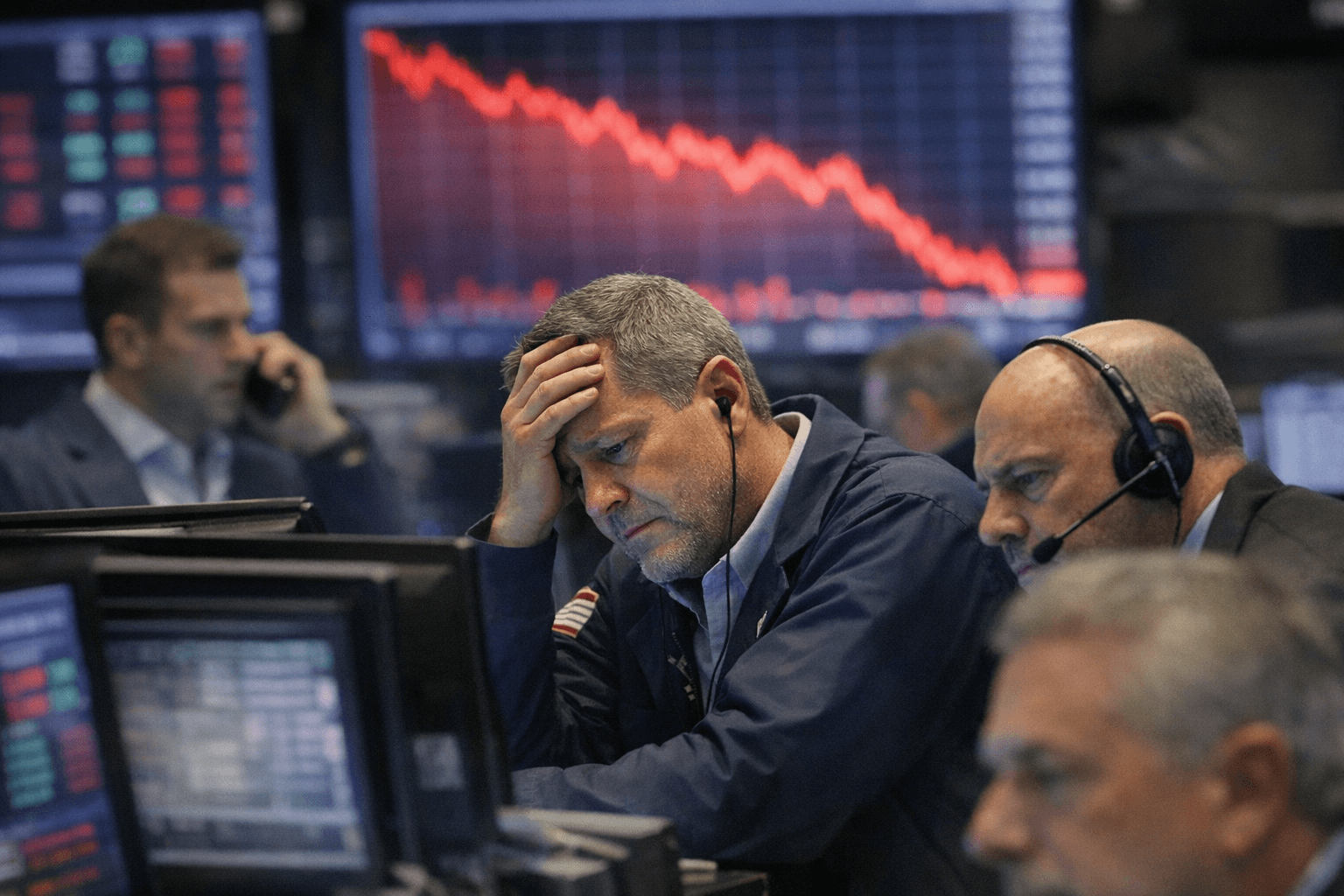
Goldman Sachs shares dropped 7.5% in a single day, following a three-month decline from $985 to $860, as investors priced in fears of a private-credit contagion tied to multiple recent shocks. The selloff came amid a broader risk-off move that hit equity futures and volatility measures.
U.S. equity futures weakened sharply, with S&P 500 futures falling more than a full percentage point and Nasdaq 100 futures down about 1.4%. European markets were not spared; the Stoxx 600 and the FTSE 100 each lost more than a full percentage point at the open. The VIX fear index spiked 32% on the session, a reading that has not been that high since President Trump roiled the market with his Liberation Day tariffs in April.
Market participants traced the rout to a string of related triggers rather than a single event. One narrative links the fear to contagion spreading from a collapsed UK mortgage lender. Another flashpoint came after two small regional U.S. banks disclosed exposure to a potentially fraudulent loan worth only $60 million, a shock that rippled into risk assets. Renewed troubles at Blue Owl over asset sales also helped trigger a sharp selloff in shares of alternative asset managers with private-credit footprints. Separately, analysts warned that concerns about AI eroding software-company earnings are prompting reassessments of borrower creditworthiness in private credit.
Portfolio manager Michael Gayed summed the mood among some investors, saying the move “signals a broader credit event rather than a mere market correction.” ING’s Francesco Pesole framed the episode as an extension of lingering sensitivity to regional-bank stress, noting: “The contagion to other risk assets shows not only that markets are still sensitive to regional bank concerns (a legacy of SVB’s 2023 collapse), but potentially to the broader credit market, which has been operating on exceptionally tight spreads over the past few months.”
Goldman has sought to draw a contrast between firm-level flows and broader market anxiety. In a letter to investors, the firm said Goldman Sachs Private Credit Corp had December inflows 11 per cent above the year-to-date average and a fourth-quarter redemption rate of 3.5 per cent, compared with more than 5 per cent for peers. Goldman added, “As we enter 2026, the private credit landscape is facing volatile macroeconomic conditions, shifting flows in the traded and non-traded BDC (Business Development Company) market, and accelerating technological change - particularly around AI.” The firm’s asset-management arm has assured investors that the redemption rate at GS Credit remains well below that of its peers.
Longer-term performance metrics show the recent shock comes against a backdrop of strong multi-year returns. The shares are down about 7.79% over one month and down 5.66% year to date, while one-year total shareholder return stands at 51.50% and five-year total shareholder return at 194.22%. Private credit itself has swelled into what analysts call a roughly $2 trillion juggernaut in the alternatives market, meaning any stress there reverberates through banks, asset managers and corporate borrowers.
Goldman, JPMorgan and Citi have all defended the diversification and soundness of their private-credit due diligence on recent earnings calls, but traders reacted by selling anyway. For Goldman, the firm-level inflows and the 3.5 per cent redemption rate will be the concrete metrics investors watch as markets decide whether this episode is a momentary scare or the start of a wider credit event.
Know something we missed? Have a correction or additional information?
Submit a Tip