Gordie Howe International Bridge opens, linking Canada and the US
A new $6.4 billion span began carrying traffic across the Detroit River, adding a customs crossing aimed at easing auto-parts bottlenecks.
Traffic began rolling across the Gordie Howe International Bridge on July 27, giving the Detroit-Windsor corridor a new route for freight, commuters and trade between Canada and the United States. The opening lands at the center of one of North America’s busiest manufacturing arteries, where auto parts and other commercial goods move in just-in-time flows that can be slowed by congestion, border delays and added trucking costs.
The bridge was formally designated a port of entry in Detroit, Michigan, in a Federal Register notice dated Jan. 30, 2026, a step that underscored its customs role before the first trucks crossed. That designation matters for carriers that have long depended on crowded existing crossings over the Detroit River. A new port of entry can spread traffic across more than one route, reduce bottlenecks and give shippers more reliable timing for deliveries that feed assembly lines in Michigan and Ontario.
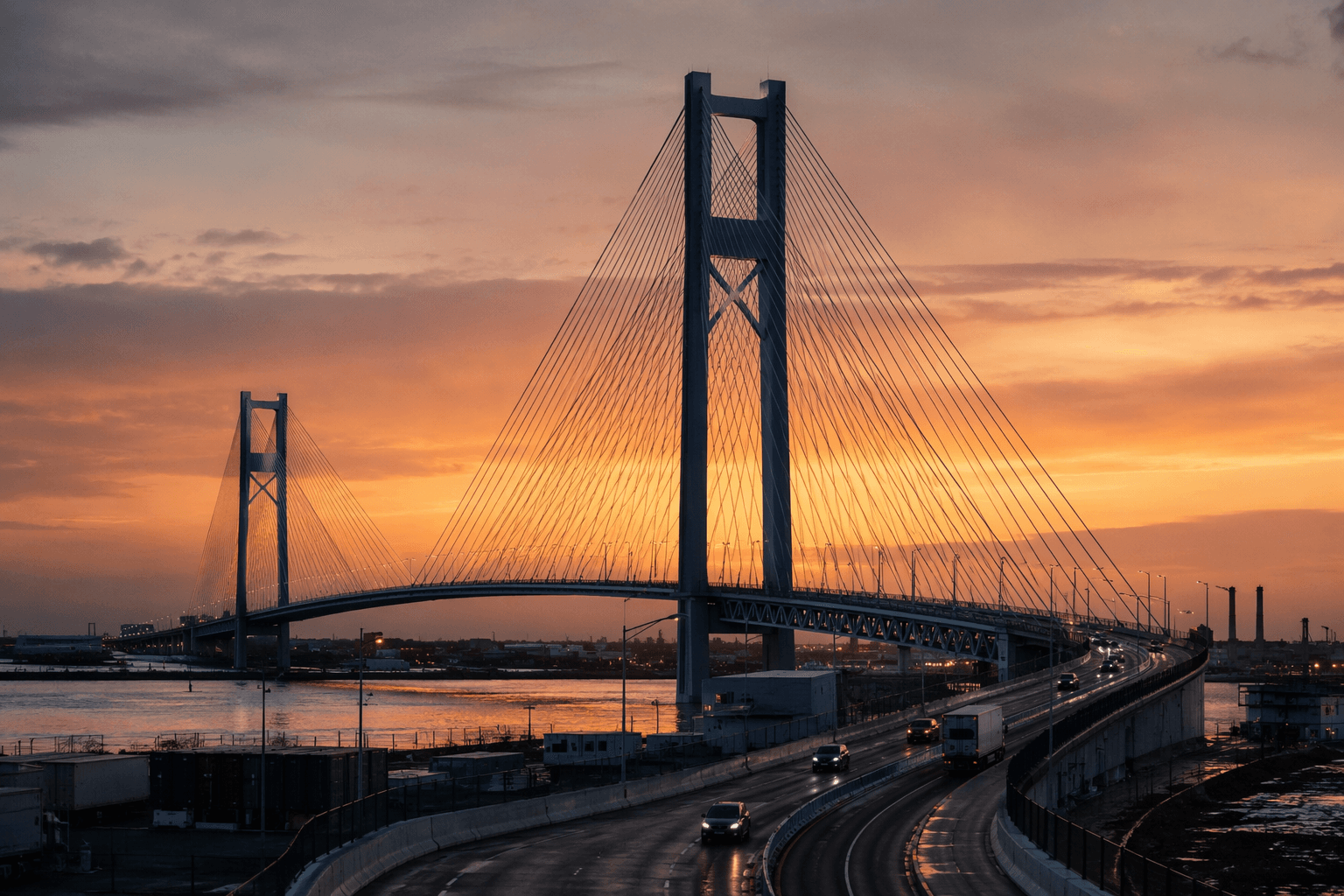
The project had been years in the making. CBC said it took 25 years of planning, seven years of construction and months of delays before the first trucks were set to roll over the bridge. Project materials put the cost at roughly $6.4 billion. The span was built to provide a new route for trade, jobs and tourism between Canada and the U.S., while also reducing congestion and adding redundancy to the border system that links Detroit and Windsor.
Officials also staged a celebration and ribbon-cutting before the opening, marking the end of a build that had become a major public investment on both sides of the border. The Windsor-Detroit Bridge Authority says the project site is on Anishinaabe Territory, a land acknowledgement that has been part of the bridge authority’s annual report and corporate plan summary. The multi-use path for pedestrians and bicyclists was set to open later on Aug. 5, extending the crossing’s use beyond truck traffic.
For the Great Lakes economy, the timing is significant. The Detroit-Windsor corridor handles a heavy volume of auto parts, manufacturing components and consumer goods, and every delay at the border can ripple through production schedules and freight bills. A new bridge does not erase customs checks or border security, but it gives shippers another fixed crossing, a cleaner traffic pattern and a modern option in a corridor where reliability is as valuable as speed.
This article was produced by Prism’s automated news system from verified source data, official records, and press releases, then run through automated quality and moderation checks before publishing. The system is built and supervised by the people who set the standards it runs under. Read our full AI policy.
Did this article answer your question?