Got Wood? LLC Publishes Workshop-Oriented White Ash Guide for Woodturners
Brad Leigher’s Got Wood? LLC education post (published March 4, 2026) puts White Ash (Fraxinus americana) into a workshop-ready species guide for turners, full of practical bench tips.

Brad Leigher of Got Wood? LLC published a hands-on profile of ash that’s built for the lathe rather than the library—most commonly White Ash, Fraxinus americana—and it went live March 4, 2026. That matters because Leigher’s post is explicitly an education blog entry aimed at woodturners, not a botanical survey, so every section reads like something you’d keep clipped to your face shield while you work.
What the guide is: a workshop-oriented species profile Brad Leigher’s education blog frames ash as a turning species with immediate, actionable information; the post is credited to him and labeled as a practical species guide. The emphasis in the Got Wood? LLC piece is on real-world handling in the shop: what you can expect when you buy ash blanks, how it behaves on the tool, and how to finish the pieces so they work and sell. Because Leigher kept the focus narrow—most commonly covering White Ash (Fraxinus americana)—the guide avoids vague generalities and gives woodturners a single species to get comfortable with.
Identifying and sourcing White Ash Leigher names White Ash (Fraxinus americana) as the most common ash in play, and that’s the first practical advantage: when you can ask for Fraxinus americana by name, your supplier is less likely to slip you a mixed load. In my experience, calling out the Latin name at the lumberyard or swap meet avoids surprises; the Got Wood? LLC post makes that same simple point, which saves time when you need consistent grain and behavior in a batch of blanks.
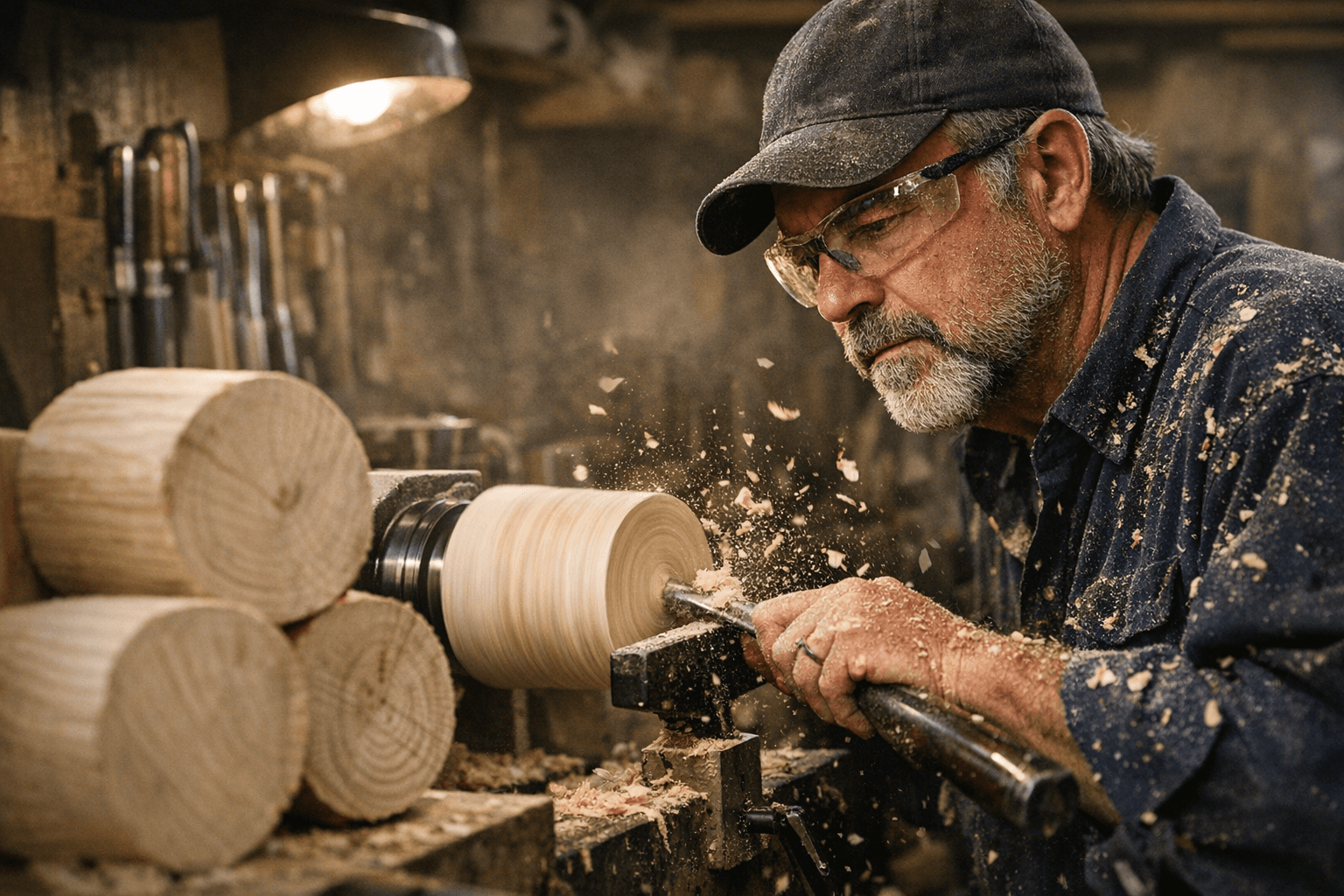
Workshop handling and roughing strategy The Got Wood? LLC guide is built around shop workflow, so treat it like a procedure sheet. When I turn White Ash (Fraxinus americana), I follow a conservative sequence—mount, rough to shape with slow cuts, and leave a chucking allowance—so the blank dries and moves predictably. Leigher’s post is useful here because it validates turning-first, dry-later workflows for many turners; use that affirmation to avoid the common pitfall of over-finishing green ash and then discovering cracking after a week on the shelf.
Tool selection and cutting technique Brad Leigher’s education focus on Ash means the guide points you toward tools and cuts that work on this species. From my bench: a 3/8" or 1/2" bowl gouge with a swept-back flute makes clean, controlled cuts in White Ash (Fraxinus americana), and a sharp spindle gouge handles beads and coves without excessive tearout. Leigher’s Got Wood? LLC post reinforces the shop-side reality that keeping tools sharp is more important than chasing a particular brand—sharp steel makes the difference when ash’s grain direction changes.
Drying, cracking and moisture tips Because the Got Wood? LLC entry is workshop-oriented, Leigher addresses what you do after the lathe: monitor moisture content and leave extra material where cracks tend to start. I use a meter to track blanks of White Ash (Fraxinus americana) and I’ll keep a 1/8"–1/4" rim for later sanding rather than chasing a finished edge early on. Leigher’s practical framing helps justify that slow approach in a class or shop environment—don’t shortchange drying because a premature finish will cost you time and material.
Finishing and surface prep for saleable pieces Leigher’s guide is about turning that lasts, and that includes finishing choices for White Ash. My standard finishing sequence for Fraxinus americana—light sanding, a shellac seal if I need quick handling, then a durable oil finish—pairs with the guide’s workshop recommendations to keep objects functional. Because the Got Wood? LLC post is written with turners in mind, it’s a good prompt to test your finish on a sacrificial piece before committing to a saleable run.
Common pitfalls and how Leigher’s angle helps One reason the Got Wood? LLC post resonates is that it anticipates the usual mistakes: buying mixed species, overworking green wood, or not leaving allowances for drying. Brad Leigher’s hands-on approach gives you permission to simplify—start with White Ash (Fraxinus americana) blanks you can buy consistently and then master a small set of techniques until they’re second nature. That focus reduces waste and accelerates learning curves in club workshops or weekend classes.
Project suggestions that fit the species profile Leigher frames ash as a dependable species for the shop, and that translates into real projects: sports bat and handle blanks, utility bowls, and tool handles where straight grain and strength matter. Based on the Got Wood? LLC guide, choose projects that benefit from Fraxinus americana’s predictable behavior so you can crank out practice pieces that refine technique and sell without surprises.
How to use the guide in a club or classroom Because the post is on Got Wood? LLC’s education blog and credited to Brad Leigher, it fits nicely into a club handout or a one-page lab sheet; print it and clip it to the wall before a hands-on session. Leigher’s March 4, 2026 posting is especially handy for demonstrators who want a single species focus for a workshop: start the day with the guide, then run a sequence of turning exercises that mirror the blog’s workshop orientation.
Bottom line: why this matters to your bench Brad Leigher’s Got Wood? LLC workshop-oriented profile of White Ash (Fraxinus americana) delivers a single, practical proposition: stop chasing species variety and learn one dependable wood well. Published March 4, 2026, the education blog entry gives you a pragmatic starting point for consistent blanks, repeatable techniques, and fewer ruined projects—exactly the kind of guidance you want clipped to the face shield when you’re turning.
Know something we missed? Have a correction or additional information?
Submit a Tip