Government to unveil plan to nationalise British Steel this week
Ministers will ask Parliament for power to take British Steel into public ownership, after £377 million in emergency support and fears over Scunthorpe’s last blast furnace.
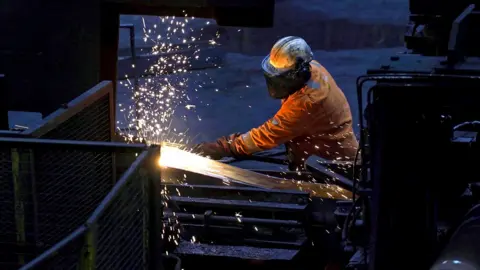
Britain is preparing to test whether the state should stay inside heavy industry, not just rescue it in a crisis. Legislation to be announced in the King’s Speech on Wednesday will give ministers the option to nationalise British Steel, a move that would put one of the country’s most strategic manufacturing assets back into public hands for the first time since 1988.
The plan is designed to keep steelmaking alive at Scunthorpe, where the UK’s last remaining blast-furnace operation has been under government control for almost a year. Ministers say the new law would only be used if a public interest test is met, but the direction is clear: safeguard domestic steel capacity, prevent a sudden shutdown, and give workers, suppliers and customers more certainty while the political mood shifts back toward active industrial policy.
That shift has already cost the public money. The National Audit Office said the Department for Business and Trade spent £377 million between 12 April 2025 and 31 January 2026 to keep the Scunthorpe site operating, and that ongoing costs are running at about £1.3 million a day. There is no fixed budget, repayment schedule or end date. The scale of the support underlines how far ministers have already moved from market hands-off instincts to direct stewardship of a foundation industry.

The emergency intervention began in April 2025 under the Steel Industry (Special Measures) Act 2025, passed on 12 April 2025 after British Steel’s owner Jingye said it intended to close the blast furnaces immediately. That came despite months of talks and a government co-investment offer of £500 million. The government said then that the intervention was meant to protect thousands of workers and keep domestic steel available for nationally important projects.
The stakes reach far beyond Scunthorpe. Earlier this year, British Steel warned that up to 2,700 jobs could go if the furnaces were shut. Unite said more than 3,000 jobs and key skills were at risk, with Sharon Graham arguing: “Ministers could not have allowed a foundation industry to go under with the loss of more than 3,000 jobs and key skills. It is absolutely the right thing to do to begin the process of nationalisation.” GMB has also said the legislation should shield the industry from foreign owners.

The government’s Steel Strategy, published in March 2026, set out why the issue now carries national weight. Steel underpins railways, automotive production, construction, defence and clean energy, and communities in Scunthorpe, Port Talbot, Sheffield, Teesside and Motherwell still depend on it. With the UK’s steel safeguard measure due to expire at the end of June 2026, the question is no longer whether ministers will intervene. It is whether British Steel becomes a one-off rescue or the template for a wider return of the state to British industry.
This article was produced by Prism’s automated news system from verified source data, official records, and press releases, then run through automated quality and moderation checks before publishing. The system is built and supervised by the people who set the standards it runs under. Read our full AI policy.
Did this article answer your question?

