Great white sharks vanish from South African hotspot, disrupting ocean food chain
Seal Island once logged 6,333 great white sightings, then white sharks all but disappeared, forcing scientists to weigh killer whales against human pressure.
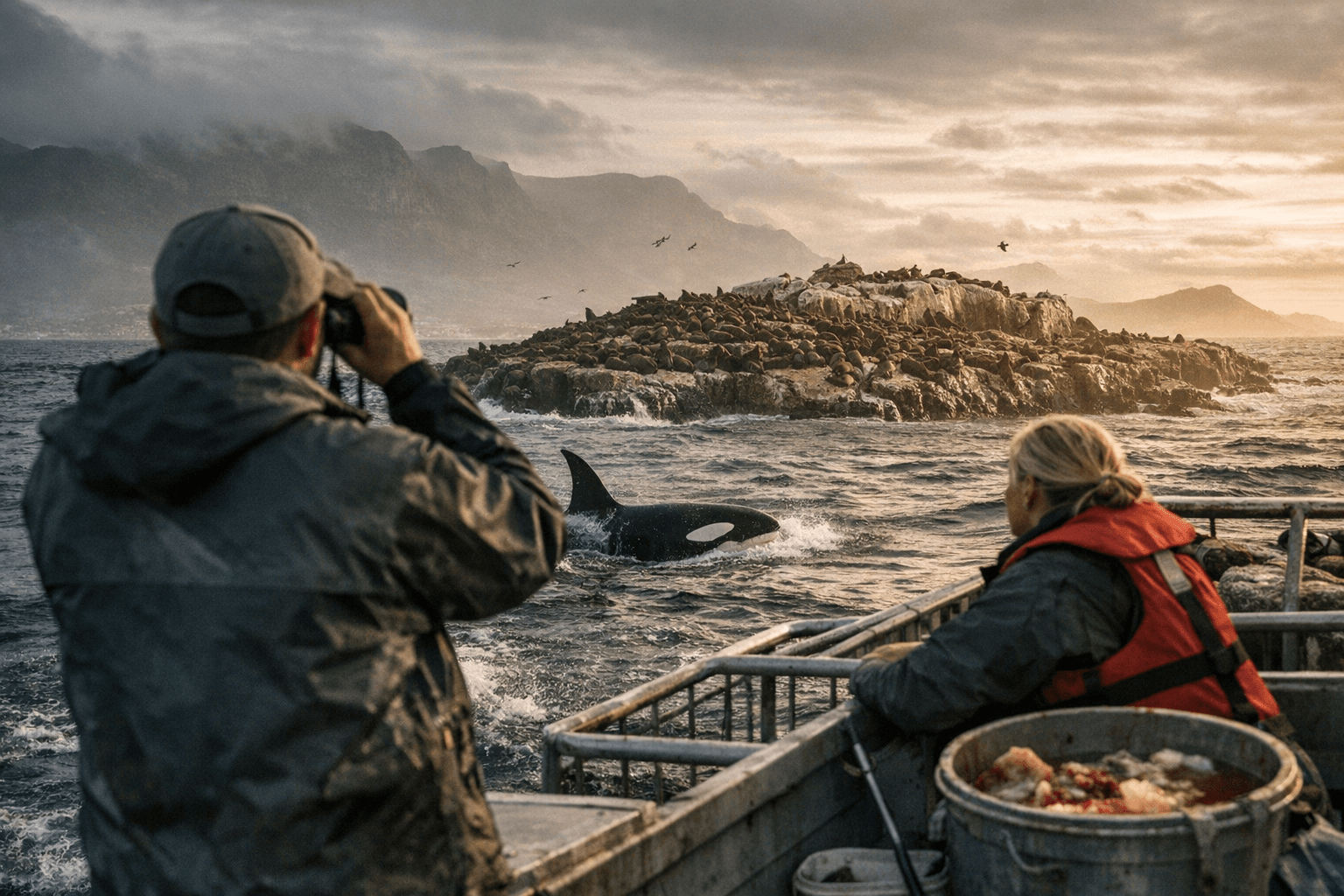
Great white sharks have nearly vanished from Seal Island in False Bay, and the loss is now exposing how quickly a marine food web can change when a top predator drops out. Long-term monitoring at the Cape Town site recorded 6,333 white shark sightings and 8,076 attacks on seals between 2000 and 2018, then showed a sharp decline in shark abundance and attack rates from 2015 to 2018, with especially low numbers in 2017 and 2018.
The disappearance matters because Seal Island sits at the center of a dense predator-prey system. The Cape fur seal colony there is about 60,000 animals, making the area one of the most intensively watched shark feeding grounds in South Africa. When white sharks faded from the site, later research found signs of a broader shift: sightings of Cape fur seals and sevengill sharks increased, while smaller fish and smaller sharks that those predators depend on declined.
That pattern has strengthened the case that False Bay experienced a trophic cascade after the apex predator left. A March 2025 study in Frontiers in Marine Science said it provided empirical evidence of cascading ecosystem effects following the loss of white sharks from the bay. The earlier monitoring work documented prolonged periods when white sharks were completely absent from Seal Island, a striking result in a place once known as one of the few locations where great whites could be seen surging out of the water to seize prey.
Scientists are still divided over what drove the decline. One line of inquiry focuses on two killer whales nicknamed Port and Starboard, whose attacks on sharks have been documented in South Africa, including cases in which sharks were found with their livers removed. Another explanation points to human pressure, including shark control nets and other lethal fisheries interactions that may have compounded the losses. The timing also overlapped with 120 sightings of sevengill sharks in False Bay, adding another layer to the debate over whether one predator’s retreat opened space for another.
The uncertainty carries policy weight far beyond False Bay. South Africa banned white shark hunting in 1991, a move aimed at conservation and tourism, and Cape Town later built Shark Spotters in 2004 as a non-lethal beach safety system. As researchers weigh killer whales against fishing mortality and other human impacts, the Seal Island case is becoming a test of how to manage conservation when ecosystems shift faster than conclusions can be settled.
This article was produced by Prism’s automated news system from verified source data, official records, and press releases, then run through automated quality and moderation checks before publishing. The system is built and supervised by the people who set the standards it runs under. Read our full AI policy.
Did this article answer your question?