Greece orders November 17 leader Alexandros Giotopoulos back to prison
Greece’s top court sent 82-year-old Alexandros Giotopoulos back to prison, reopening a case tied to November 17’s 27-year trail of killings.

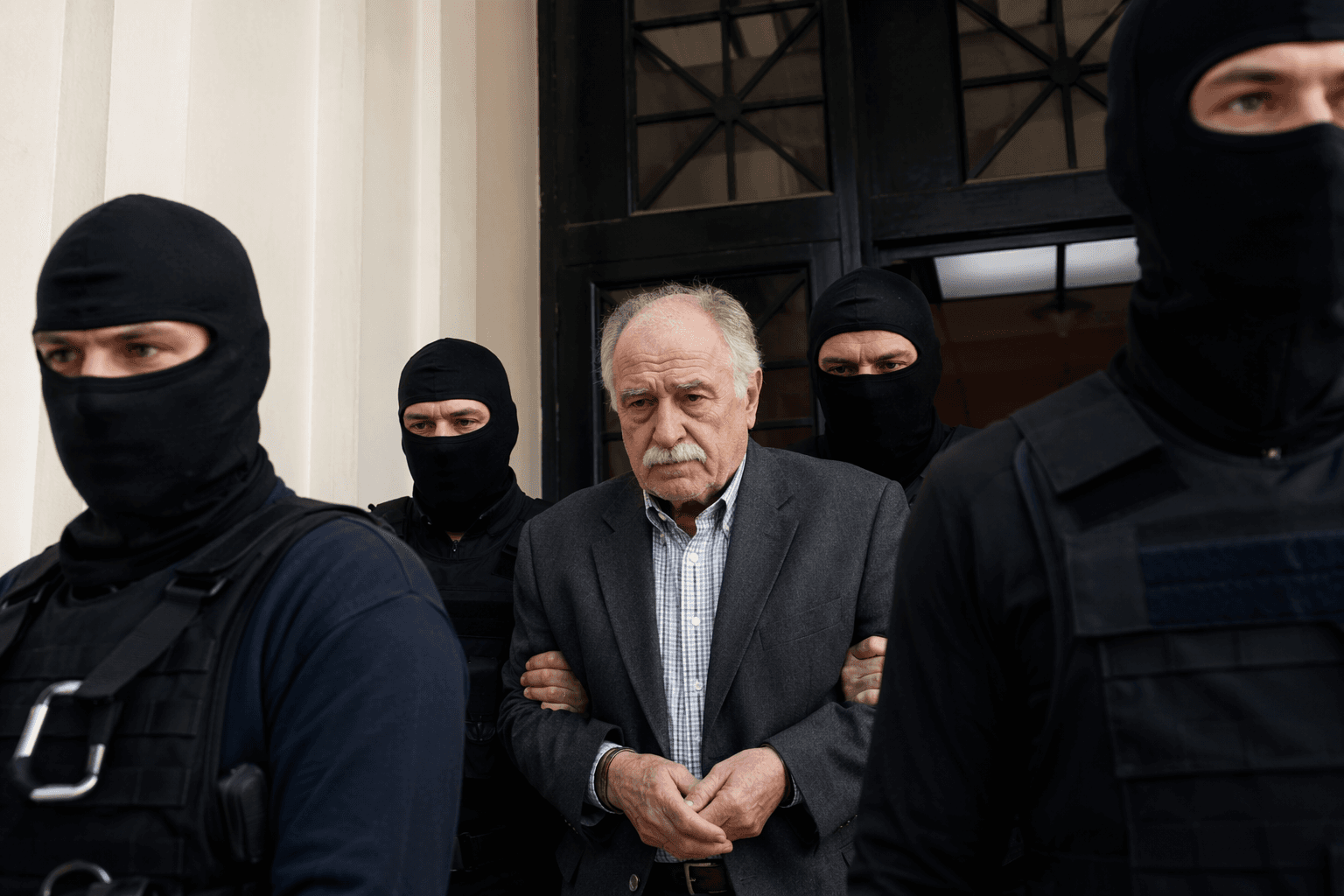
Greece’s top court has ordered Alexandros Giotopoulos back behind bars, reversing a conditional release that had briefly put the 82-year-old November 17 leader outside prison after 24 years in custody. The decision reasserts the state’s grip on one of the country’s most sensitive terrorism cases, where punishment, age and public memory still intersect.
Giotopoulos was convicted in 2003 as the leader of November 17 and handed 17 life sentences plus an additional 25-year term. The court held him morally responsible for 17 murders, along with bombings, armed robberies and participation in a terrorist organization. He had been arrested in 2002, when police dismantled the Marxist group after a 27-year campaign of assassinations.
The group’s record remains seared into Greek public life. November 17 was Greece’s most lethal domestic terrorist group for decades, killing at least 23 people, including four Americans, and carrying out repeated attacks over nearly three decades. Its first major killing was the 1975 assassination of Richard Welch, the CIA’s chief of station in Athens, as he and his wife arrived home after a Christmas party. Diplomats and other prominent figures were also among its victims.
Giotopoulos was conditionally released on May 22, 2026, reportedly on health grounds, but the Greek Supreme Court, known as Areios Pagos, overturned that decision on June 15, 2026 and ordered him back to prison. The ruling came after a prosecutor appealed the Piraeus Court of Appeal Judicial Council decision that had granted the release. The high court’s intervention was widely expected in Greek media, but it still carried legal weight because it reaffirmed how closely the justice system continues to police the legacy of November 17.
The case also lands in a prison landscape where the organization’s other convicted members remain incarcerated, including Dimitris Koufontinas and the Xeros brothers. That detail matters because November 17 never became a closed chapter in Greece; it became a measure of how the state answers political violence long after the guns fall silent. For a country that lived through decades of assassinations, the return of an elderly militant to Korydallos Prison is less about mercy denied than about how Greece continues to balance age, accountability and the public memory of terror.
This article was produced by Prism’s automated news system from verified source data, official records, and press releases, then run through automated quality and moderation checks before publishing. The system is built and supervised by the people who set the standards it runs under. Read our full AI policy.
Know something we missed? Have a correction or additional information?
Submit a Tip