Greek national charged in UK over alleged Iran-linked intelligence case
A Greek man living in Munich was charged in Britain in a case tied to an alleged Iran-linked push against a Britain-based Iran International journalist.

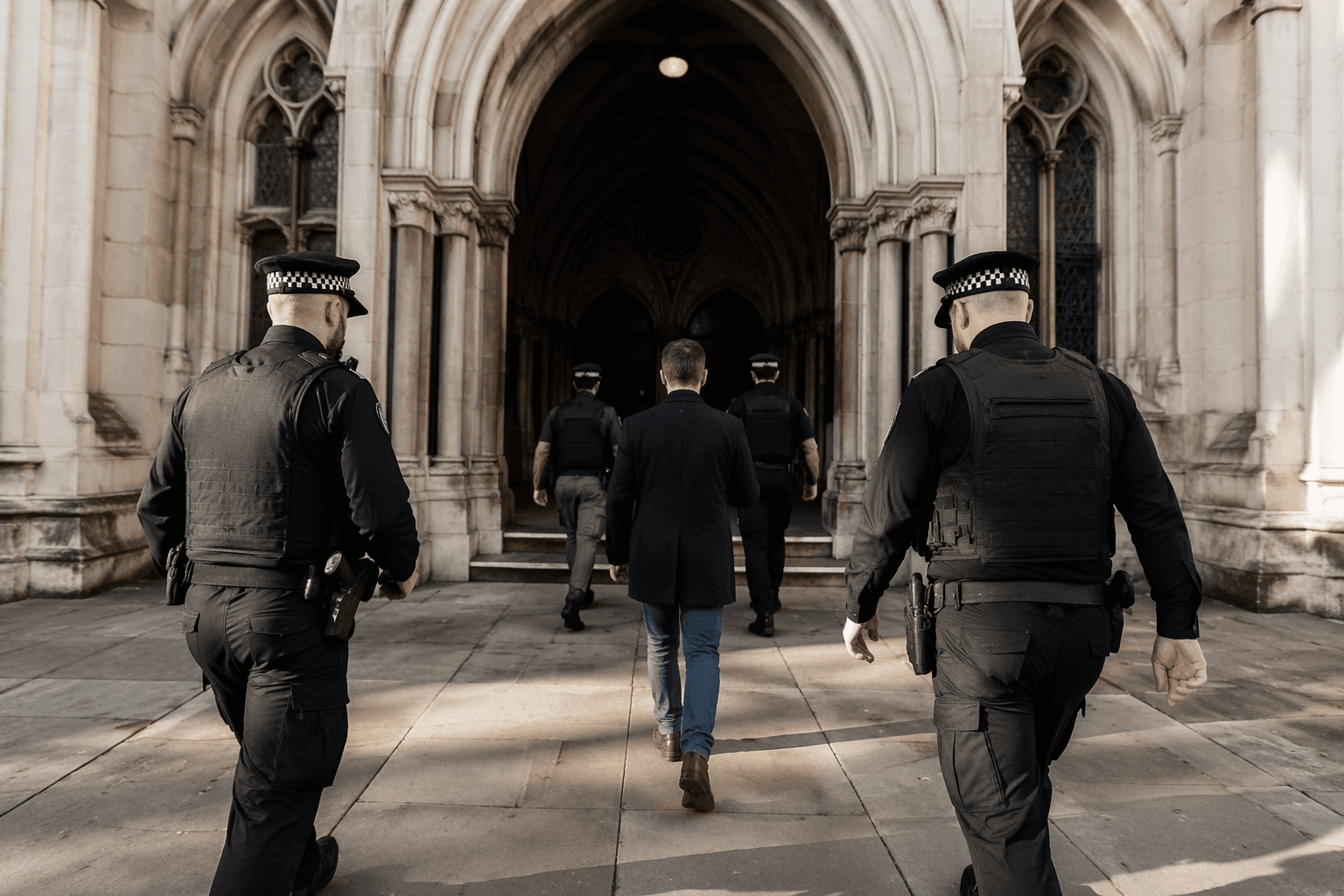
A Greek national living in Munich was charged in Britain in a case police said was tied to the targeting of a journalist at Iran International, the London-based broadcaster that has long been critical of Tehran. Ioannis Aidinidis, 46, was arrested on Saturday and was due to appear at Westminster Magistrates’ Court on Friday.
British police said the allegations were believed to relate to Iran and to the targeting of a British-based journalist at Iran International. Officers also said they did not believe there to be any wider threat to the public. Even so, the case underscores how pressure on exiled media figures can cross borders, moving beyond online harassment and surveillance into the realm of foreign intelligence operations and criminal prosecution.
The charge lands amid a widening series of cases that have placed Iran International journalists and staff at the center of alleged transnational repression. In May 2025, three Iranian nationals living in London were charged under the National Security Act 2023 after counter-terrorism police alleged they targeted journalists working for Iran International through surveillance with the aim of causing serious violence. Yvette Cooper later told Parliament that those men were the first Iranian nationals charged under the act and said MI5 had responded to 20 Iran-backed plots presenting potentially lethal threats since 2022.
The risk has extended beyond surveillance. In May 2026, prosecutors told Woolwich Crown Court that two Romanian men accused of stabbing Iran International presenter Pouria Zeraati in March 2024 were acting as proxies for Iran. Prosecutors said the attack on Zeraati, near his home in Wimbledon, southwest London, followed reconnaissance and had been ordered by a third party acting on behalf of the Iranian state. In April 2026, three people were also charged over an attempted arson attack on premises linked to the broadcaster in northwest London, although no damage or injuries were reported.
Taken together, the cases suggest a pattern that has become hard for British authorities to ignore: journalists in exile are not only reporting on repression abroad, but are also living with its reach inside Europe. For Iran International staff and other diaspora reporters in Britain, the threat is no longer confined to intimidation from afar. It has appeared in courtrooms, in surveillance charges, in stabbing allegations and in attacks on media-linked premises, turning exile into a security problem with public consequences.
This article was produced by Prism’s automated news system from verified source data, official records, and press releases, then run through automated quality and moderation checks before publishing. The system is built and supervised by the people who set the standards it runs under. Read our full AI policy.
Did this article answer your question?