Greenpeace says ghost permits fuel Brazil Amazon illegal gold trade
Greenpeace found 98 of 187 permit areas showed no mining, yet ghost permits helped move $3.88 billion in illegal Amazon gold.

Illegal gold mining is still generating billions of dollars in Brazil’s Amazon rainforest despite Luiz Inacio Lula da Silva’s crackdown, and a new Greenpeace analysis says the trade is being kept alive by paperwork that does not match what is happening on the ground.
The study examined 187 forest areas with gold mining permits near Indigenous lands and protected areas and found that 98 showed no signs of mining activity at all. Greenpeace said those empty permits, or “ghost permits,” helped launder 26.8 metric tons of gold worth about $3.88 billion between 2018 and March 2026, allowing metal that may have come from protected territory to enter the legal market. The finding matters more now because gold prices have climbed sharply amid geopolitical instability, raising the payoff from illegal extraction.
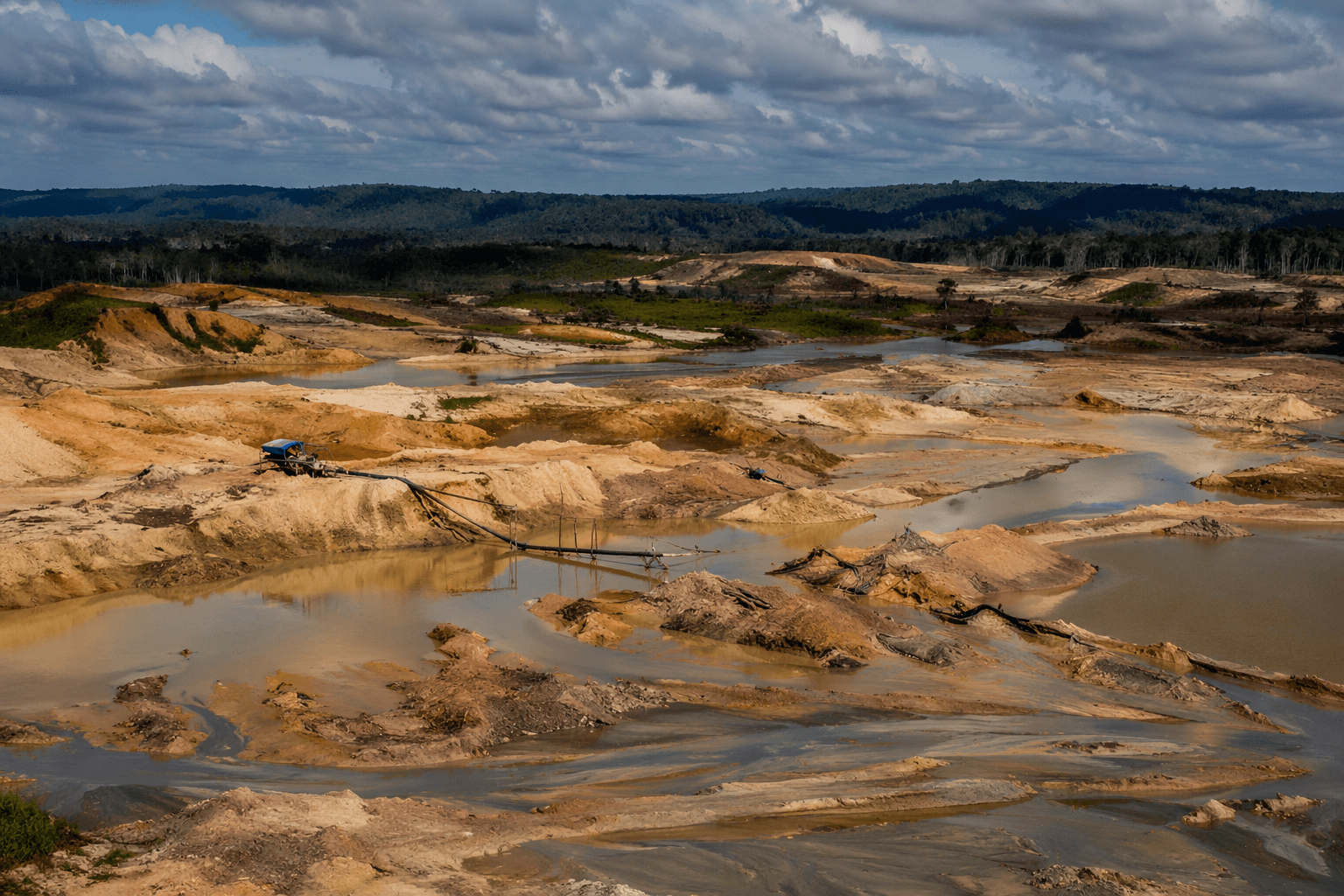
Lula pledged in 2023 to eliminate illegal gold mining from Indigenous lands after years of expansion under Jair Bolsonaro, and the government has pointed to some gains. Brazil’s federal police seized a record 447 kilograms of illegally mined gold in 2025, a sign that enforcement has intensified. But the industry has adapted rather than disappeared. Greenpeace said satellite evidence from 2023 and 2024 showed illegal mining remained rampant, and aerial checks found permit areas with no visible activity even as a large illegal operation was active only minutes away by air in a protected area.
The damage is not just financial. Illegal mining pollutes rivers, strips forest cover, brings violence into remote regions and threatens Indigenous communities such as the Kayapó and Yanomami. Greenpeace’s 2025 findings said illegal mining destroyed more than 4,000 hectares of Amazon rainforest across four Indigenous territories in the prior two years. A Brazilian government release said the Kayapó Indigenous Land alone had suffered 18,000 hectares of forest destruction by May 2025, making it the country’s second most devastated Indigenous territory after Yanomami.
Yanomami has become the clearest test of Lula’s enforcement push. Brazil declared a public health emergency there on January 20, 2023. By January 2025, the federal government said illegal mining sites had dropped sharply, deaths from malnutrition had fallen by 68% in the first half of 2024 versus 2023, and 3,536 security operations had been carried out in 2024. Even so, the Amazon trade has not been broken. Brazil’s mining agency, ANM, said it was monitoring the disputed permits and acknowledged the logistical and oversight challenges of policing such a vast region.
This article was produced by Prism’s automated news system from verified source data, official records, and press releases, then run through automated quality and moderation checks before publishing. The system is built and supervised by the people who set the standards it runs under. Read our full AI policy.
Did this article answer your question?