GrowYourBonsai Details Beginner Steps for Bonsai Repotting, Root Pruning and Care
GrowYourBonsai’s beginner guide walks you through how to tell when a bonsai needs repotting, pick the right soil, prune roots correctly and nurse the tree back to health.

1. Why repotting matters and the signs to act now
GrowYourBonsai’s beginner-focused guide starts with the problem: a bonsai in a too-small or exhausted container will stagnate fast. Look for clear signals GrowYourBonsai highlights, roots circling the pot, water running straight through the container, slow or stunted spring growth, and roots visible at the drainage holes, and treat them as the threshold for action rather than an optional maintenance task. Acting when these signs appear prevents root-bound strangulation and gives you a chance to renew soil fertility and aeration.
2. Best time to repot (season and species notes)
According to GrowYourBonsai, timing is a key part of the beginner checklist: repot in the tree’s active growth window so recovery is fastest. For most temperate deciduous and many conifers that means early spring as buds swell; for tropical indoor varieties aim for a warm stretch of their active season. Repotting in dormancy increases shock; GrowYourBonsai recommends planning ahead by species so the tree has the whole growing season to re-establish roots.
3. Tools and materials to have on hand
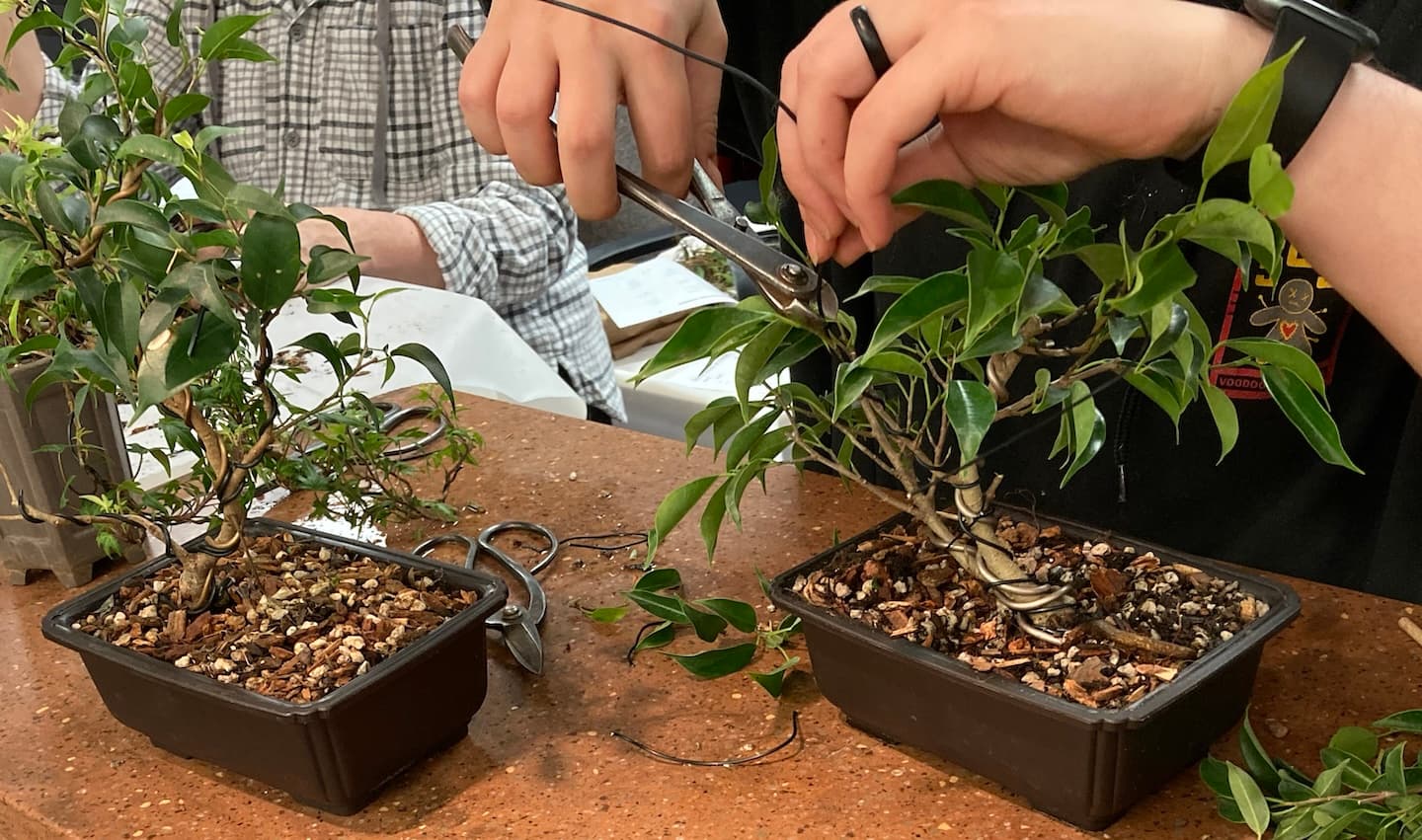
GrowYourBonsai lists the basics every beginner should have before starting: a sturdy root hook or rake, sharp concave or pruning shears for woody roots, a chopstick or similar for teasing soil out of the root mass, fresh bonsai-specific soil, potting mesh for drainage holes, and nitrile gloves if you prefer. Having the correct gear shortens the procedure and reduces damage, for example, a root rake teases old soil from tangled roots without causing the ragged tearing a screwdriver or your fingers can.
4. Choosing the right soil: what GrowYourBonsai recommends
Soil choice is one of the guide’s headline lessons. GrowYourBonsai stresses free-draining, porous mixes over garden soil; the guide frames soil as the single biggest determinant of root health and oxygenation after watering. For beginners, the guide recommends using a commercial bonsai mix or a well-draining blend suited to your species rather than trying homemade loam unless you understand particle sizing. This is where the guide pushes a practical rule: prioritize drainage and particle stability so roots receive oxygen without waterlogging.
5. Preparing the pot and tree for repotting
GrowYourBonsai walks you through preparation: secure the drainage holes with mesh, make a shallow layer of fresh soil, and set up a clean workspace. Remove the tree from its container gently, supporting the trunk base; if the rootball is stuck, turn the pot and tap the rim rather than yanking. The guide emphasizes inspecting the root crown and trunk flare for rot or girdling roots at this stage; identifying problems now saves surprises when you start pruning.
6. Root pruning technique, step by step
Root pruning is the heart of the guide. GrowYourBonsai instructs beginners to work methodically: first remove the old surface soil to expose the root mass, then use a root rake or chopstick to tease out finer roots. Prune large, dominant roots selectively, don’t indiscriminately chop 30–50% of the root mass; instead, reduce long structural roots to encourage a denser fibrous root system, focusing cuts on roots that circle the pot or grow downward out of proportion. The guide recommends making clean cuts with sharp shears and preserving as many fine feeder roots as possible; those are the roots that take up water and nutrients most effectively during recovery.
7. Rebuilding the soil column and planting depth
After pruning, GrowYourBonsai advises positioning the tree at the correct planting depth (matching the previous soil line unless the trunk flare needs correction) and filling the pot with fresh bonsai substrate that stabilizes the tree while maintaining drainage. Use a chopstick to work soil into voids around the roots; compressing too hard will reduce aeration, but leaving big gaps will cause settling and instability. The guide’s practical tip is to anchor the tree with tie-down wire through the drainage holes if the rootball is reduced significantly, this prevents the tree rocking while new roots form.
8. Immediate post-repot care and the first six weeks
GrowYourBonsai places strong emphasis on post-repot care as the difference between survival and shock. After repotting, place the tree in a protected, bright spot but out of direct harsh sun for at least one to two weeks to minimize transpiration stress. Water thoroughly to settle the soil, then follow a conservative watering schedule: keep substrate evenly moist but not waterlogged while new roots re-establish. The guide also recommends delaying heavy feeding for several weeks, give the roots time to regrow before reintroducing regular fertilizer routines.
9. Follow-up maintenance and troubleshooting
The guide rounds out the process with practical follow-up: monitor for yellowing leaves, wilting, or unusually slow bud break, signs the tree may be stressed or that drainage/soil choice needs reassessment. GrowYourBonsai advises checking root development at the next repot cycle and keeping a record of the soil mix and date of repotting so you can refine timing and technique on the next go. For persistent problems, the guide suggests reviewing the initial root-pruning choices and soil type as those are the most common culprits in repairable declines.
10. Common beginner pitfalls and how GrowYourBonsai says to avoid them
GrowYourBonsai calls out a few mistakes beginners repeat: using garden soil, over-pruning roots, and repotting at the wrong season. The guide’s fixes are straightforward, buy a bonsai-specific substrate, prune conservatively and in stages if unsure, and align repotting with the tree’s growth cycle. A practical reminder the guide gives: repot once you see the signs listed early on rather than on a hard schedule; timing and observation beat guesswork.
Conclusion GrowYourBonsai’s beginner guide is a compact, practical roadmap: identify the need, prepare tools and substrate, prune roots with respect for fine feeder roots, and focus on patient post-repot care. Follow these steps and you’ll convert an overcrowded container into a renewed, actively growing bonsai, and you’ll have a clear record to make the next repot easier and more successful.
Know something we missed? Have a correction or additional information?
Submit a Tip