Guatemala declares 30-day state of siege after prison uprisings
President Arévalo invokes emergency powers after coordinated prison riots and reprisal attacks that killed several police officers; the move expands military role in public security.
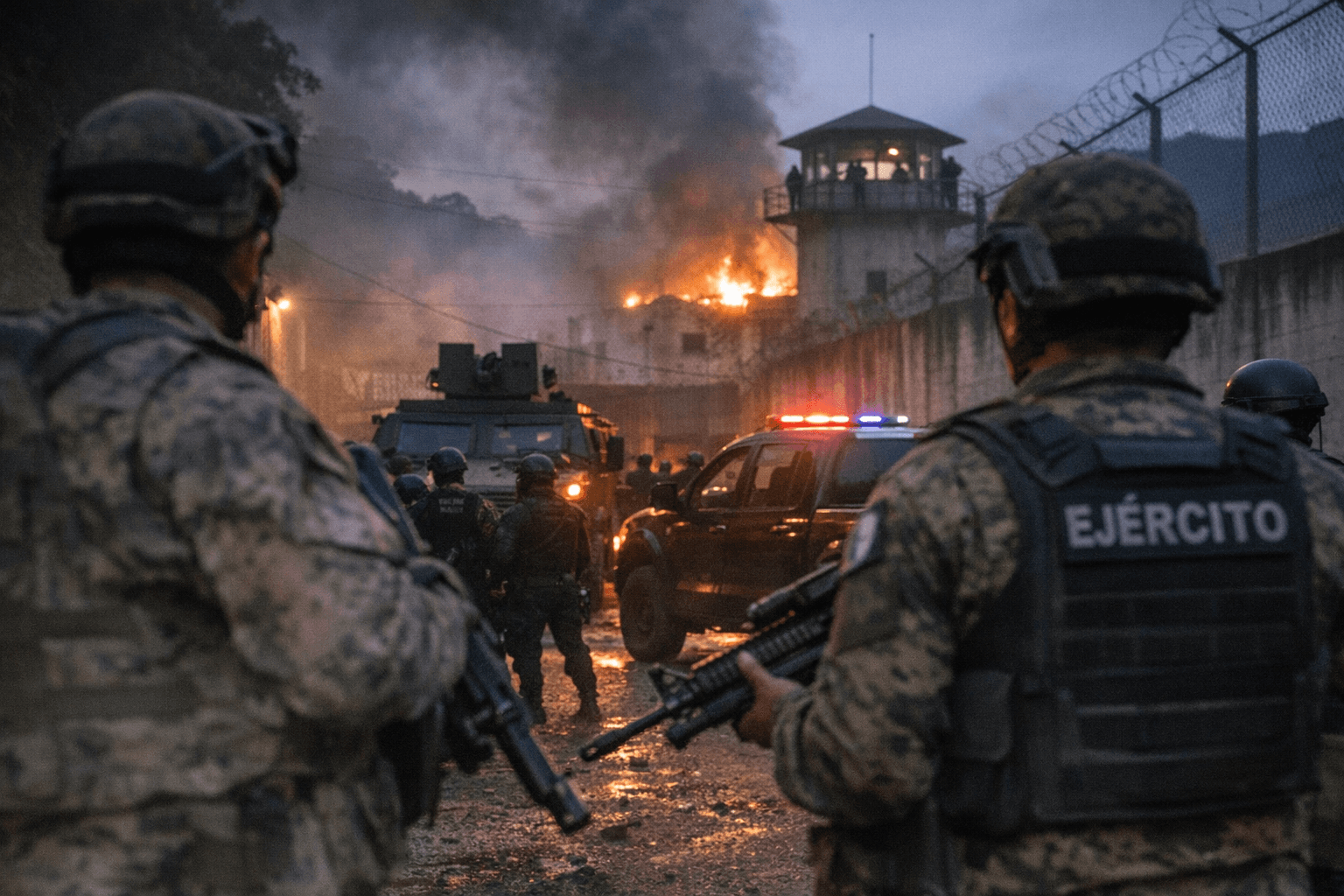
Violent uprisings by gang-affiliated inmates at three maximum-security prisons have prompted Guatemala’s president to declare a 30-day state of siege, dramatically expanding the role of police and the military in a bid to suppress coordinated attacks and restore control. Authorities say the unrest began after prison administrators moved to curtail privileges for jailed gang leaders, triggering simultaneous riots, hostage-taking and reprisal shootings in and around Guatemala City.
Interior Ministry officials described the disturbances as coordinated. During the riots dozens of prison guards were held hostage; officials initially said 46 guards were detained and later reported that 43 were freed when security forces retook the facilities. As forces moved to retake the prisons, coordinated armed attacks struck multiple zones of the capital region. Government accounts reported at least seven national police officers killed and roughly 10 injured in apparent reprisals, with one suspected gang member also reported killed. Early law enforcement actions yielded seven suspected gang arrests, two rifles and two vehicles seized, officials said.
President Bernardo Arévalo announced a 30-day state of siege that empowers the national police and the army to act against organized criminal groups and to deploy what officials described as the full force of the state. The measure takes effect immediately under the constitution but must obtain congressional approval to remain in force. Arévalo placed the country under three days of national mourning and said the emergency should not disrupt normal life for most citizens; as a precaution, schools were suspended for Monday and the national police advised residents to stay home during the initial unrest. The U.S. Embassy temporarily placed staff under a shelter-in-place order over the weekend before lifting it.
Authorities have identified Barrio 18 and Mara Salvatrucha as implicated organizations and cited the curtailing of privileges for a detained Barrio 18 leader as a trigger for the prison disturbances. Those gangs have a longstanding transnational presence across Central America and were designated as foreign terrorist organizations by U.S. authorities and by Guatemala’s legislature in recent months.
The decision to invoke a state of siege has immediate security and economic implications. In the short term, markets will watch for signs of capital flight, currency pressure on the quetzal and a hit to tourism receipts if violence persists or investor confidence erodes. The government’s deployment of the armed forces to domestic security duties could raise near-term fiscal costs for operations and detentions, creating budgetary trade-offs that may complicate Arévalo’s broader reform agenda.
Politically, the move places pressure on Congress to validate exceptional powers and risks deepening a regional trend toward militarized responses to organized crime. Past regional crackdowns have produced sharp reductions in street violence while raising concerns about prolonged suspension of civil liberties, mass arrests and the capacity of judicial institutions to process large numbers of detainees. How Guatemala balances immediate security imperatives with rule-of-law safeguards will shape both public trust and investor assessments over the coming weeks.
For now, officials say control of the prisons has been restored and hostages freed, but the declaration signals a heightened phase in the state’s confrontation with powerful prison gangs and sets a tense test for institutions charged with oversight and accountability.
This article was produced by Prism’s automated news system from verified source data, official records, and press releases, then run through automated quality and moderation checks before publishing. The system is built and supervised by the people who set the standards it runs under. Read our full AI policy.
Did this article answer your question?


