Gulf Energy Recovery Expected to Take Months Despite Quick Well Restarts
Iran's partial reopening of the Strait of Hormuz lets some wells restart in days, but 9.1 million barrels per day of shut-in production signals months of recovery ahead.
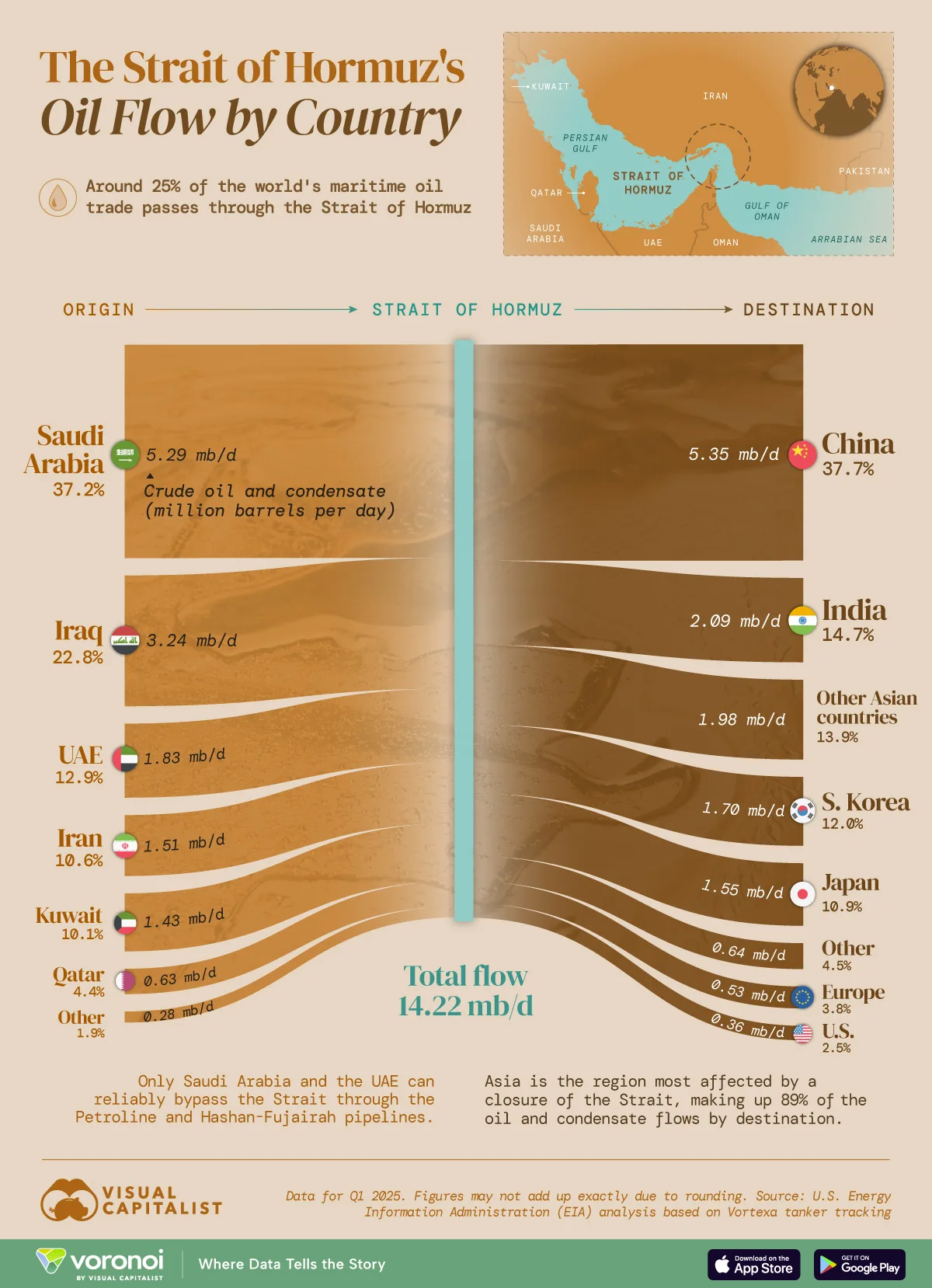
Iran's partial reopening of the Strait of Hormuz has raised hopes for a quick oil market rebound, but energy analysts and federal forecasters warned that restoring the Persian Gulf's energy system to anything close to normal will take months, regardless of how quickly individual wells come back online.
The U.S. Energy Information Administration estimated that Iraq, Saudi Arabia, Kuwait, the UAE, Qatar, and Bahrain collectively shut in 7.5 million barrels per day of crude oil production in March. The EIA projected those shut-ins would climb further to 9.1 million barrels per day in April. The scale of that pullback, triggered by the military conflict with Iran that erupted on February 28, represents one of the largest sudden supply dislocations in modern energy history.
Analysts said the global oil market faces months of disruption stemming from damaged infrastructure, a slow reopening of the strait, and severely drawn-down reserves. The EIA put it plainly in its April Short-Term Energy Outlook: "Full restoration of flows will take months. Our modeling indicates that fuel prices will continue to rise until these variables resolve."
Some producers insist they can move fast once the shipping lane is fully clear. Iraq's Basra oil chief said the country could restore oil exports to pre-war levels within a week if Hormuz reopens. Storage has filled up during the closure, giving Iraq the ability to immediately tap inventories without disrupting domestic supply. But the picture on natural gas is grimmer: gas output from fields in Basra has dropped to around 700 million standard cubic feet per day, compared with roughly 1.1 billion standard cubic feet per day before the conflict.

Oil prices surged faster during this crisis than during any other conflict in recent history. Brent crude surpassed $100 per barrel on March 8, 2026, the first time in four years, eventually reaching a peak of $126 per barrel. The speed of that price spike reflected how swiftly global markets absorbed the severity of a Hormuz closure.
Europe's airports have already begun imposing restrictions on refueling due to a shortage of jet fuel, illustrating how quickly downstream effects spread beyond the production fields themselves. Strategic reserve releases by the United States and allied nations helped steady prices temporarily, but the U.S. Strategic Petroleum Reserve held just 415.4 million barrels as of mid-February, limiting how long that buffer could hold.
The asymmetry at the heart of this crisis is straightforward: turning a well back on takes days or weeks; rebuilding depleted stockpiles, restoring damaged infrastructure, and allowing tanker flows to resume at full capacity takes far longer. Analysts noted that if the strait was effectively closed for two and a half months, markets should expect roughly another two and a half months before conditions normalize. With the conflict still unresolved as of early April, that clock had not yet started.
This article was produced by Prism’s automated news system from verified source data, official records, and press releases, then run through automated quality and moderation checks before publishing. The system is built and supervised by the people who set the standards it runs under. Read our full AI policy.
Did this article answer your question?

