Guterres urges governments to make climate adaptation a finance priority
Guterres told finance ministers to price floods, heat and sea-level rise as fiscal risks, warning that adaptation funding still falls billions short.
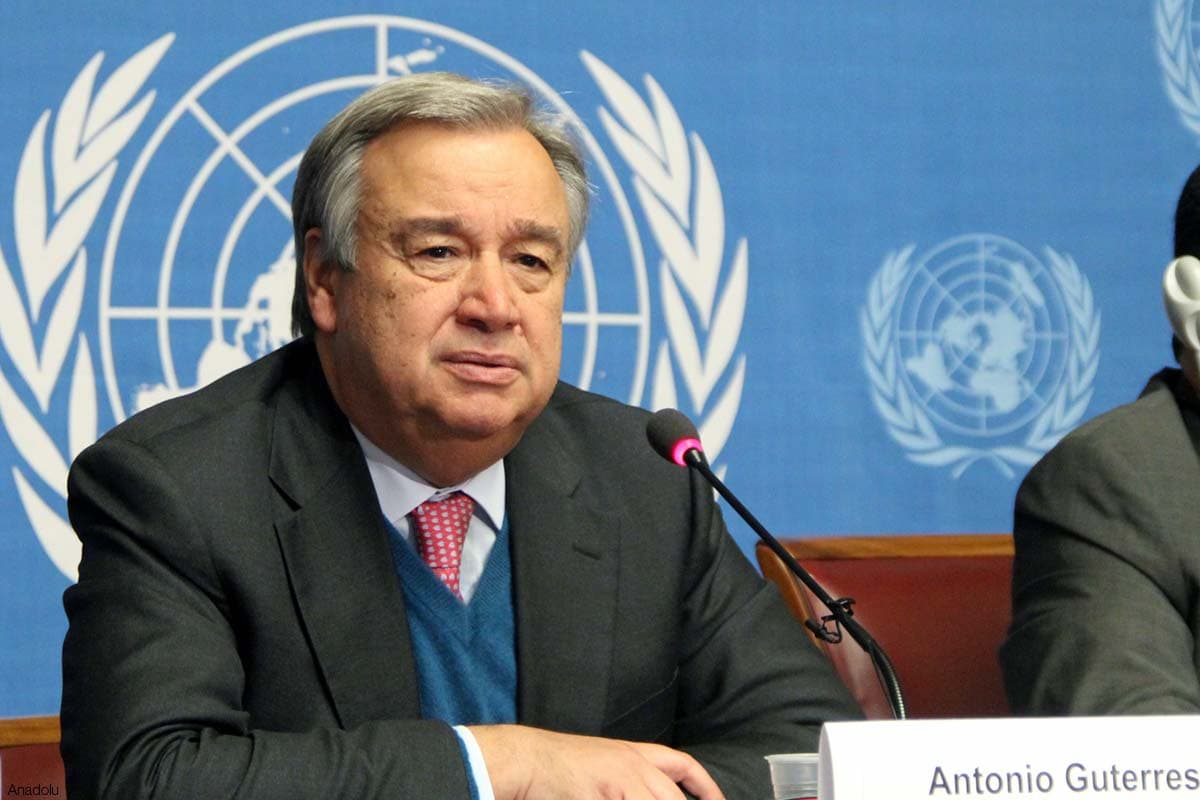
António Guterres used a London Climate Action Week address to press governments to put climate adaptation at the center of fiscal policy, arguing that finance ministries can no longer treat floods, heat and sea-level rise as a separate environmental file. He said the funding gap for adaptation remains dangerously wide even as climate risks intensify, and framed resilience spending as an economic, development, security and climate justice necessity.
London Climate Action Week runs from June 20 to June 28, 2026, as its eighth edition and brings together more than 75,000 people across more than 1,000 events. The Coalition of Finance Ministers for Climate Action also used the week to push whole-of-economy transformation, with sessions on June 24, June 25 and June 26 focused on integrating climate commitments into economic planning, macro-fiscal and financial risks, and credible transition finance.

The climate and energy crises share the same destructive origin: fossil fuels. The world has just lived through the eleven hottest years ever recorded, and UN materials say average annual temperatures are now expected to exceed 1.5C in the coming years unless overshoot is limited, with tipping-point risks such as coral reef collapse and the accelerating loss of ice sheets in Greenland and West Antarctica.
International public adaptation finance to developing countries rose from $22 billion in 2021 to $28 billion in 2022, but still fell well short of need, based on UNEP’s Adaptation Gap Report 2024. Analysis of UNEP’s 2025 report put the annual adaptation finance gap for developing countries at roughly $284 billion to $339 billion by 2035, while current international adaptation finance was estimated at about $26 billion a year. Guterres called for adaptation to be properly valued by the financial system and urged multilateral development banks to bring much greater firepower, including ideas such as taxing fossil-fuel windfall profits.

Multilateral development banks reported a record $137 billion in climate finance in 2024, including more than $85 billion for low- and middle-income economies and $134 billion mobilized in private finance.
This article was produced by Prism’s automated news system from verified source data, official records, and press releases, then run through automated quality and moderation checks before publishing. The system is built and supervised by the people who set the standards it runs under. Read our full AI policy.
Did this article answer your question?


