Haiti residents protest as gang violence displaces hundreds in Cite Soleil
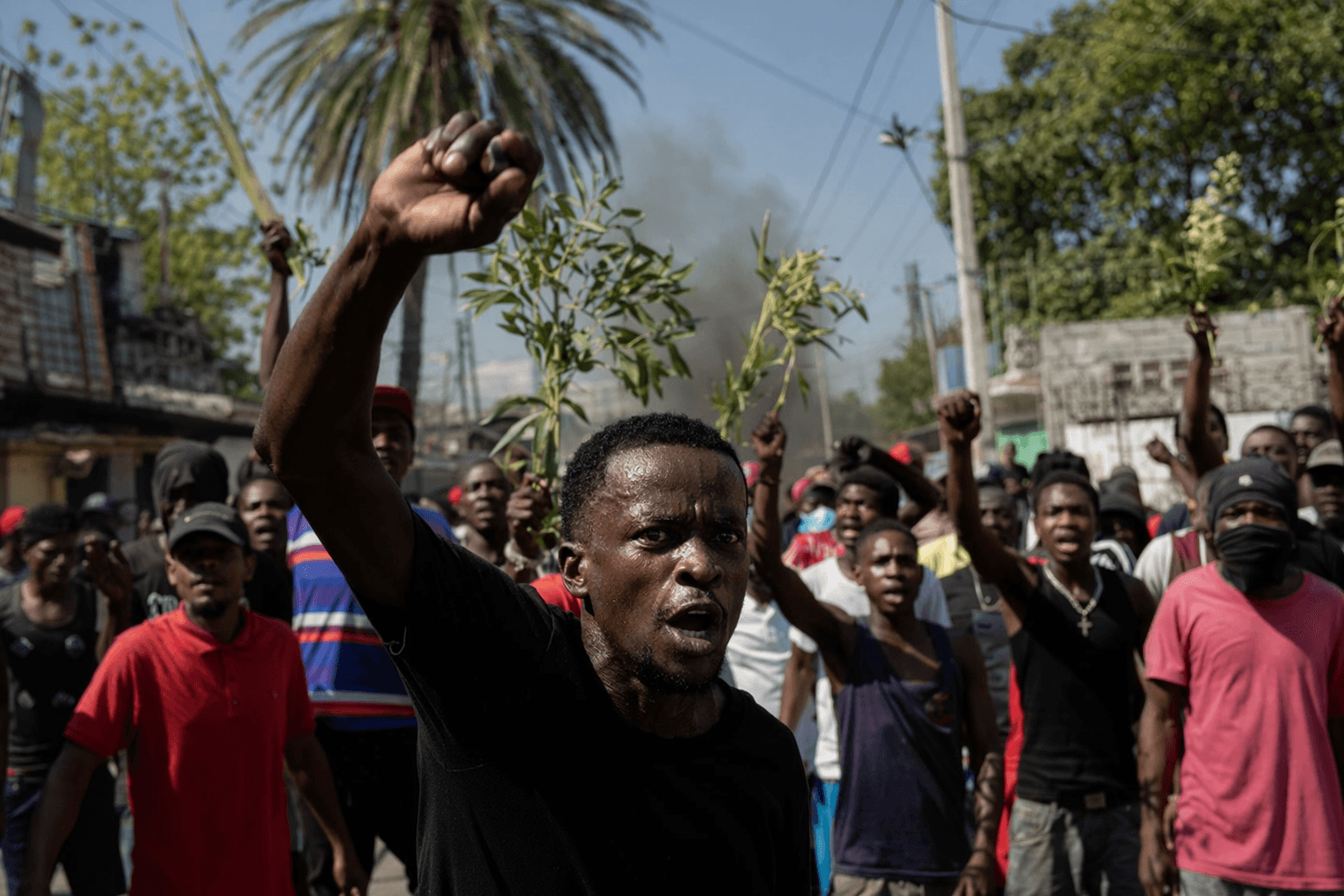
Gunfire drove families into the streets of Cité Soleil, where residents waved tree branches and demanded protection as the state’s grip weakened further.
Civilians in Cité Soleil protested in the streets after gang violence forced hundreds from their homes, turning a capital-city neighborhood into a public indictment of Haiti’s failing security system. At an intersection near the fighting, residents held tree branches aloft as gunfire continued nearby, a stark plea for protection in an area where burned cars and dead cows marked the breakdown of normal life.
Roselaine Jean-Pierre, 67, said she fled her home on Sunday and was sleeping in the streets of Port-au-Prince. Michel-Ange Toussaint said she knew of seven people killed and others shot, and said the attacks began Sunday evening before families fled in search of safety. The speed of the displacement showed how quickly violence can strip residents of shelter, movement and any sense that the state will intervene.
The violence also shut down medical care. Doctors Without Borders evacuated staff and suspended activities at its Cité Soleil facility after more than 24 hours of intense fighting. Another local hospital suspended operations and moved hospitalized patients, including 11 newborns, out of the area, narrowing access to treatment for people already trapped by the violence.
The unrest in Cité Soleil fit into a broader collapse of security that has deepened since the assassination of President Jovenel Moïse in July 2021. Haitian police say gangs now control roughly 70% of the capital, a decline from 90% but still enough to dominate daily life and push violence beyond Port-au-Prince through looting, kidnappings, sexual assaults and rape. A UN-backed force has begun arriving, but full deployment remained incomplete as armed groups continued to shape conditions on the ground.
The humanitarian toll has reached staggering levels. UNICEF said that by the start of 2026, about 1.4 million people in Haiti had been displaced, roughly half of them children, and that 2.6 million children needed humanitarian assistance. UN reporting in March 2026 said at least 26 gangs were operating in Port-au-Prince and surrounding areas and that more than 1.4 million people had been driven from their homes as violence spread beyond the capital. UNICEF also reported in October 2025 that 680,000 children had already been displaced and that displacement sites had risen to 246 nationwide in the first half of that year, a measure of how far Haiti’s protection system had unraveled.
This article was produced by Prism’s automated news system from verified source data, official records, and press releases, then run through automated quality and moderation checks before publishing. The system is built and supervised by the people who set the standards it runs under. Read our full AI policy.
Did this article answer your question?


