Hamas to dissolve Gaza government once technocratic committee assumes control
Hamas said it will step down when a Palestinian technocratic leadership committee takes over Gaza under a U.S.-brokered plan, but left timing and personnel unspecified.
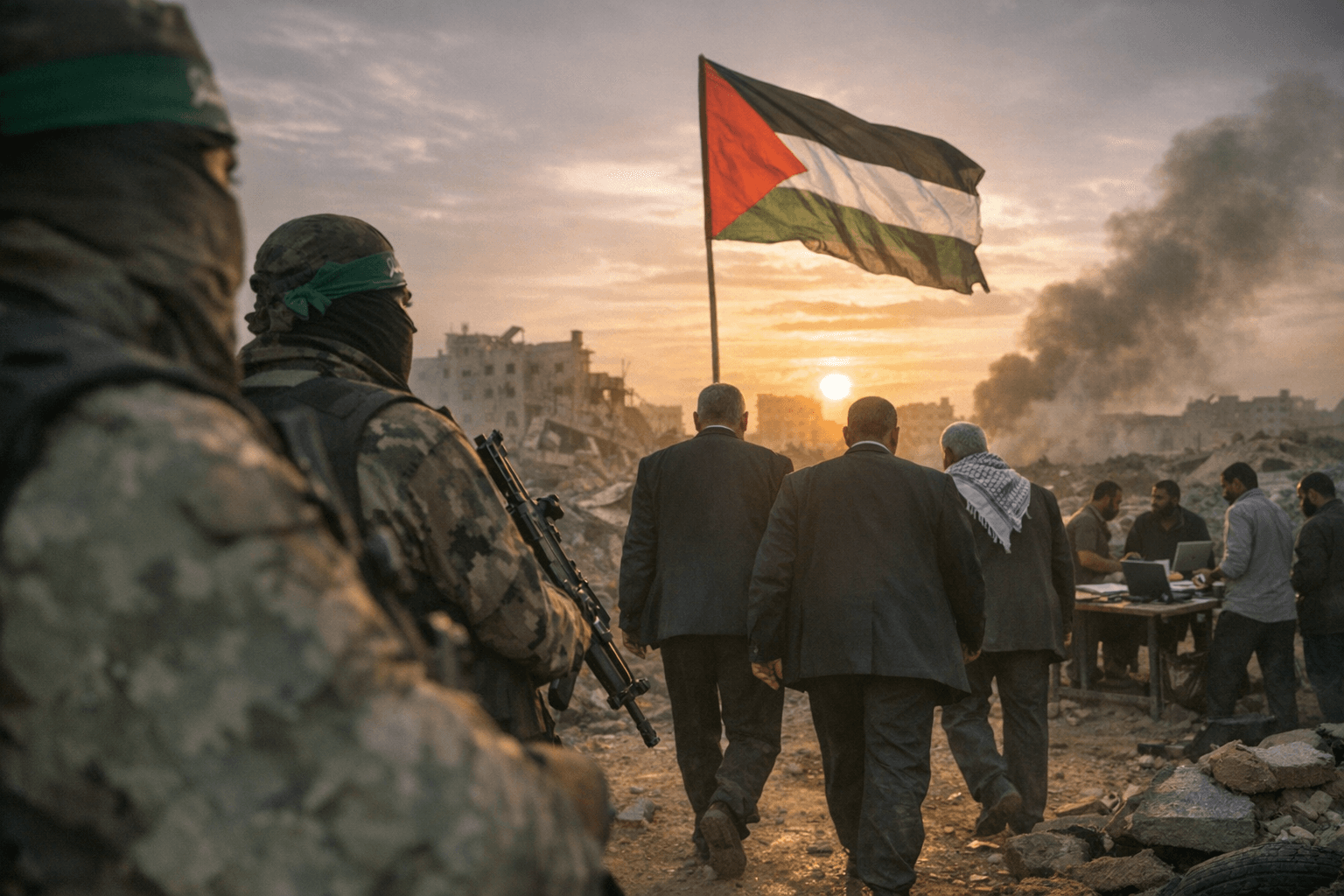
Hamas announced it would dissolve its Gaza government after a Palestinian technocratic leadership committee assumes control of the territory under terms of a U.S.-brokered peace plan, but provided no timetable or names for the transition. The move, disclosed in a statement republished across international outlets, sets the stage for intense negotiations this week among regional mediators and raises immediate questions about security, reconstruction and the mechanics of international oversight.
Hamas spokesman Hazem Kassem urged that formation of the technocratic committee be accelerated in a post on his Telegram channel, but the organization stopped short of detailing how or when it would cede administrative authority. The proposed technocrats have not been publicly identified; both Hamas and the rival Palestinian Authority have withheld names, and reporting indicates the candidates are expected to be nonpartisan. It remains unclear whether Israel and the United States will need to clear or approve individual members.
Regional intermediaries are mobilizing to move the process forward. An Egyptian official, speaking anonymously to describe closed-door discussions, said a Hamas delegation chaired by senior negotiator Khalil al-Hayya will meet with Egyptian, Qatari and Turkish officials to press toward a so-called second phase of the agreement. Hamas is also reported to be consulting other Palestinian factions in the coming days to finalize the committee’s formation.
Central to the plan is an international oversight mechanism intended to supervise the transition and comply with ceasefire obligations. The framework envisages a Board of Peace to monitor implementation, oversee disarmament of militant groups and coordinate deployment of an international security force, though the body’s membership and operational rules have not been announced. The absence of a public roster for that board leaves open who will wield political leverage over key tasks such as security sector reform and border control.
The political and economic implications are immediate. The ceasefire that enabled the diplomatic initiative began Oct. 10, 2025, and early exchange arrangements included the release of hostages in return for thousands of Palestinians held by Israel. The truce remains in a preliminary phase as negotiators seek to recover the remains of the final hostage, and skirmishes have continued: Palestinian hospital officials reported three Palestinians were killed by Israeli gunfire after the ceasefire took effect.
For Gaza’s battered economy, uncertain governance and security arrangements threaten to slow aid flows and reconstruction. International donors and suppliers typically require clear oversight, vetting and secure corridors before releasing large-scale funding or materials; unresolved questions about who will control civil services, how disarmament will be enforced and which international actors will oversee security complicate those calculations. Neighboring states’ role in vetting and logistics will also shape how quickly basic services and commerce can resume.
Politically, a technocratic interim body could depoliticize day-to-day administration and facilitate reconstruction if it wins broad recognition. But without clear guarantees on neutrality, accountability and security, the arrangement risks producing parallel authorities or renewed instability. Negotiations this week among Hamas, Egypt, Qatar, Turkey, Israel and the United States will determine whether the plan moves from paper to practice, though critical decisions about membership, timelines and the Board of Peace’s powers remain unresolved.
This article was produced by Prism’s automated news system from verified source data, official records, and press releases, then run through automated quality and moderation checks before publishing. The system is built and supervised by the people who set the standards it runs under. Read our full AI policy.
Did this article answer your question?