Hantavirus cases remain rare, but deadly, as experts warn of risk
Hantavirus remains uncommon in the United States, but New Mexico's repeated cases and a March death show how fast a rodent exposure can turn lethal.
Hantavirus stays rare in the United States, but when it appears, it can be deadly. The virus spreads most often when people inhale or ingest particles from infected rodents’ urine, droppings or saliva, and in North America the main carrier is the deer mouse.
Public health officials have long treated the disease as a serious threat even as case counts remain small. Surveillance in the United States began in 1993 after a cluster of severe respiratory illness in the Four Corners region, where Arizona, Colorado, New Mexico and Utah meet. Hantavirus pulmonary syndrome became nationally notifiable in 1995, and the CDC now tracks lab-confirmed cases with fever through the Nationally Notifiable Disease Surveillance System. The virus is not known to spread person-to-person in the United States.
New Mexico has remained the center of the country’s worst burden. State health officials reported seven confirmed cases in 2024, seven in 2023 and three in 2022. In March 2025, New Mexico officials confirmed a hantavirus death in Santa Fe County. State reporting has attributed 142 cases and 55 deaths in New Mexico between 1975 and 2025, a reminder that the disease is uncommon but far from theoretical in the Southwest.
The risk is not confined to that region. Florida has had three CDC-reported cases between 1993 and 2023, including one in Dade County in 1993, underscoring that hantavirus can surface far beyond the desert Southwest. Virginia Tech researchers described the disease in 2025 as an emerging infection with pandemic potential and said environmental conditions influence where the virus circulates in rodent populations.
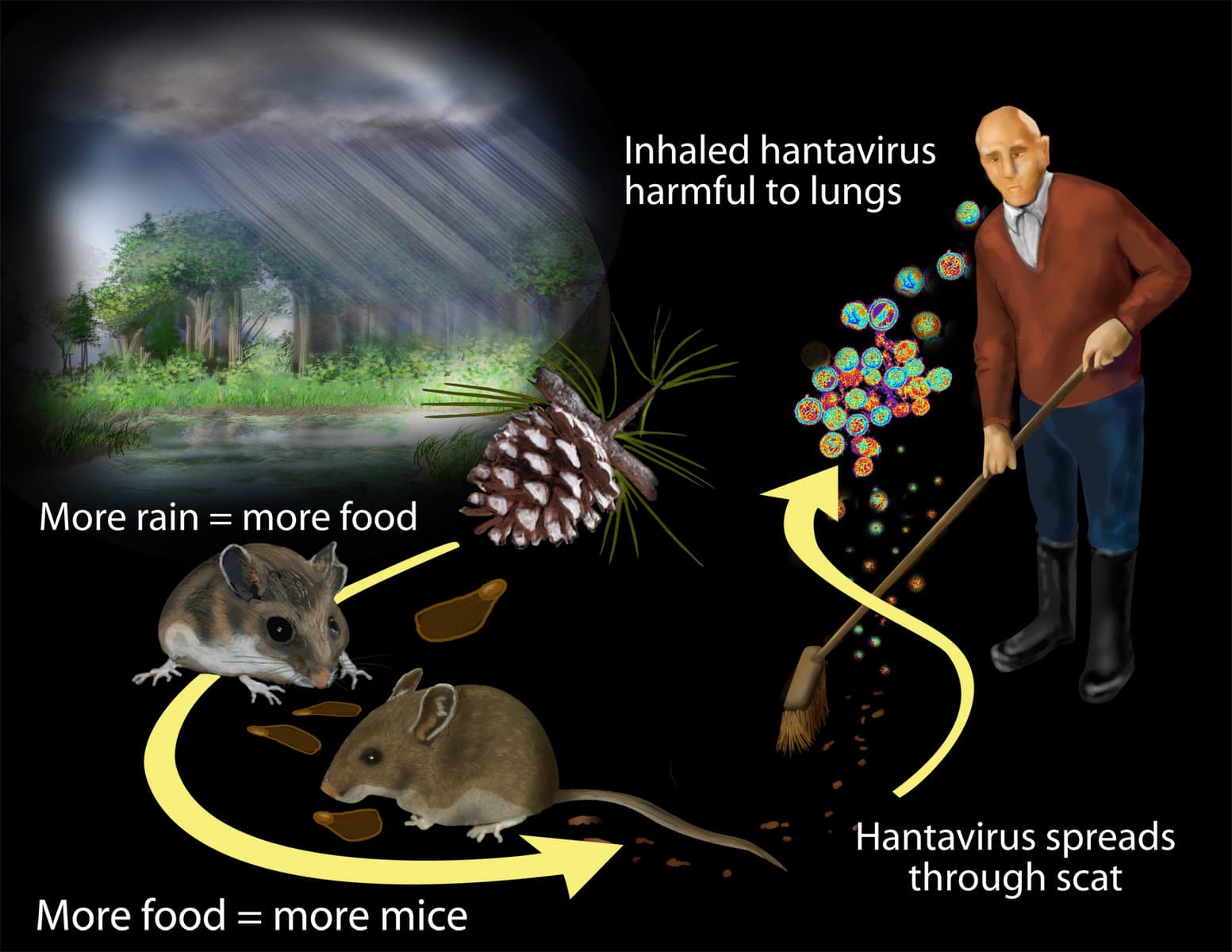
The practical danger comes from contaminated spaces, not everyday contact. CDC guidance emphasizes airing out rodent-infested areas and carefully disinfecting them before cleaning, a step meant to reduce the chance of disturbing infectious particles. That advice matters most in homes, sheds, cabins and other places where rodents have left droppings or nesting material behind, especially for people handling cleanup jobs without protection.
The public-health message is a calibrated one: do not panic, but do not dismiss the threat. Hantavirus cases remain rare, yet the combination of severe respiratory disease, repeated New Mexico deaths and the virus’s broad geographic reach means rodent control and safe cleanup remain the most effective defenses.
This article was produced by Prism’s automated news system from verified source data, official records, and press releases, then run through automated quality and moderation checks before publishing. The system is built and supervised by the people who set the standards it runs under. Read our full AI policy.
Did this article answer your question?