Hasina’s stronghold confronts unfamiliar ballot as boat symbol vanishes
Voters in Gopalganj face an election without the Awami League’s boat symbol, raising questions about turnout and the vote’s local legitimacy.

“An election without the boat on the ballot is not an election,” said rickshaw puller Solaiman Mia, capturing a sentiment that has rippled through Gopalganj as Bangladesh heads toward a parliamentary vote on Feb. 12. The district, long regarded as the political home and bastion of former prime minister Sheikh Hasina, now confronts a ballot that many residents say feels unrecognizable.
Gopalganj, south of Dhaka and the hometown of Sheikh Hasina’s family and her father Sheikh Mujibur Rahman, carries heavy symbolic weight for the Awami League. Mujibur Rahman’s grave in the district is described by local residents and reporting as an enduring symbol of the party’s powerful grip on the region. Hasina has historically won huge victories in Gopalganj in every election since 1991, a record that adds to the shock among lifelong supporters at seeing the familiar icon absent.
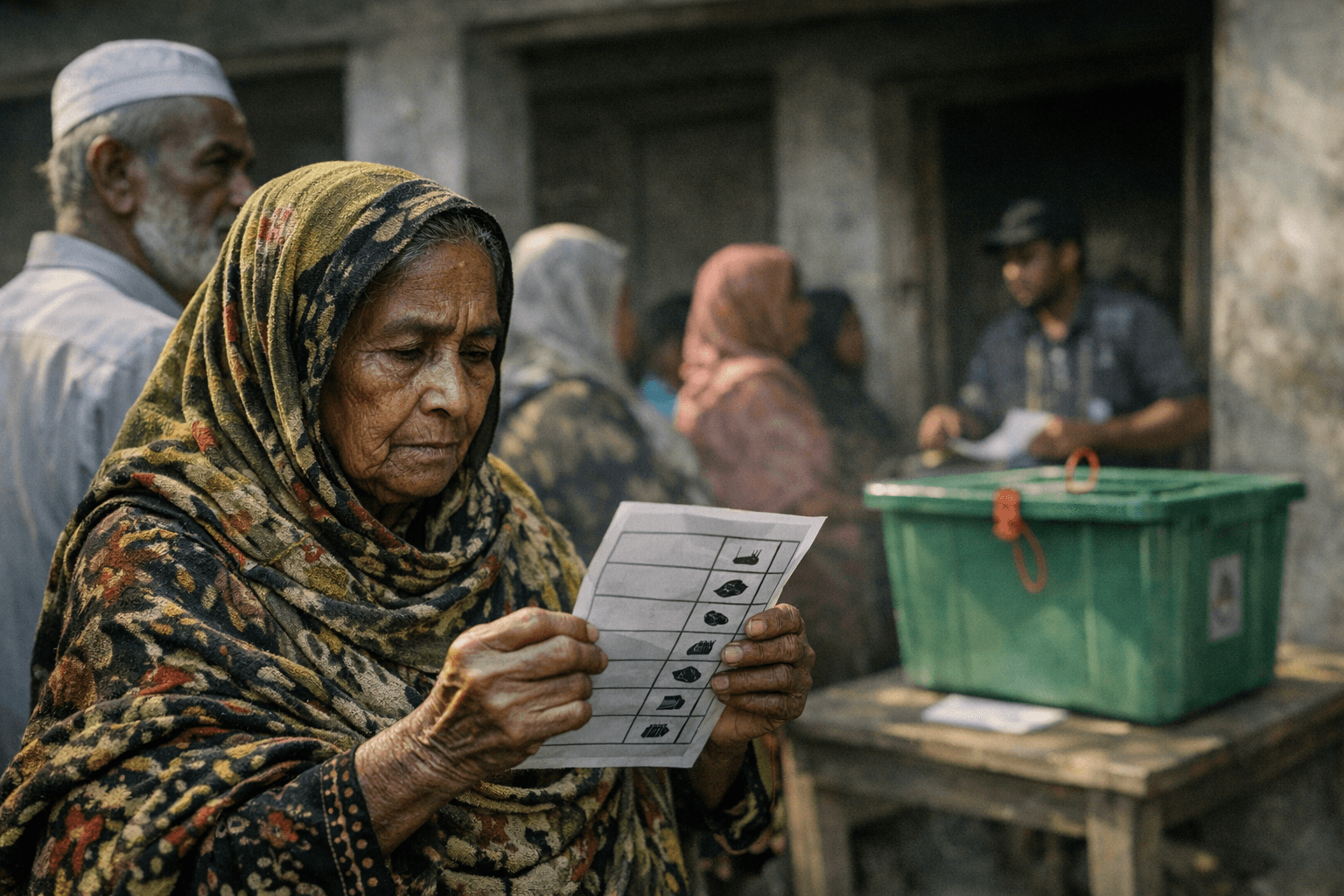
Reuters reported on Feb. 6 that in Gopalganj, the political home district of former prime minister Sheikh Hasina and long considered an Awami League stronghold, the party’s familiar “boat” symbol is absent from campaign materials ahead of the Feb. 12 parliamentary election. Al Jazeera reported in late January that the boat symbol will not appear on the official ballot and framed the absence in the context of a broader ban that has left the party and its voters in limbo.
The void of a simple pictograph has complicated choices for ordinary voters. Ripon Mridha, a boatman about 50 years old, described a morning scene that has become emblematic of local uncertainty: washing his feet after a night of fishing on the Padma River and scanning the shutters and walls of the neighbourhood market for signs of campaign life. A lifelong Awami League voter, he told reporters he feels little enthusiasm for an election after the party he supported “had been banned.” He said he might still vote, but is unsure whom to support now that the boat symbol will not appear on the ballot.
Many residents echo Mia’s stance: some say they and their families will not vote this year, while others fear that not voting could lead authorities or neighbours to identify them as Awami League supporters. Al Jazeera’s reporting highlights that this fear is intensified by narratives of past abuses tied to Hasina’s decades in power, including allegations that residents and rights groups have associated with killings, forced disappearances, torture and political crackdowns.
The removal of the boat symbol underlines how electoral rules, legal actions and symbolic identifiers intersect to shape voter behavior in a place where party iconography once guided choices. For Gopalganj, the absence is more than administrative; it is a visible break with decades of local political identity.
Observers say the situation will be closely watched inside Bangladesh and by international observers concerned with electoral credibility. At the same time, key questions remain about the legal basis for the party’s exclusion from the ballot and whether the election commission has formally prohibited the symbol. Those procedural clarifications will be central to understanding whether the Feb. 12 vote in Gopalganj represents a routine poll or a turning point for a longstanding political bastion now confronting an unfamiliar ballot.
This article was produced by Prism’s automated news system from verified source data, official records, and press releases, then run through automated quality and moderation checks before publishing. The system is built and supervised by the people who set the standards it runs under. Read our full AI policy.
Did this article answer your question?