Hawaiʻi Volcanoes National Park: Safety, Access and Tips for Residents and Visitors
Hawaiʻi Volcanoes National Park covers 335,259 acres, rises to more than 13,000 feet, and is both a major visitor draw and a critical safety concern for nearby communities.

“Hawaiʻi Volcanoes National Park is a major visitor destination on the Big Island and also a critical safety and environmental concern for nearby communities,” a condition that shapes access, safety and planning for residents and visitors alike. The park covers 335,259 acres - about 523 square miles - and climbs from sea level to more than 13,000-feet, encompassing Kīlauea and Mauna Loa and six distinct climate zones.
The park is open 24 hours daily, year round, but the Kīlauea Visitor Center is the recommended first stop for up-to-date guidance. The Kīlauea Visitor Center is open daily from 9:00 a.m. to 5:00 p.m. and sits on Crater Rim Drive off Highway 11 between the 28 and 29 mile marker south of Hilo. Park signage and rangers at the Visitor Center provide trail, road, ranger-led activity and safety updates, and the National Park Service Hawaiʻi Volcanoes page remains the official source for closures and entrance-fee information. The Hawaiʻi Volcanoes entrance station accepts credit and debit only.
Driving times and route choices affect how Big Island residents plan a trip. From Hilo, expect a 45 minute drive along Highway 11 to the park; arriving before 10:00 a.m. can get visitors in ahead of heavier midday traffic. From Kailua-Kona, the journey is longer - roughly two hours one-way - with options either around the southern tip on a 96-mile stretch of Highway 11 or 105 miles across Saddle Road via Highways 190 and 200 to Highway 11; Saddle Road is typically the faster drive because much of the southern route is winding with several speed zones. Visitors can also shorten daily travel by staying in Volcano or Fern Forest, though those communities have limited dining options and nighttime activities.
Entrance fees and passes merit attention for residents who visit frequently. One vendor lists a Hawaiʻi Tri-Park Annual Pass at $55 covering Hawaiʻi Volcanoes, Puʻuhonua o Hōnaunau and Haleakalā and stating the pass admits a single vehicle or the passholder and immediate family on foot or bicycle. The National Park Service describes the Tri-Park pass as valid for 12 months from purchase and admitting passholders and occupants in a private non-commercial vehicle (15 max capacity or less) or a passholder plus three additional adults; residents should confirm the current price and admission rules on the NPS Hawaiʻi Volcanoes page. The America the Beautiful national pass is also an option with listed prices including a Resident Annual Pass at $80 and a Non-Resident Annual Pass at $250, while senior, military, access, 4th grade and volunteer passes carry different prices or no cost.
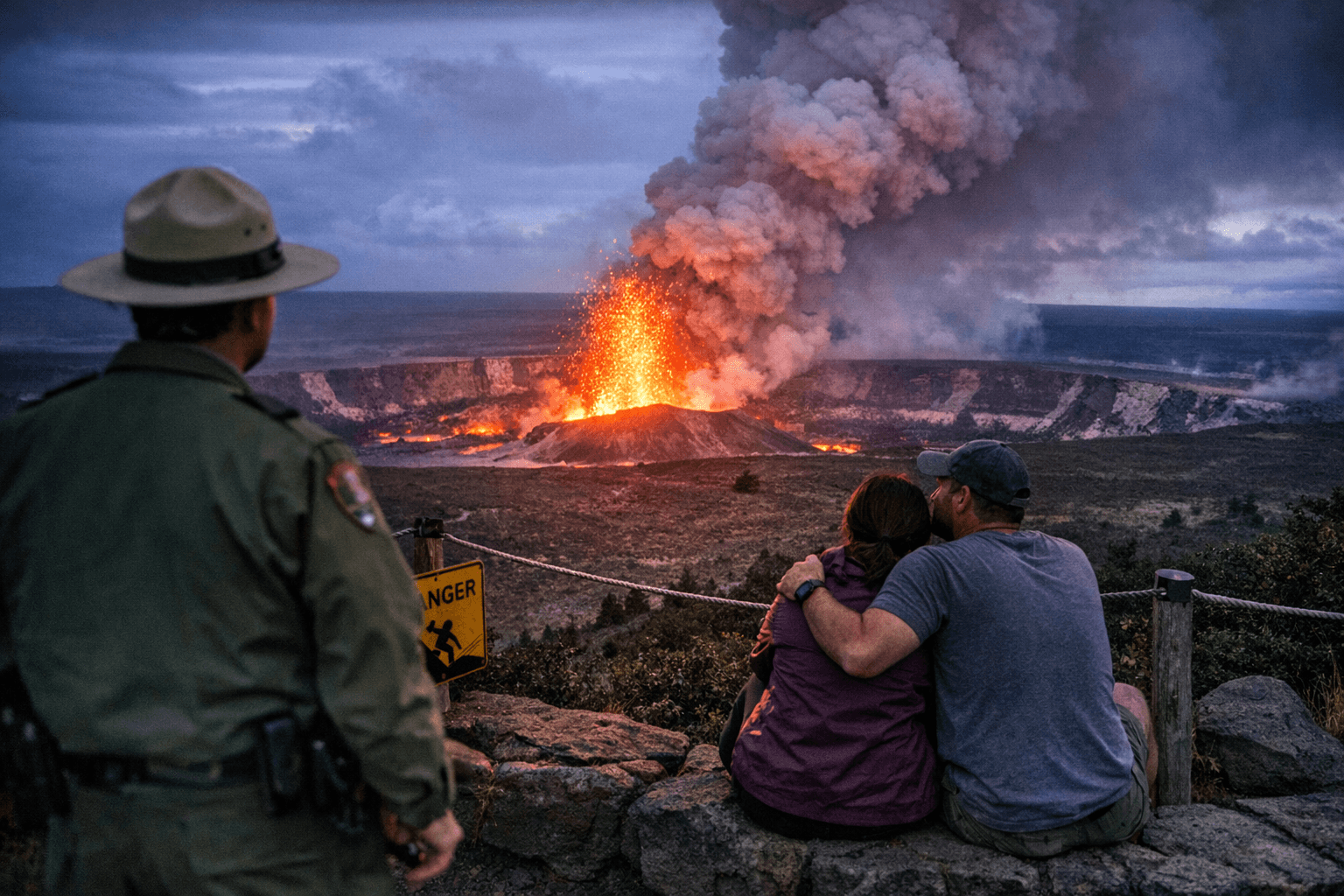
On-the-ground attractions and hazards demand planning. The Thurston Lava Tube, Nāhuku, is an illuminated 20 minute (1/3 mile) walk through tree fern forest from the Kīlauea Iki parking lot. When Kīlauea is active, eruptions have produced lava fountains and lava flows that draw visitors, but viewing opportunities are episodic - “view the lava (when it is flowing)” - and community safety concerns rise when activity resumes. Mauna Loa’s last eruption was in November 2022 and the previous major event was in 1984.
Safety guidance is specific and uncompromising: “Wear sturdy shoes and long pants, falling on lava rock is like falling on broken glass,” and “Do not hike after dark. Even those who know the area must be cautious.” Rangers repeatedly advise visitors to “stay out of closed areas” and Bigislandguide reminds people to “always follow safety instructions from the rangers and to stay in safe areas away from ledges.” Lodging options include Volcano House and campgrounds, and military personnel may book inside the park at the Kilauea Military Center, which offers 90 guest cottages and apartments plus a 110-bed dormitory.
Before traveling, check the National Park Service Hawaiʻi Volcanoes page for the current eruption status, trail and road closures, and the latest entrance-fee and pass information, and begin visits at the Kīlauea Visitor Center during its 9:00 a.m. to 5:00 p.m. hours for the most current safety advice.
Sources:
Know something we missed? Have a correction or additional information?
Submit a Tip